

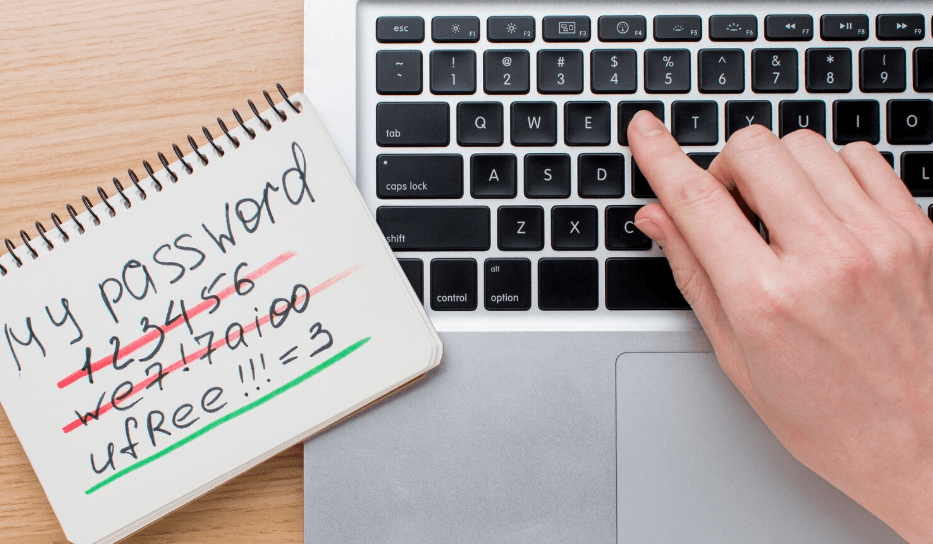
For years, passwords have been obsolete. The odd thing is that most people are still unaware of it. IT departments secretly battle them every day in offices all over the world. Reset requests accumulate. On monitors, sticky notes appear. Workers use the same eight-character secret for grocery delivery services, corporate systems, and banking apps. Observing this routine gives the impression that passwords have endured primarily due to habit rather than intelligence. In the background, something else has been developing.
The Connectivity Standards Alliance’s early 2026 release of the Aliro standard seems like a watershed. Engineers put it simply as “Matter for digital door keys.” Matter facilitated communication between smart home appliances. Aliro seeks to resolve a slightly more complex and tangible issue: who enters the building.
| Category | Details |
|---|---|
| Standard Name | Aliro |
| Developed By | Connectivity Standards Alliance (CSA) |
| First Specification Release | February 2026 (Aliro 1.0) |
| Purpose | Universal standard for digital access credentials and smart lock communication |
| Key Technologies | NFC, Bluetooth Low Energy (BLE), Ultra-Wideband (UWB) |
| Security Model | Asymmetric cryptography with certificate-based authentication |
| Industry Support | Apple, Google, Samsung, Assa Abloy, Allegion |
| Use Cases | Smart homes, offices, hotels, universities, corporate access |
| Certification Program | Authorized testing labs worldwide |
| Official Reference | https://csa-iot.org |
Last year, attendees at the IFA in Berlin stood in a packed tech hall and observed a seemingly unremarkable demonstration. With a smartphone in hand, someone walked up to a smart lock. With a click, the door opened. No keypad, no password, and no app errors. It was almost dull. However, there was a lot of engineering going on in that brief moment.
Aliro operates by standardizing the transfer of digital credentials between devices. Direct communication between the lock and the phone involves the exchange of cryptographic identity proofs. The dialogue is carried by three wireless technologies. The straightforward “tap to unlock” interaction is handled by NFC. When someone approaches the door, Bluetooth Low Energy handles the first handshake. The system is able to determine whether someone is standing in front of the door or across the street thanks to Ultra-Wideband, an astonishingly accurate radio technology.
The final section is important. For years, digital key systems have been plagued by relay attacks, in which hackers use wireless signals to trick locks into opening. That trick is made much more difficult by UWB, which measures distance in real time. There’s a quiet confidence as you watch engineers explain it. But exercise caution as well.
Matter and other smart home platforms are not being replaced by Aliro. The two function in a building much like distinct employees. Automation, schedules, and battery alerts are all managed by Matter. The doorman is Aliro. It doesn’t require Wi-Fi or a hub and verifies credentials in real time, phone to lock. The architectural change is subtle. mAdditionally, the industry appears to be unusually supportive of it.
Participating in the standard are Apple, Google, and Samsung. Security behemoths like Assa Abloy and Allegion, whose locks already protect government buildings, hotels, and office towers, are also involved. When businesses of that type collaborate, it typically indicates that the market has become weary of fragmentation. The true issue has been fragmentation.
Up until now, using a phone to unlock doors required selecting a tribe. Apple Home Key was essential to Apple users. Bluetooth applications linked to particular hardware were developed by other manufacturers. As a result, a complex web of slightly different but incompatible systems trapped consumers within their respective ecosystems.
The confusion was evident when strolling through apartment buildings that had early smart locks installed. Many apps were downloaded by the locals. Visitors had trouble using temporary keys. Integration issues were a source of complaints from property managers. Aliro is an effort to put an end to that.
The standard specifies how digital keys are created, validated, and sent in place of proprietary protocols. Credentials are stored in smartphones and wearables’ secure wallets, which are also where people store their payment cards and boarding passes. Asymmetric cryptography, a security model that banks have relied upon for decades, is used by the phone to verify its identity when it approaches a lock. It’s not perfect. In security, nothing ever is. However, compared to earlier architecture, this one feels more robust.
In discussions with engineers, another minor detail keeps coming up: Aliro continues to function even in the event of network failure. garages for underground parking. storage spaces in the basement. distant locations with erratic internet access. Local authentication takes place between the lock and the phone. That choice seems intentional in a time when cloud computing is the norm.
The technology has already left the laboratory. Aliro-compatible locks have been announced by companies like Aqara, SwitchBot, and Uniloq. Months prior, Nuki displayed a prototype in Berlin. In late 2025, certification labs in China and Belgium worked through the night to finalize the standard and test various devices’ real-world behaviors. It’s early yet. Hardware cycles are sluggish.
However, there is a familiarity to this moment. The computer industry was in a similar state of disarray when USB first emerged. One cable was required for printers and another for keyboards. A universal connector eventually appeared and subtly made everything simpler. Aliro could end up being the USB of access control.
There is a growing sense that passwords, those brittle little strings of characters, are coming to an end of their peculiar reign as the industry lines up behind it. Not in a single day. Rarely do outdated systems disappear that fast. However, the world might begin to unlock itself in a different way, door by door and lock by lock.
