

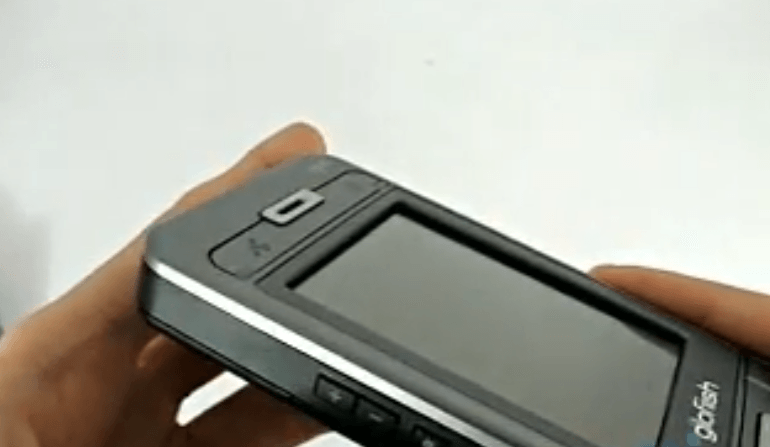
Credit: Phone Arena
You may have noticed something a little out of the ordinary in the glass display cases if you were strolling through a Taipei electronics market in the mid-2000s. Among the well-known brands were Glofiish-branded satellite devices from HTC, Nokia, and Motorola. The name had an odd, almost playful appearance. There were two “i” letters in the middle, like an unrepentant typo. However, a company was secretly experimenting with what smartphones could become behind that strange branding.
Long before the term “smartphone” became widely used, in 1985, E-TEN Information Systems was established. Early on, the company developed software and computing tools for MS-DOS systems in Chinese. Engineers in Taipei’s offices were busy resolving character-input issues that were rarely considered by Western software companies.
| Category | Details |
|---|---|
| Company | E-TEN Information Systems Co., Ltd. |
| Founded | 1985 |
| Headquarters | Taipei, Taiwan |
| Smartphone Brand | Glofiish |
| First Glofiish Phones | X500 and M700 (2006) |
| Known For | Early Windows Mobile smartphones with GPS, Wi-Fi, and PDA features |
| Major Milestone | Acquisition by Acer for $290 million |
| Acquisition Date | March 2008 |
| Outcome | E-TEN brand discontinued and absorbed into Acer |
| Reference | https://en.wikipedia.org/wiki/E-TEN |
It was practical, specialized, and technical work. However, as time went on, the business shifted its focus to portable electronics, releasing financial pagers in the late 1990s that traders used to watch stock prices flash on tiny, black-and-white screens.
E-TEN had completely embraced the smartphone experiment by the middle of the 2000s. When its Glofiish line was introduced in 2006, it included features that at the time were surprisingly ambitious. Bluetooth, GPS, and Wi-Fi. touchscreens with Windows Mobile from Microsoft. In essence, devices like the X500 and M700 were tiny computers with the ability to make phone calls.
It seems like they were attempting to do too much when you look at them now, chunky and stylus-driven. However, the industry as a whole had not yet determined what a smartphone should be in those years. Unfortunately, the timing was cruel.
Steve Jobs held the original iPhone on a stage in San Francisco in January 2007. It’s hard not to sense the change occurring in real time when watching old keynote videos of that moment—the black turtleneck, the quiet applause turning into cheers. Suddenly, the smartphone appeared more straightforward. cleaner. touch-based as opposed to stylus-dependent. All of a sudden, companies like E-TEN that were manufacturing Windows Mobile devices were playing a different game.
Nevertheless, E-TEN continued to advance. Features like VGA screens, specialized GPS chipsets, expandable storage, and even FM transmitters were all included in models like the Glofiish X800 and X650. It was obvious that engineers were trying to fit as much functionality as possible into these small devices. There’s a sense that the company thought feature lists were still important and that customers would pick the phone with the most features.
It was difficult to ignore the widening gap while standing in European electronics stores in 2007 or 2008. The HTC phones had a polished appearance. The iPhone from Apple appeared to be revolutionary. Smaller producers, like E-TEN, were producing amazing gadgets at the same time, but they somehow found it difficult to get the same attention. They were frequently disregarded by carriers. The distribution was inconsistent. Seldom were they advertised to customers.
Acer declared in March 2008 that it would pay roughly $290 million to acquire E-TEN. The move made strategic sense on paper. Acer, a well-known PC manufacturer, sought to improve its standing in the mobile device market. Engineering expertise, smartphone designs, and familiarity with Windows Mobile hardware were immediately obtained by purchasing E-TEN. From a business standpoint, it appeared to be effective.
However, acquisitions have repercussions that are rarely mentioned in the press release. The E-TEN brand vanished shortly after the purchase. The Glofiish name subtly disappeared from the smartphone market, but the company itself did not disappear—its engineers and technology mainly transferred under the Acer umbrella. Instead, Acer branding was used on subsequent devices.
One gets the impression that the choice was made more for the purpose of consolidation than failure. Acer probably thought that having two distinct brands in the same market would make marketing efforts less effective. It’s preferable to group everything under a single, identifiable name. That probably made sense to investors. However, consumers seldom pay attention to the internal calculations that go into these decisions.
It’s interesting to note that E-TEN wasn’t particularly having problems when it was acquired. The company’s market share for Windows Mobile devices was surprisingly high in some regions, especially Russia. According to reports, it captured more than 20 percent of the market there at the beginning of 2008. That is a significant amount.
Nevertheless, the smartphone market was evolving more quickly than most people had anticipated.
Soon after, Android was released. The iPhone was improved by Apple. Styluses were replaced by touch interfaces. Hardware manufacturers had to compete on ecosystems, such as app stores, developer communities, and software polish, instead of just specifications. It’s possible that E-TEN would have been under tremendous pressure to adjust to that change even in the absence of the Acer acquisition.
As the narrative progresses, the Glofiish name has an odd connotation. Not exactly nostalgia. It’s more like curiosity. The phones were creative. Occasionally awkward. Sometimes brilliant. They were part of that turbulent time when engineers were still figuring out what should go inside a pocket computer.
After 2008, the brand quietly disappeared as it was absorbed by a larger company and the quickly growing smartphone market. However, the gadgets themselves—those hefty little Windows Mobile computers loaded with styluses and GPS antennas—still seem like relics from a time before the regulations were established.
And maybe that’s the true reason the tale endures. For a short time, E-TEN was more than just a phone manufacturer. It was playing with possibilities and creating devices that gave the impression that the future might be very different.
