

Several hundred offshore turbines are producing more electricity on a windy North Sea afternoon than the cable that connects them to the mainland was built to handle. This is not an uncommon circumstance. Tuesday is here. The same wire, which originates from a substation in Lincolnshire, was designed to support a specific rated load based on ambient temperatures that engineers determined from historical weather data decades ago. The specific wind speed at the cable’s position at this exact moment, as well as the fact that cooler air is keeping the cable’s temperature far below its rated limit, are things that the AI system currently operating a portion of the UK’s national grid understands that the original engineers were unable to. More power can be safely pushed thru the system. Yes, it does. In a control room, no one makes that choice by hand. It takes only a few seconds.
The UK’s AI-managed smart grid program is based on this type of real-time capacity optimization. As part of its live balancing operations, National Grid ESO, the corporation in charge of maintaining the high-voltage transmission network, has been using more advanced machine learning capabilities. The objective is both realistic and ambitious: transport more electricity from its source, which is increasingly offshore wind, solar farms, and battery storage, to the locations where it is required, with less waste and at a lower cost, without installing thousands of miles of new cable, which would require ten years to plan and construct.
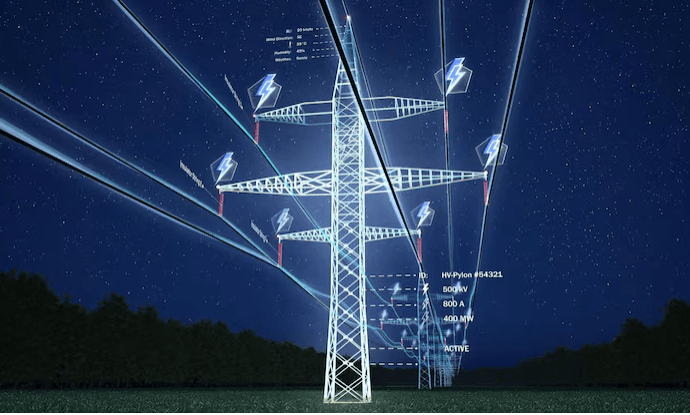
Much of this is motivated by the issue of renewable integration. Over the past fifteen years, there has been a significant shift in the electrical mix in Britain. Coal, which used to supply most of the UK’s generation, is now almost nonexistent on most days. Much of that gap has been filled by wind and solar power, but they have a basic operating problem that coal never had: you can’t control when the wind blows or the sun shines. Gas-fired “peaker” plants have historically been kept in the background by grid operators, ready to turn on in the event of an unforeseen drop in renewable energy. The cost of that reserve capacity is high. The grid spends money that eventually ends up on customer bills each time it calls on a gas peaker that it could have prevented by more accurately predicting a wind gust off Scotland.
Thru predictions, the AI systems being used directly address this. With accuracy that has significantly increased as the models have been trained on additional data, machine learning algorithms are now able to forecast wind and solar output on timescales ranging from the next twenty minutes to the next several hours. Improved forecasts allow the grid operator to commit less standby capacity, taking on a greater risk that the models are accurate and the costly backup won’t be required. These constraint costs decrease when the models are accurate. The transition to AI-dependent operations is occurring gradually and with significant engineering oversight rather than all at once since when they make mistakes, the expenses increase.
Although the relationship between grid optimization savings and what shows up on a household energy account is neither straightforward nor quick, consumer bills are, in theory, one of the benefactors of all this. Constraint payments, which are sums of money given to producers to shut down when the grid is unable to physically transport power from the point of production to the point of consumption, have historically cost the UK hundreds of millions of pounds every year. By more intelligently channeling power in real time, AI-assisted balancing aims to lower such payments. The market structure that sits above and around the technology, as well as regulatory considerations, will determine whether or not such savings are clearly visible to consumers.
As this develops, there’s something subtly startling about the scope of the demands placed on the algorithms. With hundreds of nodes, thousands of variables, prices fluctuating in the balancing market every thirty minutes, and weather systems traveling across the British Isles at its own speed, the UK national grid is an incredibly complicated system. For the time being, the engineers developing these systems take care to characterize them as instruments that support human decision-making rather than taking their place. The industry will need to respond to the question of whether such framing holds true as the systems become more capable in practice rather than in press releases.
