

The scenery indicates that something has changed in Ashburn, Virginia, as you travel west on Route 7 from Washington. Huge, low-profile buildings set back from the road, with no windows, thick perimeter fencing, and diesel generator farms sitting outside like industrial sentinels, now punctuate what was once a mix of horse country, strip malls, and suburban development. The signage in front are usually simple, consisting just a corporate emblem and a number. Inside, rows of servers are operating nonstop, 24/7, drawing power at a scale that most passing cars don’t have to think about.
The world’s densest concentration of data center infrastructure is found in “Data Center Alley” in Northern Virginia. Prior to the acceleration of the AI buildout, such was already the case. The strain those plants are putting on the regional grid, particularly the PJM Interconnection, which oversees the transmission of power throughout thirteen states and the District of Columbia, has changed. Although a traditional data center uses a lot of electricity, it also has predictable consumption curves, partial loads, and idle times. That is not how an AI training cluster operates. For weeks at a time, it draws significant, almost constant baseload power. Over 100 megawatts, or over 80,000 households, can be consumed by a single hyperscale AI installation. There are a lot of them in the area, and more are being built.
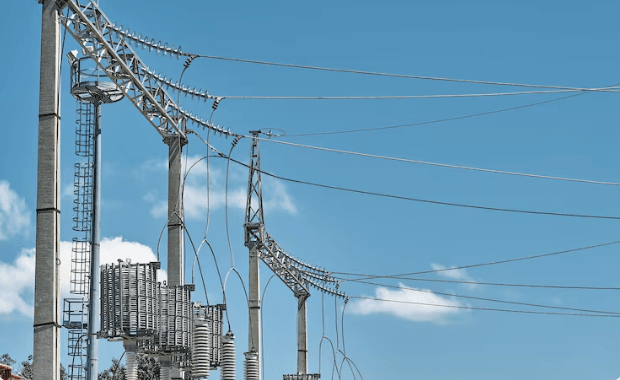
The most challenging aspect of this scenario for the grid operators to handle is the volatility. An AI facility can send a load change of several gigawatts thru the transmission system in a matter of seconds when it abruptly switches to backup generators—during a maintenance window, a power quality event, or a grid disturbance. The PJM grid was not intended to handle that kind of variability. High-voltage cables and substations that were designed for steady load increases are now handling abrupt fluctuations that ten years ago would have been regarded as extraordinary occurrences. The situation is manageable, according to grid engineers, but there is a tension in that phrase that implies it won’t stay that way forever.
Outside of regulatory filings, the consumer aspect of this has not gotten enough attention. Prices typically increase when a region’s industrial demand outpaces its generation and transmission capacity, and this is true for more than simply the industrial clients that are driving the expansion. Rate hikes have generally resulted in a portion of those expenses being borne by residential customers and small businesses serviced by the same grid infrastructure. In order to directly address this issue, Virginia officials put in place regulations requiring new data center developers to cover the costs of specialized upstream grid upgrades rather than spreading those expenses throughout the rate base. It’s a sensible strategy that more evenly distributes the financial load. It’s another matter entirely whether it closes the underlying infrastructure gap.
A time mismatch is the core issue. It takes years to build a new substation or upgrade a high-voltage transmission corridor—permitting, engineering, construction, interconnection studies, and regulatory approval. Data centers are expanding even more quickly than that. Demand that significantly exceeded the infrastructure planning cycle is being placed on the grid, and there is a lengthy catch-up time. Fuel cells, adaptive load migration, and on-site battery storage could be able to relieve enough of the grid’s strain in the meantime to avoid major dependability issues. These technologies are being used, and businesses are making significant investments in them. However, they complement grid capacity rather than replace it.
