

Two satellites that had been silently circling the planet for years collided on February 10, 2009, at a speed of 17,500 miles per hour over Siberia. Neither had time to get used to it. In less than a second, the American Iridium 33 and the long-dead Russian Kosmos 2251 collided, producing over 1,800 trackable fragments, each of which is now an unguided projectile that can pierce a spacecraft wall. There are still clouds of debris up there. I’m still floating. Continuing to exacerbate an issue that no one has managed to solve.
Now, in 2026, when the number of objects in Earth’s orbit has increased to levels that would have seemed nearly abstract fifteen years ago, that incident is worth remembering. Currently, over 25,000 objects larger than 10 centimeters are tracked by NASA’s Orbital Debris Program Office. Estimates increase to 500,000 pieces between one and ten centimeters and about 130 million pieces in the millimeter range below that size. Current ground-based systems are unable to track the majority of those. They simply travel quickly and invisibly through orbit, making it difficult to predict what they might hit on any particular pass in real time.
| Information | Details |
|---|---|
| Issue | Space Debris / Orbital Junk accumulation in low-Earth orbit (LEO) |
| Total Tracked Objects (10cm+) | Over 25,000 — active and defunct satellites combined |
| Objects 1–10 cm | Approximately 500,000 |
| Objects ~1mm range | Nearly 130 million pieces currently orbiting Earth |
| Famous Collision | Iridium 33 (USA, 1997) vs. Kosmos 2251 (Russia, 1993) — collided Feb. 10, 2009 |
| Debris from That Collision | 1,800+ fragments larger than 10 cm generated instantly |
| Orbital Speed of Debris | Approximately 17,500 mph — enough for small fragments to hit like bullets |
| Kessler Syndrome | Cascading collision chain reaction — first theorized by NASA’s Donald Kessler in 1978 |
| 2025 Emergency Incident | China’s Shenzhou-20 viewport cracked by debris strike — first emergency crew return in Chinese spaceflight history |
| Key Expert Voice | Moriba Jah, space debris expert, University of Texas at Austin |
| Debris Removal Company | Astroscale Holdings — Japan-based, focused on LEO debris removal and satellite servicing |
| Key Economic Risk | GPS, weather satellites, financial networks, and communications infrastructure all depend on unobstructed orbits |
This situation involves real economic stakes. Hardware stationed in low-Earth orbit powers GPS navigation, weather forecasting, financial transaction routing, military communications, and broadband internet provided by satellite constellations. Since NASA scientist Donald Kessler first described it in 1978, a chain-reaction collision event—known to physicists as Kessler syndrome—would be able to seriously harm global infrastructure without destroying every satellite. All it would have to do is make some orbital bands too hazardous. Some of those bands are already overcrowded, which worries the people who paid to consider this. The industry may not have fully factored that risk in yet.
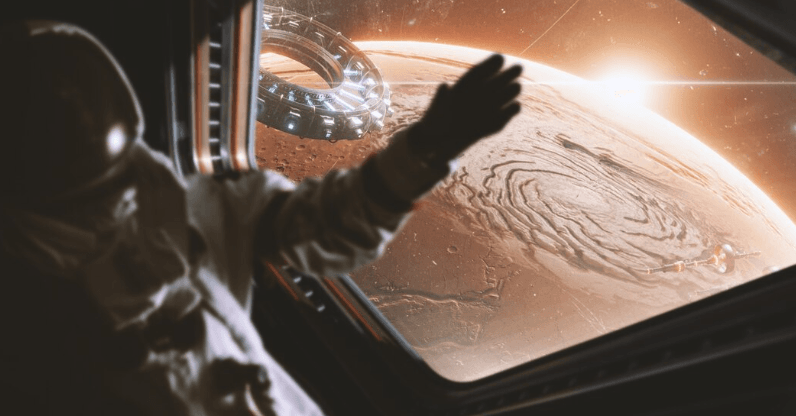
The most obvious warning came in November 2025 when Chinese astronauts on board Shenzhou-20 noticed tiny cracks in the viewport window of their spacecraft. These cracks were caused by a debris strike that was small enough to go unnoticed until the damage was already done. The mission necessitated the first alternative return procedure in China’s history of crewed spaceflight: an emergency uncrewed rescue launch.
The choice to postpone and replace vehicles revealed something more profound than a single incident, according to Moriba Jah, a debris specialist at the University of Texas at Austin. The real issue is “our collective inability to maintain continuous, verifiable understanding of what moves through orbit,” he stated. He went on to say that each piece that is left in the air “adds to a rising tide of uncertainty.”
Observing the current rate of commercial space expansion gives one the impression that the urgency in orbit has outpaced the urgency on the ground. For years, Astroscale, a Japan-based company that specializes in satellite servicing and debris removal, has argued that incremental inaction compounds.
“It’s not like one accident is necessarily going to have an immediate, massive impact,” the company’s chief operating officer Chris Blackerby stated. “But the more we don’t pay attention to it, the more it’s going to be a massive problem for generations down the line.” That’s a tactful caution from a knowledgeable person. The ability of the regulatory frameworks required to address it—across numerous governments, commercial entities, and conflicting national interests—to move quickly enough to be significant is still up for debate.
