

On a Monday in early March, the press release arrived. It was written in Cupertino’s signature tone, which is clear, self-assured, and slightly exuberant. Inside is a brand-new iPad Air M4. Memory of twelve gigabytes. a starting price of $599, which hasn’t changed from the previous year despite a memory market that has been brutal by all accounts. It seems like just another standard spec bump on paper. However, the longer you sit with it, the stranger it becomes.
The iPad Air now uses the same silicon that Apple was selling inside MacBook Pros two years ago, which is something that no one at the Battersea event in London seemed to want to mention aloud. Not a diluted version. The real M4. With a 9-core GPU, hardware-accelerated ray tracing, a Neural Engine that Apple claims is roughly three times faster than the one in the M1. A Mac used to be defined by that chip. It’s now defining what an iPad Air is. It seems as though the distinction between the two has begun to completely dissolve rather than just blur.
The script writes itself when you stroll around the demo area, as Eric Zeman of PCMag did in London. Using Final Cut Pro, an editor joins together video clips. A generated soundtrack that is timed to the cuts can be heard with a few taps. No round-trip cloud. No beachball spinning. He described it as happening “in the blink of an eye.” These little, almost theatrical displays of effortlessness are something Apple adores, and this one had a subdued message underneath. The tasks that formerly required a Mac are no longer necessary.
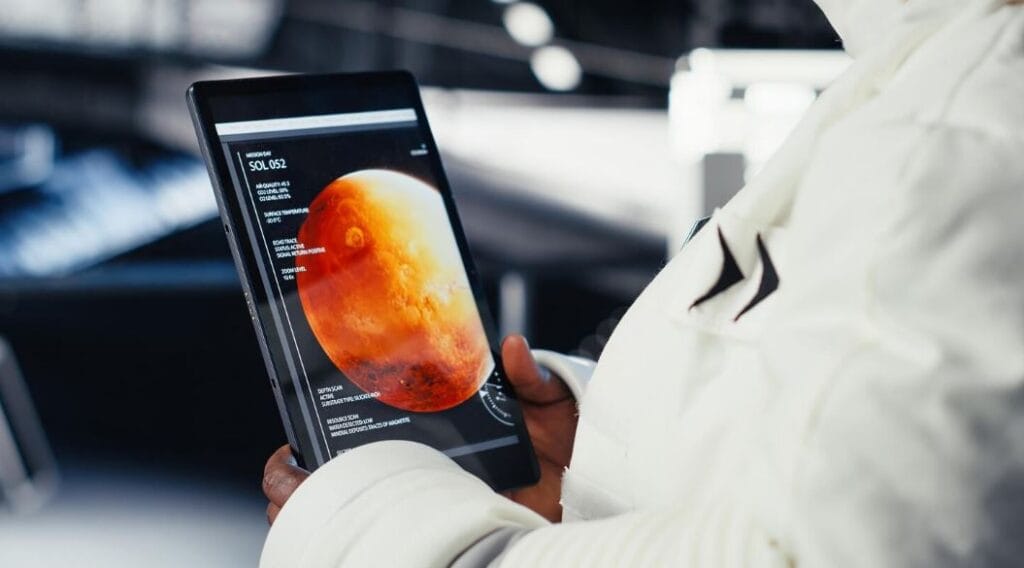
It’s difficult to ignore the pattern. As the Mac moves closer to becoming a sort of professional haven, Apple continues to enhance the iPad’s capabilities and make it more powerful than the Mac. Editors can use Mac Studios. Mac Pros in studios. For those who still prefer a clamshell, there are MacBook Pros. Everybody else? They receive an iPad with a Magic Keyboard and a chip that would have made a 2019 Pro tower look foolish on a Geekbench chart. One thing is stated by the hardware. Another claims that the $599 price is stable despite inflation and a shortage of memory. In order to maintain this device’s accessibility, Apple is prepared to withstand margin pressure. That isn’t a typical choice for a product. That’s tactics.
As these things frequently do, the true nature of that strategy is left somewhat unsaid. Investors seem to think Apple is hedging, getting ready for a time when the differences between tablets and laptops won’t be as important as the differences between Apple’s ecosystem and others. Perhaps the company is just consolidating its silicon roadmap because it is less expensive and more environmentally friendly. It’s also possible that something more intentional is taking place, such as the gradual transformation of the iPad into the go-to computer for a whole generation that was never confined to a desk.
In contrast, the hardware itself is essentially unaltered. same chassis made of aluminum. The Face ID button is still absent from the Touch ID button, which makes it seem more noticeable. The same USB-C 2 port, but Apple would pay very little for USB-C 3. It makes sense that Apple representatives in London told reporters that the design would remain the same for accessory compatibility. It’s a tell as well. The iPad Air doesn’t need to be redesigned. It requires the iPad Air to continue selling in huge quantities, silently, and to perform more tasks than the Mac did in the past.
For years, analysts have asked Tim Cook the same question: When will the iPad be a true computer? He has always politely sidestepped it. The question is not addressed by the M4 iPad Air either. It simply gives the question an outdated vibe. With its straightforward specifications and subtly aggressive pricing, it seems like Apple has already made up its mind as it launches this product. We’re all just catching up.
