

Kenny Hirschhorn, Orange’s group director of strategy, imagineering, and futurology, pulled out his cell phone in January 2000 in London and asked a strategy consultant, “What is this?” A cell phone, the consultant said. With a sigh, Hirschhorn gave another opportunity. When the response was “Nokia,” he shook his head.
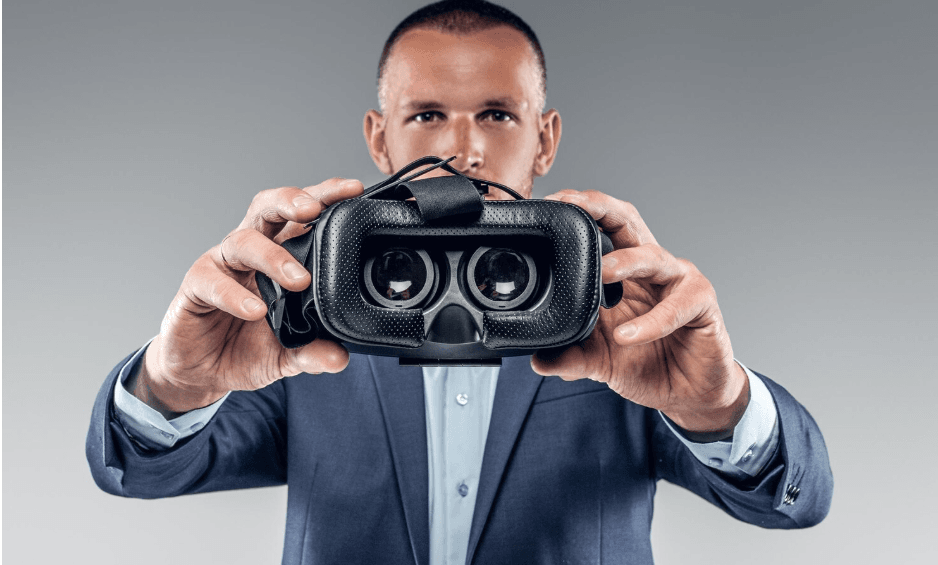
“This,” he stated, “is the remote control of your life.” Then he showed a video of a California executive using a phone in a car in 2000 to check his calendar and see his wife’s ultrasound pictures. The consultant’s mouth fell open.
| Category | Details |
|---|---|
| Topic | Artificial Intelligence in Mobile Devices (On-Device & Cloud AI) |
| Core Technology | On-Device AI, Cloud AI, Hybrid AI Models |
| Key Concept | Portable Artificial Intelligence |
| Original Thinker | Kenny Hirschhorn, Group Director of Strategy, Imagineering & Futurology, Orange |
| Industry | Mobile Technology, AI Development, Consumer Electronics |
| Key Players | Apple (Siri), Google (DeepMind), Amazon, Sentient, Arago, SenseTime, Snips, Element AI |
| Relevant Year | Concept origin: 2000 |
| Primary Use Cases | Voice assistants, photo recognition, health monitoring, translation, recommendations |
| Reference | Harvard Business Review – Portable AI Article |
Charles-Edouard Bouée was that consultant, and over the course of the following 20 years, he saw that idea blossom into what now seems almost inevitable. In today’s research labs, development studios, and boardrooms, the question is not whether AI will be personal. The question is whether it will reside in your hand or on the cloud.
The argument has become much more heated by 2026. Mobile apps already have features like real-time language translation, heart rate monitoring, facial recognition in photos, and song prediction. The majority of people don’t pause to consider how any of that truly functions.
However, a choice was made behind each of those moments: should the intelligence reside on the device or should it reside on a server far away and return to you at the speed of a good internet connection?
Everything is processed locally by on-device AI. Your phone doesn’t lose any data. Because there is no round trip to a server in a warehouse in Singapore or Virginia, the results are instantaneous. Face Unlock operates in a split second because the model that powers it is located directly on your chip, not because it is magical. Privacy is maintained. The device functions even in the absence of a signal. These days, flagship smartphones come with AI chips that are specifically made to perform this kind of work without depleting the battery by noon.
However, the system isn’t flawless. Supercomputers are not phones. Hardware is still strained by heavier AI tasks, such as those that need a lot of processing power or models that are too big to fit in a few gigabytes. Because the model is embedded rather than centrally managed, updating the AI itself takes longer. Additionally, the cost of storage increases with the complexity of the models. These are not hypothetical limitations, but actual ones.
Cloud AI takes a different approach to the issue. Your data is transferred to a distant server, where it is examined by a processor far more powerful than any smartphone, and the outcome is returned to you, typically in a matter of seconds.
Cloud AI still has a distinct advantage in areas like large-scale video processing, sophisticated recommendation engines, and translation apps. On that end, the computational ceiling is practically infinite. Models can be updated by developers overnight, with instant benefits for all users.
However, the trade-off is clear. No AI, no internet. Additionally, every time data moves over a network, it encounters vulnerabilities. That trip is extremely risky for businesses handling private communications, financial data, or health records. Privacy concerns may ultimately drive development toward on-device solutions more so than raw performance.
The most intriguing area seems to be in the middle of the two. Hybrid models are already emerging, in which lightweight AI operates locally and the heavy lifting is only transferred to the cloud when necessary. Whether this middle path becomes the dominant architecture or merely a transitional phase is still up for debate. However, it makes some intuitive sense. Make use of what is available. Save what you have.
“Portable artificial intelligence” is what Bouée called it—an extension of the self. It’s more than just a tool you carry around; it’s a private cloud-based system that helps you develop a true sense of who you are by removing irrelevant information and highlighting what matters. No model for advertising. You cannot pay for the service by selling your data.
Instead of using thirty-seven browser tabs to book your vacation, a personal AI will sync calendars, read preferences, check school holidays, and present you with a decision. The vision is that. In 2017, it was speculative. Now it feels much less speculative.
The amount of ingredients that are already present is astounding. Even five years ago, the amount of money being invested in AI development would have seemed ridiculous. Engineers are constantly surprised by the speed at which chips are becoming smaller. More than ever before, entrepreneurs and researchers are collaborating. There are the building blocks. Assembly is the question.
It’s difficult to ignore the fact that the largest corporations in the world, such as Google, Apple, and Amazon, stand to lose more from genuinely private, personal AI than nearly anybody else. Data is the foundation of their entire business strategy.
One of the more intriguing paradoxes in technology today is seeing them make significant investments in AI while also controlling the systems that personal AI would disrupt. Whoever creates the AI that truly safeguards personal information and gains the trust of users might not be one of the names that are currently making headlines.
In 2000, Kenny Hirschhorn discovered the remote control of life in a phone from the Nokia era. In reality, he was talking about agency, which is the notion that the gadget in your pocket could be sufficiently familiar with you to act on your behalf. It’s no longer science fiction. It is a roadmap for a product. You might never need to ask your phone for anything if the next quarter-trillion-dollar company builds it correctly. It will already be aware.
