

Imagine a building that has collapsed, the floors folded over one another, dust still in the air, and people waiting to be discovered somewhere beneath it all. The rubble doesn’t care about the urgency of first responders’ prompt arrival. Accessing some of those areas puts more lives in danger. For many years, more people, more hours, and more hope were the only practical solutions to the issue that has defined disaster response.
Quietly, that calculus is starting to change. In search and rescue situations, swarm robotics—systems in which dozens, occasionally hundreds or thousands of tiny robots cooperate without a central command—is demonstrating real promise. The idea is based on how fish schools move as a single organism, how ants locate food, and how birds flock. Every unit adheres to basic guidelines. Together, the group performs a far more complex task.
Swarm systems that use Particle Swarm Optimization algorithms, which simulate the coordinated movement of birds, can speed up response times in disaster areas while preventing human rescuers from entering the most hazardous areas, according to research published in 2025 by IEEE. Without a controller to give each command, the robots share information throughout the swarm, modify their routes in real time, and reassign tasks when circumstances change. It’s decentralized problem-solving, and redundancy is crucial in a collapsed building where environments are unpredictable and communication channels are cut off.
Scope and resilience are what set this apart from a single rescue drone. A single robot may malfunction. A swarm takes that setback and moves on. The remaining units carry out the mission by redistributing tasks and rerouting coverage. It has a certain elegance, both practically and technically. The significance of that is evident to anyone who has witnessed a rescue operation come to a standstill due to a single malfunctioning tool.
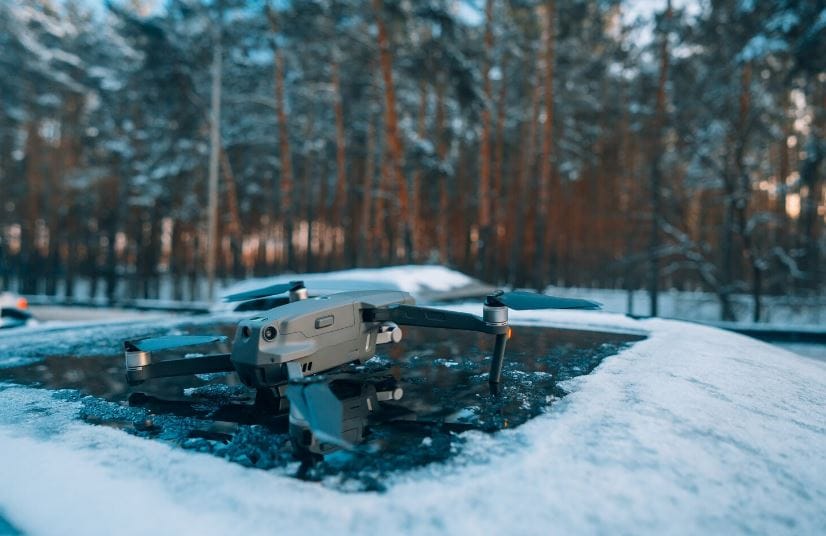
Ryan Williams, a researcher at Virginia Tech, has been focusing on a particular variation of this issue: wilderness search and rescue, in which the environment turns against you. In order to anticipate where people will walk based on topography and prioritize challenging terrain that humans might not be able to reach, his team is programming drone swarms to coordinate not only with one another but also with human searchers on the ground.
It’s interesting—and sometimes overlooked—that this isn’t about taking the place of human judgment. It’s about making it longer. Instead of covering the ground mindlessly, the drones are filling in the gaps and simulating human movement. In order to guide the swarms’ search, Williams has also integrated historical data from over 50,000 recorded lost-person scenarios. Such data-driven behavior seems like a significant advancement over the capabilities of previous autonomous systems.
However, it would be too simple to exaggerate the current situation. Currently, the majority of drones used for search and rescue are still operated by a single operator. At least not at scale, the swarm systems being tested in controlled and simulated environments haven’t fully transitioned into regular deployment. Reliability in harsh environments, how swarms manage electromagnetic interference, and the legal and liability frameworks that haven’t kept up with the technology are all serious concerns. These are not insignificant obstacles.
This also has a human component that is sometimes overlooked. Emergency personnel and rescue workers work in high-stress, high-stakes situations where trust in equipment is gradually gained. The notion of delegating parts of a search to autonomous robots, even highly competent ones, requires first responders to do more than just perform technical tasks. When lives are at stake, it asks them to give up a sense of control that feels intimate. It will likely take longer to establish that trust than to develop the robots.
However, it’s difficult to ignore the fact that something genuine is taking place as this field develops. Swarm systems for disaster response are being actively funded by agencies like DARPA, the research is progressing more quickly, and the simulations are becoming more advanced. According to data cited by Virginia Tech’s team, 25% of individuals discovered in wilderness rescues are already injured when searchers arrive. Each minute and each meter of coverage is significant.
Not all disaster response issues can be resolved by swarm robotics. However, preliminary data indicates that it will resolve some of the most challenging ones, which is more than sufficient justification to pay attention for the time being.
