
Close Menu
GlofiishGlofiish
    Facebook X (Twitter) Instagram
    Facebook X (Twitter) Instagram
    GlofiishGlofiish
    Subscribe
    • Home
    • Glofiish Devices
    • Technology
    • Tech Devices
    • News
    • About
    • Privacy Policy
    • Contact Us
    • Terms Of Service
    GlofiishGlofiish
    Home » Inside Wall Street’s $40 Billion Bet on Autonomous Deep-Sea Mining Technologies
    Tech Devices

    Inside Wall Street’s $40 Billion Bet on Autonomous Deep-Sea Mining Technologies

    Taylor LoweryBy Taylor LoweryAugust 25, 2026No Comments4 Mins Read
    Facebook Twitter Pinterest LinkedIn Tumblr Email
    Share
    Facebook Twitter LinkedIn Pinterest Email

    A few years ago, when Loke Marine Minerals bought UK Seabed Resources from Lockheed Martin, it appeared to be a daring move into the deep ocean mineral rush—a private business acquiring rights that a defense contractor had owned since the 1980s without ever using them. The incident served as a helpful reminder that the corporate vehicles seeking this opportunity are frequently more vulnerable than the resources they are hunting when Loke encountered liquidity issues and the assets were transferred once more to a business named Glomar Minerals. Your balance sheet doesn’t matter to the seabed. The money continues to flow in.

    The global deep-sea mining market was valued at around $5.6 billion in 2026, up from about $1 billion a year earlier. Market research organizations’ projections for the early 2030s cluster around $40 billion, with some estimates going far higher. These figures reflect the infrastructure, technology, licensing, and feasibility studies required to actually transport autonomous vehicles to and from the ocean floor. The sector has drawn interest from a wide range of sources, including defense contractors seeking supply chain diversification opportunities, venture capital funds, and sovereign wealth vehicles.
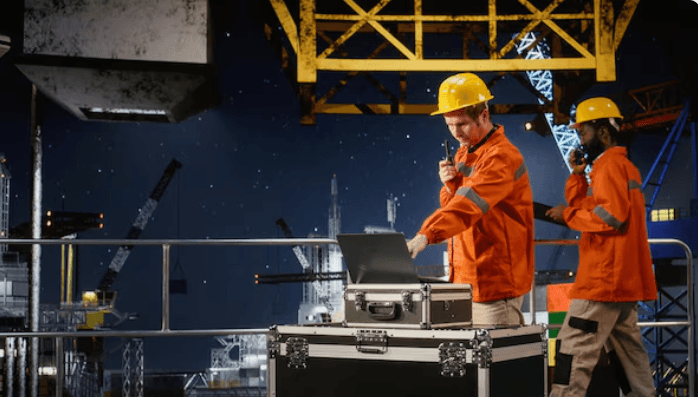
    Autonomous Deep-Sea Mining Technologies
    Autonomous Deep-Sea Mining Technologies

    The technical layer has evolved over the past two years. Older dredging theories, which essentially involved industrial vacuums dragging across the bottom and drawing up everything in their path, including silt clouds, used to dominate discussions about deep-sea mining. Because the harm was evident and indisputable, that strategy made the environmental opposition simple. The more recent autonomous systems are more focused. Businesses such as Impossible Metals have developed buoyancy-driven vehicles equipped with high-accuracy optical sensors that can selectively harvest specific polymetallic nodules on the seafloor without disturbing the surrounding creatures, or at least not as much as a dredge would.

    As early as 2023, the Department of Mechanical Engineering at MIT exhibited autonomous vehicles that could identify nodules and optimize collection paths at depths more than 5,000 meters. Between 2022 and 2024, the National Science Foundation and the Department of Energy jointly funded the prototype project with $8.5 million, a small amount that indicated government interest rather than commitment.

    Compared to pure business rationale, the geopolitical factor has been driving things more quickly. Through NOAA, the United States, which is not a party to the UN Convention on the Law of the Sea, has been developing its own domestic licensing system for the extraction of seabed resources in the Clarion-Clipperton Zone. Through 2040, Japan has pledged $5.7 billion in public-private funding for the development of deep-sea resources. The CCZ footprint of China’s state mining interests has been gradually growing. The contest is more about who builds the operational and legal framework to remove the nodules first than it is about who finds them—everyone knows where they are.

    The regulatory ambiguity surrounding extraction in foreign waters is what causes investors to be really cautious and is typically acknowledged by more reliable market estimates. Due to pressure from their own institutional clients about ESG, commercial banks have been withdrawing from this market, leaving sovereign wealth funds and state-backed businesses to fill the void. Even while the nominal growth predictions are still optimistic, that shift reveals something about the risk profile the market actually carries.

    The Mining Code for the ISA is still incomplete. Commercial environmental responsibility frameworks are nonexistent. A corporation is in a very challenging situation if it takes nodules from the international seabed and then finds that its insurance won’t cover operations that circumvent ISA procedures. One of the bigger bets hidden in those $40 billion figures is the discrepancy between the anticipated market size and the legally established operational framework.

    Autonomous Deep-Sea Mining Technologies Glomar Minerals The Metals Company (TMC) Wall Street’s $40 Billion Bet
    Share. Facebook Twitter Pinterest LinkedIn Tumblr Email
    Taylor Lowery
    • Website

    Taylor Lowery is a senior editor at glofiish.com, a technology writer, and a true circuit enthusiast. She works in the tech sector, so she does more than just cover it. Taylor works for a smartphone company during the day, which gives her a firsthand look at how gadgets are designed, manufactured, promoted, and ultimately placed in people's hands.Her writing is unique because of this insider viewpoint. Taylor makes the technical connections that other writers overlook, whether she's dissecting the silicon architecture of a new flagship chipset, analyzing the implications of a significant Android update for actual users, or tracking the effects of a new AI model announcement across the mobile industry.Her editorial focus covers every aspect of the current tech stack, including smartphone software and hardware, artificial intelligence (from large language models and generative tools to on-device inference), and the broader innovation trends influencing the direction of the consumer technology sector. She is especially passionate about the nexus of AI and mobile computing, which she feels is still in its most exciting early stages.

    Related Posts

    Why Australian Miners Are Using Autonomous AI Agents to Locate Underground Mineral Deposits

    August 25, 2026

    The Windows Mobile Resurgence , Why Gen Z Programmers in Brooklyn Reject iOS for Pocket PC OS

    August 25, 2026

    How Stanford Robotics Labs Use Legacy Glofiish Sensors for Micro-Drone Navigation

    August 18, 2026
    Leave A Reply Cancel Reply

    You must be logged in to post a comment.

    Technology

    The Hydrogen Highway Myth , Inside California’s $10 Billion Clean Energy Gamble

    By Taylor LoweryAugust 26, 20260

    Arnold Schwarzenegger declared in 2004 that California will construct a Hydrogen Highway, a network of…

    Why the UK Government Created an Emergency Taskforce to Regulate Agentic Superintelligence

    August 25, 2026

    Inside the Cyberwar for Control of North America’s Interconnected Regional Energy Grids

    August 25, 2026

    Why Wall Street Analysts Are Downgrading Legacy Telecoms in Favor of Orbital Mesh Networks

    August 25, 2026

    Inside Wall Street’s $40 Billion Bet on Autonomous Deep-Sea Mining Technologies

    August 25, 2026

    Why Australian Miners Are Using Autonomous AI Agents to Locate Underground Mineral Deposits

    August 25, 2026

    The Hallucination Safeguard , How New Verification Layer Software Stops AI Mistakes

    August 25, 2026

    The Windows Mobile Resurgence , Why Gen Z Programmers in Brooklyn Reject iOS for Pocket PC OS

    August 25, 2026

    Inside the Melbourne Facility Training Physical AI Robots to Assist Elderly Citizens

    August 25, 2026

    Silicon Valley’s Quiet Obsession with Pre-Capacitive Touchscreens , The Glofiish Legacy

    August 25, 2026
    Disclaimer

    Glofiish.com’s content, which includes market reporting, technology analysis, AI commentary, and device coverage, is solely meant for general informational and educational purposes. Nothing on this website is intended to be financial, investment, legal, or professional technology advice specific to your situation.

    We’re strongly advise all readers to seek independent professional financial advice from a qualified financial adviser before making any financial, investment, or purchasing decisions based only on information found on this website. Technology markets are unstable; product availability, cost, and performance attributes fluctuate quickly.

    Facebook X (Twitter) Instagram Pinterest
    • Home
    • Glofiish Devices
    • Technology
    • Tech Devices
    • News
    • About
    • Privacy Policy
    • Contact Us
    • Terms Of Service
    © 2026 ThemeSphere. Designed by ThemeSphere.

    Type above and press Enter to search. Press Esc to cancel.