

When you drive through central Illinois’ corn region on a warm September morning, you’ll recognize the scene: expansive, level fields that reach to the horizon, with combines going through the rows. The people within such devices are becoming less and less visible from the road. The cab is vacant on certain farms. A farmer watching a tablet from the farmhouse kitchen is keeping an eye on the tractor as it moves independently, guided by GPS to sub-inch accuracy. Work is being done in the field. There is no one seated in it.
Most people outside of agriculture are unaware of how quickly this is happening. From idea to commercial availability in 2022, John Deere’s completely autonomous 8R tractor—which can plant, cultivate, and spray without a person in the cab—has been used on hundreds of American farms. Since 2021, businesses such as Sabanto, which provides autonomous tractors as a service instead of selling them outright, have been operating fleets in the Midwest on a per-acre subscription basis. Before being purchased by John Deere in 2022, Bear Flag Robotics equipped pre-existing tractors with autonomous systems, proving that you don’t need to purchase a brand-new vehicle to remove the driver. GPS, computer vision, sensor arrays, and wireless communication are all pieces of technology that have been around for a long time. The cost has decreased to the point where, in the absence of any type of subsidies, the economics make sense.
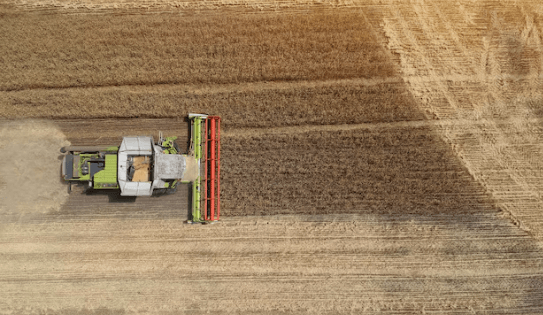
Adoption is being driven by a labor scarcity that has been growing for years. According to USDA statistics from 2024, during the busiest planting and harvesting seasons, farmers reported an average of more than two open positions per operation. Between 2020 and 2024, the number of applications for the H-2A visa program, which permits farms to hire temporary agricultural workers from overseas, increased by more than 20 percent annually, but it was still insufficient to close the deficit. Recruitment has become increasingly difficult due to the physical demands and seasonal nature of farm labor, the aging of the laborers who once performed this work, and the decline in the number of young people remaining in rural communities. Every year, US farms spend almost $53 billion on labor. The motivation to automate focuses when that cost continues to rise and there are no workers.
The argument for swarm-style operations, which use multiple smaller autonomous units instead of a single large piloted machine, is based in part on resilience and in part on agronomy. A traditional tractor with a lot of power can weigh up to 25 tons. Over time, the concentration of the weight on a small number of soil contact sites results in compaction, which lowers drainage, restricts root penetration, and diminishes yields. With reduced ground pressure per unit, a fleet of lightweight autonomous cars spreads the same amount of labor among more machines. The soil performs better. Additionally, the remaining robots in the fleet continue to function even if one of them experiences a mechanical issue, which is inevitable for anything with moving parts. Compared to a single massive equipment, where a single malfunction might, in the worst case scenario, stop an entire operation, that type of reliability is different.
The weather window argument is less technical, but given the current situation, it may be more essential. The time when soil temperature, moisture, and weather coincide to promote germination and yield is known as the “optimal planting window,” and it has become less predictable and, in some places, shorter. Autonomous systems are able to operate through the fog in the early morning, the night, and the shift changes that typically cause a manned operation to slow down. Instead of working single daily shifts, a farm that can plant continually over a 72-hour window is covering ground that could otherwise languish till conditions worsen.
A straightforward “robots replacing workers” story obscures the complexity of the workforce. Because the skills needed to remotely monitor a fleet of autonomous machines differ from those needed to drive one, the farms implementing autonomous tractors are reassigning personnel rather than laying them off, or finding it difficult to do so. “The position of “ag tech operator” necessitates familiarity with data dashboards, remote diagnostics, and sensor troubleshooting. Some farmers who have implemented autonomous systems have discovered that the employees who adjust to this change are the ones they most desire to retain. Others have found the shift more difficult than anticipated, especially in older businesses where the majority of institutional knowledge is held by individuals who have operated the same machinery for decades.
