
Close Menu
GlofiishGlofiish
    Facebook X (Twitter) Instagram
    Facebook X (Twitter) Instagram
    GlofiishGlofiish
    Subscribe
    • Home
    • Glofiish Devices
    • Technology
    • Tech Devices
    • News
    • About
    • Privacy Policy
    • Contact Us
    • Terms Of Service
    GlofiishGlofiish
    Home » How Brisbane Engineers Designed an Offshore Wave Generator That Outpowers Wind Turbines
    Technology

    How Brisbane Engineers Designed an Offshore Wave Generator That Outpowers Wind Turbines

    Taylor LoweryBy Taylor LoweryAugust 7, 2026Updated:August 7, 2026No Comments4 Mins Read
    Facebook Twitter Pinterest LinkedIn Tumblr Email
    Share
    Facebook Twitter LinkedIn Pinterest Email

    In the comparatively protected waters of King George Sound off the southern coast of Western Australia, close to the port town of Albany, a 22-meter steel device spent six months doing what wave energy engineers have been attempting to do consistently for decades: reliably producing electricity from ocean swells over an extended period of time and generating enough data to determine whether the thing might actually work at scale. On May 1, 2025, the UWA M4 project hoisted its prototype out of the ocean following 300 hours of power generation and 130 days of operation. It included three terabytes of data. Over the next few months, the researchers analyzed what they had.

    The M4 may be the most meticulously serious piece of engineering to come out of Australia’s wave energy industry, but it isn’t the most showy. Designed by the Marine Energy Research Australia team at the University of Western Australia, the device uses the hinging motion between its triangular forward frame and trailing arm to capture energy. It is constructed from structural steel beams and four steel floater buoys, and it was deployed with funding from the Western Australian State Government and the Blue Economy CRC. The hinge powers a generator as waves shift the portions in relation to one another. The idea is straightforward. It is much more difficult to get it to live, function, and generate useful data in actual open-water circumstances over an extended length of time, which is why the Albany trial’s completion is a meaningful advancement rather than only an announcement.

    In this tale, Queensland has its own thread that extends further back. Wave motion drives air thru chambers and into turbines in the Wave Mill, a modular pontoon system tested at the Gold Coast. The Queensland Government supported the introduction of the Nautilus, a two-megawatt attenuator-type device that was positioned as a large-scale deployable technology. Each unit measured 50 by 200 meters. Both showed that Australian engineering teams had been considering the unique advantages of wave energy over wind and solar for years, not as a rival to replace those technologies but rather as a supplement, solving the consistency issue that ocean waves mainly do not have.

    Wave energy has always had a simple physics justification. The density of water is around 830 times that of air. A wave has a lot more kinetic energy per unit volume than a wind blast with the same speed. A well-designed wave energy device is absorbing more energy rather than less in harsher conditions, where wind turbines frequently need to shut down for safety reasons. This density advantage means that a wave energy device can theoretically extract significant power from a physically smaller footprint than an equivalent wind turbine. The southern Australian coastline is one of the world’s most energy-rich wave habitats since it consistently experiences Southern Ocean swells throughout the year.

    The density argument may not be as practically significant as the consistency advantage. About two to six hours beforehand, wind forecasting is accurate. Because swells produced by storms thousands of kilometers distant travel consistently across open sea before arriving, ocean swell forecasts are accurate three to five days in advance. For grid operators attempting to balance supply and demand, this predictability is extremely essential. A wind farm whose production is still unknown tomorrow morning is not the same type of grid asset as a wave array that can be predicted to deliver a known output five days in advance.

    In order to compete first with diesel power in rural areas rather than grid-scale generation, Perth-based startup WaveX, which was awarded a government funding in late 2024, is targeting a purposefully modest entry point: ten-meter tubes with a 30-kilowatt capacity, sufficient for about six households. Recognizing that wave energy’s cost issue has been partially a procurement and deployment one rather than just a physics one, the project’s founder, Simon Renwick, added supply chain expertise from the offshore oil and gas business to the project. The economics differ from those of previous academic prototypes that required custom fabrication if the parts and installation techniques can be obtained at competitive prices from businesses that currently operate in offshore locations.
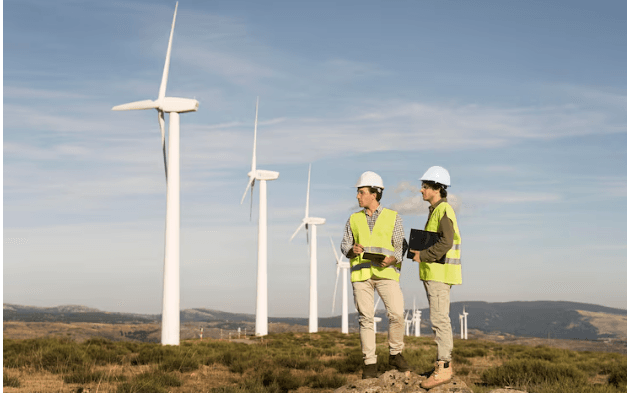
    How Brisbane Engineers Designed an Offshore Wave Generator That Outpowers Wind Turbines
    How Brisbane Engineers Designed an Offshore Wave Generator That Outpowers Wind Turbines

    In collaboration with TechnipFMC, Bombora, which operates throughout Perth and the UK, has been testing its mWave technology—submerged rubber membrane modules that compress successively as waves pass overhead, driving air into ducts and toward a turbine—off Pembrokeshire in Wales and in Australian waters. In severe storm circumstances, when surface-mounted devices are most vulnerable to structural concerns, the submerged method may provide a survivability benefit.

    Brisbane Engineers Offshore Wave Generator Oscillating Water Column device Outpowers Wind Turbines Queensland Government University of Western Australia
    Share. Facebook Twitter Pinterest LinkedIn Tumblr Email
    Taylor Lowery
    • Website

    Taylor Lowery is a senior editor at glofiish.com, a technology writer, and a true circuit enthusiast. She works in the tech sector, so she does more than just cover it. Taylor works for a smartphone company during the day, which gives her a firsthand look at how gadgets are designed, manufactured, promoted, and ultimately placed in people's hands.Her writing is unique because of this insider viewpoint. Taylor makes the technical connections that other writers overlook, whether she's dissecting the silicon architecture of a new flagship chipset, analyzing the implications of a significant Android update for actual users, or tracking the effects of a new AI model announcement across the mobile industry.Her editorial focus covers every aspect of the current tech stack, including smartphone software and hardware, artificial intelligence (from large language models and generative tools to on-device inference), and the broader innovation trends influencing the direction of the consumer technology sector. She is especially passionate about the nexus of AI and mobile computing, which she feels is still in its most exciting early stages.

    Related Posts

    The Silicon Dawn , What Happens When Artificial General Intelligence Surpasses Human Capability?

    August 7, 2026

    The AI Copyright Stalemate , Inside the High-Stakes Lawsuit Threatening Silicon Valley

    August 7, 2026

    Inside the Australian Agricultural AI System Predicting Rainfall with 99% Precision

    August 6, 2026
    Leave A Reply Cancel Reply

    You must be logged in to post a comment.

    News

    Inside the Toronto Lab Using AI to Predict Viral Mutations Before They Emerge

    By Taylor LoweryAugust 7, 20260

    Omicron has been anticipated by the model. The shape of it, not the name, the…

    The Bio-Printed Organ Era , Inside the San Francisco Lab Printing Human Kidneys on Demand

    August 7, 2026

    The Synthetic Reality Crisis , How Photorealistic AI Media Is Eroding Public Trust in Journalism

    August 7, 2026

    The Silicon Valley AI Bubble , Why Top Investors Warn a $2 Trillion Correction Is Imminent

    August 7, 2026

    Why Vancouver Tech Engineers Are Building Sovereign AI Networks on Legacy Glofiish Boards

    August 7, 2026

    How AI-Driven Material Discovery Is Unlocking Battery Technologies in Months Instead of Decades

    August 7, 2026

    The Silicon Dawn , What Happens When Artificial General Intelligence Surpasses Human Capability?

    August 7, 2026

    From Taipei Factories to Wall Street Portfolios , The Strange Afterlife of E-Ten Communications

    August 7, 2026

    The AI Copyright Stalemate , Inside the High-Stakes Lawsuit Threatening Silicon Valley

    August 7, 2026

    How Brisbane Engineers Designed an Offshore Wave Generator That Outpowers Wind Turbines

    August 7, 2026
    Disclaimer

    Glofiish.com’s content, which includes market reporting, technology analysis, AI commentary, and device coverage, is solely meant for general informational and educational purposes. Nothing on this website is intended to be financial, investment, legal, or professional technology advice specific to your situation.

    We’re strongly advise all readers to seek independent professional financial advice from a qualified financial adviser before making any financial, investment, or purchasing decisions based only on information found on this website. Technology markets are unstable; product availability, cost, and performance attributes fluctuate quickly.

    Facebook X (Twitter) Instagram Pinterest
    • Home
    • Glofiish Devices
    • Technology
    • Tech Devices
    • News
    • About
    • Privacy Policy
    • Contact Us
    • Terms Of Service
    © 2026 ThemeSphere. Designed by ThemeSphere.

    Type above and press Enter to search. Press Esc to cancel.