

A printer that hardly resembles the inkjet on your desk is depositing something remarkable onto a scaffold no bigger than a postage stamp in a lab at Harvard’s Wyss Institute. The substance that is being deposited is living. Human cells, including smooth muscle cells, endothelial cells, and supporting tissue, are suspended in a hydrogel that maintains their position during placement and permits them to reorganize as they settle. The printer travels in exact, preprogrammed arcs. What’s being constructed appears to be the start of a blood vessel under a microscope.
The technology being developed at Wyss, Organovo’s San Diego facility, the Murdoch Children’s Research Institute in Melbourne, and dozens of smaller labs across the US and Europe is called 3D bioprinting. Its long-term goal would have seemed firmly in the realm of science fiction twenty years ago: printing a functional human kidney, made from a patient’s own cells, shaped to the exact dimensions of the organ it will replace, and immunologically matched so the body won’t reject it.
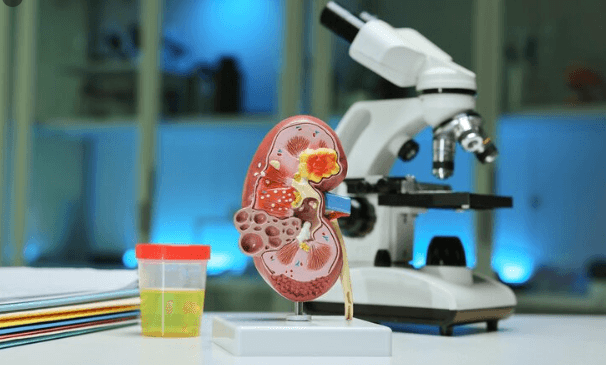
There is currently no such organ. That needs to be made very obvious since there is a big difference between what technology can accomplish now and what the idealized version of this story would look like. Currently, the labs are creating kidney organoids, which are tiny structures that mimic some of the functions of kidney tissue on a small scale. They are sometimes referred to as mini-kidneys. In collaboration with Organovo, a team from the Murdoch Children’s Research Institute published research showing that bioprinted kidney organoids could create tissue sheets big enough to be regarded as a step toward transplant-scale structures. These organoids could be used to screen medications for kidney toxicity in ways that more accurately predict human response than animal models. These are real contributions to science. They cannot be transplanted like kidneys.
When asked how distant the field is from its ultimate goal, researchers most frequently bring up the vascularization issue. A network of blood arteries tiny enough to reach each cell cluster within a printed kidney structure is required; these capillaries are smaller than a human hair and branch and rebranch in patterns that have developed over millions of years. Any printed structure larger than a certain size would perish from oxygen starvation without the network. The reason Harvard’s 2024 work on printing vascular networks with the proper shell-and-core architecture of actual blood arteries was noteworthy is that it transformed this issue from theoretical to practically attainable on a modest scale. The next step is to scale it to organ size, which is a big one.
Because xenotransplantation is addressing the same challenge in a different way, it is noteworthy that this parallel track is taking place. Tim Andrews, a 66-year-old patient with end-stage renal illness, had the first transplant of a genetically modified pig kidney from Massachusetts General Hospital in January 2025. The kidney was created by eGenesis with 69 distinct gene alterations. For the first time in more than two years, Andrews was able to forego dialysis. In February, a second patient underwent a transplant. These are animal organs that have been altered to make them less immunologically alien to humans; they represent an alternative approach to the same donor scarcity issue that bioprinting is attempting to address. The two strategies involve racing for the same goal on parallel tracks rather than directly competing.
The promise of something xenotransplantation cannot provide—a kidney generated from the patient’s own cells—is the reason bioprinting draws the investment and scientific attention it does, even if it is farther from clinical deployment than xenotransplantation. One of the main side effects of kidney transplantation is rejection, which is the immune system fighting a transplanted organ as alien tissue. This requires lifelong immunosuppressive medications, which have significant health concerns of their own. Theoretically, the recipient’s body would not recognize a bioprinted organ made from their own stem cells. No denial. Immunosuppression is absent. Just a kidney that works.
