

A robotic arm in a national research facility’s chemistry lab is conducting battery experiments at three in the morning while no one is around. This would have seemed nearly comical twenty years ago. Compounds are mixed, charge cycles are measured, failures are noted, and all of this information is fed back into an AI system that will modify the subsequent applicant prior to the start of the midnight shift. When the researchers arrive in the morning, they discover not only the outcomes of the hypotheses from the day before, but also improved recommendations for a dozen more tests that are already scheduled and prepared. The cycle never ends. There is no sleep in the lab.
In 2026, there will be a significant change in the way materials science, particularly battery materials science, is conducted. This type of independent experimentation is just one aspect of that change. Finding a novel battery material required a human chemist to formulate a theory, combine compounds, test them, obtain results, make adjustments, and test again for the majority of the 20th century. It took years or decades for a suitable candidate to emerge from that cycle, which was repeated thousands of times. There are significantly more potential material combinations in any given design space than any human team could methodically investigate over the course of a career. As a result, advancements were made gradually over several generations of researchers and occurred in bursts of insight.
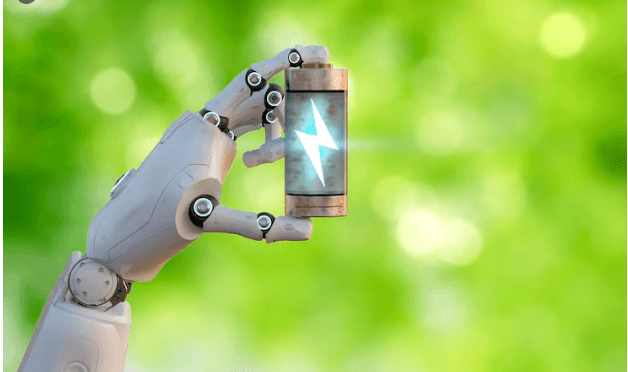
AI systems are doing more than just speeding up searches. They are taking a radically different approach to making it work. The traditional method was intuition-driven chemistry, which involved starting with a known molecule and modifying it. The AI approach, in particular what researchers refer to as inverse design, begins with the desired properties and works backward: what molecular structure would result in a solid electrolyte that doesn’t contain lithium, maintains stability above 200 degrees, and charges in fifteen minutes? In contrast to the years that a conventional literature-search-and-experiment cycle would take, the AI creates candidates, computationally screens them for atomic stability, and moves the most promising to physical synthesis—often in a matter of weeks.
One of the best examples of what this looks like at scale came from Microsoft’s work with Azure Quantum Elements. Instead of the decades that a human-led sequential screening would take, the researchers used computing to screen 32.6 million candidate materials in 2023. Eighteen of those millions of candidates were selected by the models for physical synthesis. In less than nine months, one of those—a novel solid-state electrolyte compound—went from computational prediction to physical characterization. According to the researchers involved, it would have taken about twenty years to reach the same candidate by the traditional route. The order of magnitude is more important than the accuracy of that estimate: weeks versus decades is not a slight improvement.
Although it employed a different approach, Google DeepMind’s GNoME system, which was released in November 2023, yielded results at a similar scale. 2.2 million previously unidentified stable crystal structures were predicted by the model, adding 380,000 of the most stable to a database that is accessible to researchers worldwide. The foundation of materials science is stable crystal structures; without understanding which atom combinations may exist physically in a stable form, you cannot even start to determine whether they have practical qualities. The field now has a considerably wider area to investigate because to GNoME, which increased the known map of stable materials by around an order of magnitude.
Since the supply chain for lithium-ion batteries has grown to be one of the more politically complex aspects of the energy transition, the lithium question lies at the heart of much of our effort. Demand forecasts for electric vehicles and grid storage indicate that existing lithium supply chains will be challenged in ways that cause both geopolitical and economic risk. Lithium mining is concentrated in a few countries, and the process is environmentally damaging. This limitation is being actively addressed by AI-assisted discovery, which includes solid-state electrolytes that require less lithium per unit of energy stored, sodium-ion battery materials, and completely lithium-free substitutes. Reducing the amount of lithium in viable battery designs by 70% or more is a current research objective at numerous major labs, not just a theoretical desire.
There is still a gap between commercial production and computational discovery that needs to be acknowledged. Large amounts of engineering work—manufacturing process development, quality control at scale, cost reduction, and supply chain integration—separate a battery candidate that has been validated in a research facility from a battery that can be purchased in an electric vehicle. The discovery process has been shortened using AI.
The engineering and scaling phase, which can take ten years in and of itself, hasn’t been significantly shortened yet. The most serious practitioners in this field are painting a cautiously particular picture: AI evolves when candidates are discovered, not necessarily when products hit the market. That remains a truly noteworthy shift. It indicates that compared to ten years ago, the pipeline of candidates undergoing testing is far larger and proceeding more quickly. What emerges will rely on the subsequent engineering effort and industry investment.
