

The Chicago Board of Trade building on South LaSalle Street still has a trading floor. The architecture remains intact, including the high ceilings, the tiered steps, and the pneumatic tube system that carried order slips prior to the obsolescence of order slips in the digital age. The noise has nearly disappeared. There is now silence in the pits where hundreds of traders in colored jackets used to yell prices and make hand signals using a vocabulary that took years to acquire.
The actual trading takes place in server rooms in Aurora, Illinois, where the data centers of CME Group are situated so close to the exchange’s matching engines that the fiber optic runs are measured in meters rather than kilometers. Those who can yell the loudest in an open-outcry pit are not the most important persons in contemporary Chicago trade. They are capable of creating the most intelligent and quick algorithms.
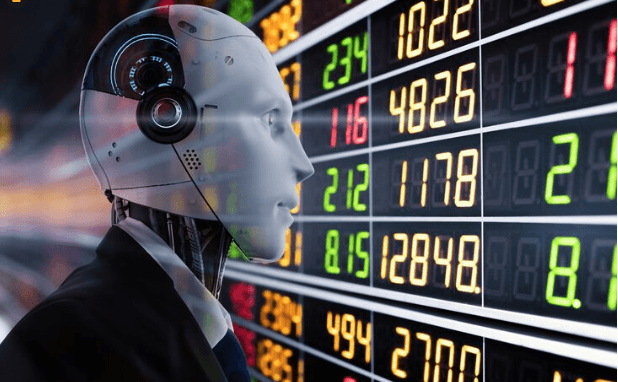
The transition from open-outcry to electronic trading took about 20 years, from the early 1990s to the mid-2010s. However, when CME Group removed the majority of its physical pits in 2015, it was formalizing a shift that had already occurred in volume figures. Over 99 percent of trades were being completed electronically by that time. As a marketing representation of the appearance of financial markets, the pit’s theater remained valuable. The actual markets have long since switched to automated systems.
It is more difficult to explain what took the place of the pit because it is invisible and moves too quickly to be seen in any traditional sense. The pace at which Chicago’s modern quantitative trading is conducted makes the term “high frequency” seem insufficient. In microseconds, or millionths of a second, orders are created, sent, matched, and verified. In the most competitive organizations, the delay between an event in one market and a trading algorithm reacting to its consequences in another is measured in nanoseconds. This is not a speed at which humans can operate. Approximately 150 milliseconds is the fastest human reaction time to a visual stimuli. An algorithm has already responded to a price change with hundreds of judgments by the time a human trader notices it.
Despite appearances, this is hardly a clear-cut win for the machines. The artificial intelligence (AI) systems used in today’s electronic markets are incredibly quick and proficient in the jobs for which they were created. Additionally, they are brittle in some ways, as market practitioners have learned from sometimes terrible experience.
A large portion of the May 2010 Flash Crash, in which the Dow Jones Industrial Average fell by over 1,000 points in a matter of minutes before rising nearly as quickly, was caused by algorithmic interaction that neither a single company nor a human was in a position to stop in time. The post-mortem research revealed feedback loops between various automated tactics that responded to one another’s actions in ways that increased rather than decreased price movement. The market bounced back. However, under the correct circumstances, the experience established a benchmark for what pure algorithmic trading without sufficient human circuit breakers may generate.
The companies that control contemporary Chicago trade, such as Citadel Securities, Virtu Financial, DRW, and Jane Street, function in a way that is neither entirely automated nor entirely human. Signal extraction and order execution are handled by the algorithms at machine speed. At monitoring stations, human quants and risk managers keep an eye on the systems and have the power to step in if market conditions deviate from the historical parameters used to train the models. They are searching for instances in which the algorithm’s reaction to an anomalous occurrence begins to resemble a feedback loop that causes a flash crash rather than reasonable price discovery. The trades are not being made by humans. Whether the machine should continue producing them is up to the human.
Coverage of AI’s speed advantage over human traders frequently ignores the hostile aspect of contemporary quantitative trading. The issue facing large institutional investors, such as mutual funds, pension funds, and sovereign wealth funds that execute trades on behalf of millions of beneficiaries, differs from that of the algorithms. They must transfer substantial amounts of an asset without turning the market against them.
A fund attempting to sell $500 million worth of S&P 500 futures cannot just place one order because the algorithms monitoring the order book will determine the amount of the request and adjust prices before it is filled. In response, institutional investors have created order execution algorithms that mask the underlying objective by breaking up large orders into thousands of smaller ones that are timed and randomized. In response, the algorithms have created pattern recognition software that can detect hidden large orders in spite of fragmentation. Since electronic trading turned the order book into a data source rather than merely an execution tool, there has been an arms race.
