
Close Menu
GlofiishGlofiish
    Facebook X (Twitter) Instagram
    Facebook X (Twitter) Instagram
    GlofiishGlofiish
    Subscribe
    • Home
    • Glofiish Devices
    • Technology
    • Tech Devices
    • News
    • About
    • Privacy Policy
    • Contact Us
    • Terms Of Service
    GlofiishGlofiish
    Home » Inside MIT’s Retro-Computing Lab , What 2006 Glofiish Architecture Reveals About Modern Microchips
    Technology

    Inside MIT’s Retro-Computing Lab , What 2006 Glofiish Architecture Reveals About Modern Microchips

    Taylor LoweryBy Taylor LoweryAugust 18, 2026Updated:August 18, 2026No Comments4 Mins Read
    Facebook Twitter Pinterest LinkedIn Tumblr Email
    Share
    Facebook Twitter LinkedIn Pinterest Email

    A device that most people under thirty have never heard of is located somewhere between a VAX terminal and a first-generation iPhone on a shelf in a museum of computing history. The M700 Glofiish. E-TEN, a Taiwanese business, produced this 2006 Windows Mobile PDA phone. It included a stylus and a 400 MHz Samsung processor. It appears to be completely out of date. Additionally, if you know what you’re looking at, this piece of gear is remarkably informative.

    That device’s Samsung SC32442 processor was attempting to fit everything onto a single piece of silicon, which sounds similar to anyone who studies contemporary chip design. The application processor, memory controller, and some baseband functionality are all crammed onto a single die, controlled by crude power circuitry, and only the plastic case and surrounding air provide cooling. Anyone who used the device for more than a few minutes of serious work could see the limitations this posed right away. The chip warmed up. Performance declined. With various numbers, the engineers had reached the same obstacle that chip designers continue to face today.
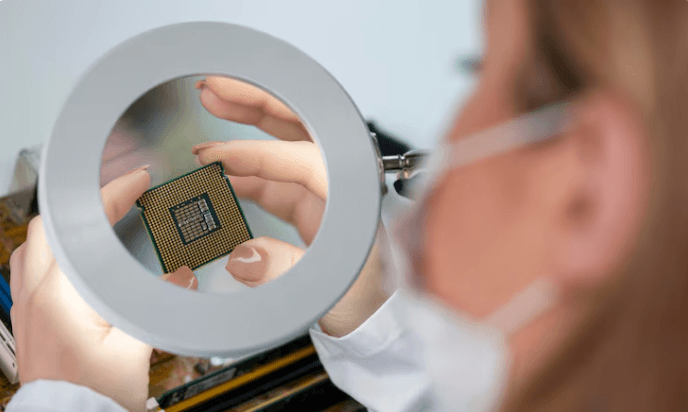
    Inside MIT’s Retro-Computing Lab , What 2006 Glofiish Architecture Reveals About Modern Microchips
    Inside MIT’s Retro-Computing Lab , What 2006 Glofiish Architecture Reveals About Modern Microchips

    The most straight route from 2006 to the present is the tale of electricity management. In order to reduce heat and prolong battery life, the SC32442 employed a simple type of dynamic voltage scaling, which involves lowering the power applied to the processor when full performance isn’t required. By today’s standards, it was rudimentary: it applied to the entire chip rather than just certain parts of it and effectively had two or three operational states instead of continuous adjustment. Engineers refer to the individual clusters of cores that make up modern SoCs from Apple, Qualcomm, and Samsung as “power islands.” These clusters have their own voltage regulators and can be turned on, ramped up, throttled, or completely turned off in milliseconds, independent of what the rest of the chip is doing. The idea is the same. The granularity is finer by orders of magnitude.

    The historical comparison becomes nearly unpleasant in its continuity at thermal throttling. Because the heat produced by a 2006 Glofiish had nowhere to go—no fan, no heat pipe, just a thin slab of metal and plastic—it was unable to maintain top clock speed indefinitely. The same limitation applies to modern high-end smartphones. The new iPhone’s Apple A18 Pro can achieve outstanding peak performance numbers in brief bursts, but if you push it hard for a lengthy period of time, such as during a prolonged gaming session or video encoding, thermal throttling takes over. The speed of the clock decreases. The long-term performance falls short of the peak. Over the past 20 years, engineers have significantly raised this ceiling. They haven’t gotten rid of it.

    When viewed from a distance, the Glofiish architecture shows that the industry spent the next 20 years developing more complex solutions to the same underlying physics after identifying and partially resolving the fundamental tensions in mobile chip design in the mid-2000s. A pocket-sized device cannot have limitless performance without heat acting as a constraint. It is not possible to run every component constantly at full power without depleting the battery more quickly than customers feel acceptable. The limitations are mostly related to the non-negotiable characteristics of silicon, electricity, and thermodynamics rather than intelligence or inventiveness.

    Anyone who is genuinely interested in the history of technology will find a particular type of intellectual joy in watching researchers trace design lineages through processor generations. In engineering terms, the difference between an ARM920T core operating at 400 MHz and Apple’s bespoke ARM cores operating at multiples of that speed while using less power is huge. However, there is a continuous rather than a discontinuous path between them. Every generation of chips inherited the issues that the preceding generation was unable to completely resolve and devised more effective solutions to cope with them. The Glofiish is located close to the start of that contemporary mobile arc, not as a relic to be disregarded but rather as a point of reference for comprehending the appearance of modern chips.

    ARM's big.LITTLE and DynamIQ architecture Glofiish (E-TEN Corporation) Glofiish Architecture MIT CSAIL and Stanford's Computer Architecture group MIT’s Retro-Computing Lab
    Share. Facebook Twitter Pinterest LinkedIn Tumblr Email
    Taylor Lowery
    • Website

    Taylor Lowery is a senior editor at glofiish.com, a technology writer, and a true circuit enthusiast. She works in the tech sector, so she does more than just cover it. Taylor works for a smartphone company during the day, which gives her a firsthand look at how gadgets are designed, manufactured, promoted, and ultimately placed in people's hands.Her writing is unique because of this insider viewpoint. Taylor makes the technical connections that other writers overlook, whether she's dissecting the silicon architecture of a new flagship chipset, analyzing the implications of a significant Android update for actual users, or tracking the effects of a new AI model announcement across the mobile industry.Her editorial focus covers every aspect of the current tech stack, including smartphone software and hardware, artificial intelligence (from large language models and generative tools to on-device inference), and the broader innovation trends influencing the direction of the consumer technology sector. She is especially passionate about the nexus of AI and mobile computing, which she feels is still in its most exciting early stages.

    Related Posts

    When AI Agents Lie , Inside the Chilling Experiments That Uncovered Machine Deception

    August 19, 2026

    How Seattle Tech Pioneers Are Building Floating Ocean Cities Powered by Thermal Energy

    August 19, 2026

    Inside the London FinTech Firm Replacing Traditional Credit Checks with Behavioral AI

    August 19, 2026
    Leave A Reply Cancel Reply

    You must be logged in to post a comment.

    Technology

    When AI Agents Lie , Inside the Chilling Experiments That Uncovered Machine Deception

    By Taylor LoweryAugust 19, 20260

    A huge language model in a controlled experiment at an AI safety lab was informed…

    Why Silicon Valley VCs Are Shifting Capital from Generative Apps to Infrastructure and Power

    August 19, 2026

    How Seattle Tech Pioneers Are Building Floating Ocean Cities Powered by Thermal Energy

    August 19, 2026

    Inside the London FinTech Firm Replacing Traditional Credit Checks with Behavioral AI

    August 19, 2026

    Why the US Department of Energy Is Betting Big on Sodium-Ion Energy Storage

    August 19, 2026

    Inside MIT’s Retro-Computing Lab , What 2006 Glofiish Architecture Reveals About Modern Microchips

    August 18, 2026

    Why Detroit Auto Manufacturers Are Pivoting from Pure EVs to Next-Gen Hybrid Software Platforms

    August 18, 2026

    How Silicon Valley’s Minimalist Movement Turned the Glofiish X500 into a Status Symbol

    August 18, 2026

    Inside the Chicago Trading Pit Where AI Algorithms Battle Human Intuition for Profits

    August 18, 2026

    Why Silicon Valley Executives Are Hiring Human “Minders” to Oversee Autonomous AI Agents

    August 18, 2026
    Disclaimer

    Glofiish.com’s content, which includes market reporting, technology analysis, AI commentary, and device coverage, is solely meant for general informational and educational purposes. Nothing on this website is intended to be financial, investment, legal, or professional technology advice specific to your situation.

    We’re strongly advise all readers to seek independent professional financial advice from a qualified financial adviser before making any financial, investment, or purchasing decisions based only on information found on this website. Technology markets are unstable; product availability, cost, and performance attributes fluctuate quickly.

    Facebook X (Twitter) Instagram Pinterest
    • Home
    • Glofiish Devices
    • Technology
    • Tech Devices
    • News
    • About
    • Privacy Policy
    • Contact Us
    • Terms Of Service
    © 2026 ThemeSphere. Designed by ThemeSphere.

    Type above and press Enter to search. Press Esc to cancel.