

When you stroll through some Singaporean neighborhoods at night, there’s a subtle difference that takes some time to identify. Before you realize they have changed, the streetlights react. The timing of traffic signal adjustments doesn’t seem haphazard. In a subtle, hard-to-express way, the city appears to be listening. It used to sound like science fiction. It’s only Tuesday more and more. As a result of a recent government initiative, Singapore has developed over 100 generative AI solutions that are integrated into its urban operations. It is far ahead of practically every other city on the planet, and the difference between it and the rest of the world is something to consider carefully.
Many people still view smart cities as a far-off idea because the typical framing around them tends to involve flying cars and shiny robots. However, the reality is far more widespread and far less dramatic. Technically speaking, any city that has incorporated sensors into its infrastructure—even something as unremarkable as an AI-adjusted streetlight—is already a smart city. It’s not the question of whether cities are getting smarter that is becoming more pressing. The question is whether the intelligence being incorporated into them is genuinely altering their structural operation or merely adding a more complex dashboard to the same sluggish bureaucracy that has always existed.
Key Facts & Context
| Topic | AI-Powered Smart Cities & Intelligent Urban Infrastructure |
|---|---|
| Definition | A smart city uses ICT, AI/ML, and IoT technologies to derive actionable insight from infrastructure, enhancing quality of life and safety for citizens |
| Market Size Projection | AI in smart cities market projected to reach USD 460.47 billion by 2034 |
| Mayor Adoption Gap | 90% of mayors globally want to engage with generative AI — yet only 2% are actively doing so, per a Bloomberg Philanthropies survey (2023) |
| Leading Example | Singapore — following a government initiative, the city-state developed over 100 generative AI solutions for urban operations |
| What AI-Native Cities Do Differently | Rather than using data to inform human decisions, AI-native infrastructure observes, decides, and adjusts operations automatically — in real time, without waiting for human escalation |
| Key Application Areas | Traffic flow management, energy consumption optimization, water systems, public health monitoring, permitting processes, and predictive safety systems |
| Core Risks | Data privacy concerns, citizen surveillance, cyber vulnerability of connected critical infrastructure, and risk of widening digital inequalities |
| McKinsey Assessment (March 2026) | AI-native public infrastructure is described as “a structural break rather than an incremental evolution” — cities beginning to behave like computing platforms |
Smart-city initiatives fell into that second category for the majority of the last ten years. After installing sensors, gathering data, and creating dashboards, human workflows, budget cycles, and interagency coordination continued essentially as before. Decisions were not made by data, but they were informed by it. It may not seem important, but that distinction is crucial. Cities are starting to act less like governments and more like computing platforms, monitoring conditions in real time and modifying operations without waiting for someone to escalate a request through three departments and a committee meeting. This is known as “a structural break rather than an incremental evolution,” according to a McKinsey analysis published in March 2026.
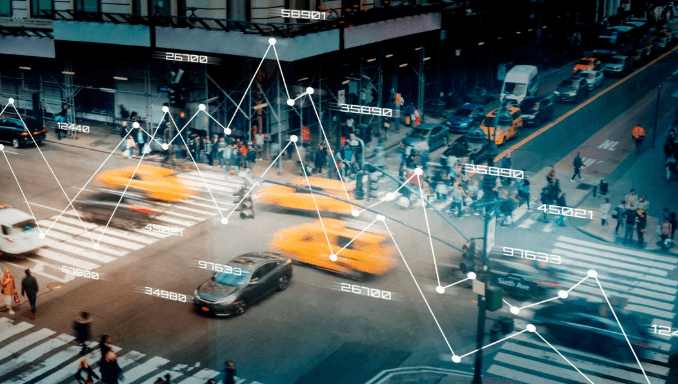
There are tangible consequences to that change. AI systems are currently being implemented in a number of cities to autonomously manage simultaneous real-time adjustments to public services, energy consumption, and traffic flow. Instead of responding to issues after they arise, these systems anticipate and address issues before the majority of residents even notice them. Since these systems are still relatively new and public infrastructure has a narrow margin for error, it’s possible that this sounds more seamless than it will actually be in practice. Longer commutes, less effective emergency responses, higher utility costs, and slower permitting are just a few of the tangible effects that cities that lag behind in this shift will experience.
Nine out of ten mayors in cities worldwide say they want to work with generative AI, according to a helpful survey statistic from Bloomberg Philanthropies. However, only 2% are genuinely making any significant progress in this regard. This discrepancy between declared intent and operational reality is caused in part by a lack of resources, in part by governance issues, and in part by a lack of creativity. Even when AI tools are available, many local governments still lack the technical infrastructure to implement them. Others, understandably, are wary of giving decision-making power to a system that the people did not elect and cannot readily challenge.
It would be incorrect to write off those reluctances as bureaucratic timidity because they are not illogical. There are genuine risks associated with this promise. A city’s “threat surface” is increased by connected critical infrastructure; more sensors and networked systems mean more possible points of entry for cyberattacks. Genuine AI-native urban management necessitates the collection of personal data at a scale that raises legitimate concerns about surveillance, data ownership, and what happens when governments choose to use the data for purposes other than traffic signal optimization. A truly more equitable and livable version of the smart city exists. Simply put, a different version is more popular.
It’s difficult to ignore the fact that cities with the most centralized governance structures are typically the ones pursuing AI infrastructure the fastest; Singapore is the most obvious example. Western democracies are acting more cautiously, and maybe for good reason, given their more dispersed power structures and robust privacy traditions. By 2034, the market for AI in smart cities is expected to reach $460 billion, indicating that the commercial momentum driving this change is virtually unstoppable regardless of how policymakers react. Therefore, whether or not AI-native cities will emerge is a more pertinent question than whether or not the residents will have had a meaningful say in what kind of city they truly desired. The majority of cities have yet to begin that conversation, which is already long overdue.
