

The speed at which a buzzword can disappear is peculiar. Three years ago, every magazine cover, keynote address, and awkward LinkedIn post featured the metaverse. Because of it, Mark Zuckerberg changed the name of his business.
Companies scrambled to purchase digital land parcels that were never used. Then, almost without warning, the topic of conversation changed. Nowadays, if you walk into a tech conference, you’ll hear murmurs about “spatial computing” in the same tone that people used to reserve for “the next internet.”
| Information | Details |
|---|---|
| Topic | The shift from Metaverse to Spatial Computing |
| Original Hype Peak | Late 2021 to early 2022 |
| Key Catalyst | Facebook’s rebrand to Meta (October 2021) |
| Meta’s Reality Labs Investment | Over $47 billion since 2020 |
| Notable Hardware | Apple Vision Pro, Meta Quest 3, Sony XR |
| Underlying Technology | AR, VR, LiDAR, edge AI, computer vision |
| Enterprise Adoption Areas | Manufacturing, healthcare, retail, logistics |
| Emerging Trend (2026) | Headset-free ambient mixed reality |
| Industry Voice Cited | Luis Oscar Ramirez, CEO of Mawari Network |
| Outlook | Gradual integration into everyday physical environments |
The failure of the underlying idea prevented the shift from occurring. The original packaging never quite fit, which is why it occurred. Meetings that gave people headaches after twenty minutes, blocky avatars without legs, and empty digital plazas were all uncomfortable aspects of the early metaverse demonstrations. Looking back, it seems like the industry oversold a partially constructed product and underestimated the harshness of the public when the promised magic fails to materialize.
In a recent exchange, Mawari’s founder, Luis Oscar Ramirez, stated quite bluntly that NFTs and the metaverse were always tied at the ankle. Each required the other to make a point, and when neither did, they both fell apart simultaneously. It’s a neat explanation, and most likely a reasonable one. Venture capital had already begun searching for a new frontier by the time ChatGPT appeared in late 2022. They received one from AI. Silently, the metaverse was pushed into the closet.
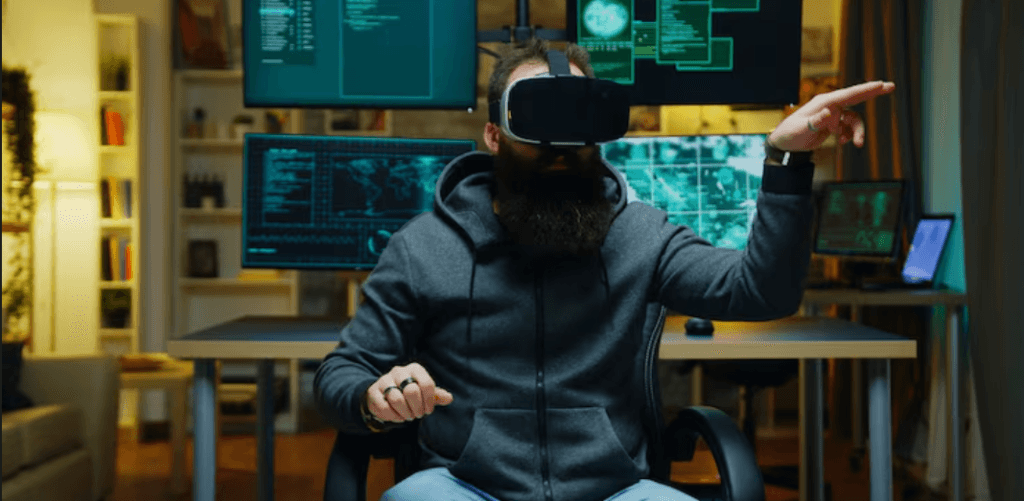
The official rebranding began with the release of Apple’s Vision Pro. Tim Cook never once used the M-word. Rather, he heavily relied on “spatial computing,” which sounds more like something a procurement officer might actually approve of than something from a science fiction book. It was a minor linguistic change with important ramifications. In terms of marketing, the same hardware that had been derided as a toy suddenly became a productivity tool. Investors may be correct when they say that the framing is more important than the underlying technology.
It’s intriguing to note how technology has moved away from headsets. If you speak with anyone working in this field, the next wave isn’t about putting more glass on your face. It involves integrating intelligence into hospital wards, factory floors, dashboards, and rooms. Without a tablet, a surgeon at a teaching hospital in Munich can now view patient vitals projected onto smart glass next to the patient’s bed. On concrete floors that are updated in real time, warehouse employees in suburban Texas follow glowing paths. It’s almost unremarkable, which is probably why it’s effective.
As is often the case with technologies that require patience, Enterprise is at the forefront. To cut down on training time, manufacturing facilities are using pilots where instructions are displayed directly on machinery. Retailers are experimenting with displays that change depending on who is in front of them; this development raises clear privacy concerns that no one seems eager to address just yet. As this develops, it’s difficult to ignore how much more subdued this rollout is in comparison to the 2021 metaverse circus. This time, no one is selling virtual handbags.
Whether the software becomes useful and the hardware becomes lighter will determine whether spatial computing escapes the same fate. According to Ramirez, the runway is about six years. That seems hopeful, but in 2005, smartphones also did. The term “metaverse” may be obsolete. The concept seems to have endured in a different and more useful form.
