

There’s a particular kind of fluorescent light that hums above the produce section of any large grocery store, and lately, walking under it feels different. The lemons are still stacked the way they always were.
The child is still wearing earbuds while replenishing yogurt. But somewhere up near the ceiling tiles, behind a smoked-glass dome the size of a softball, a camera is doing more than recording footage. It’s measuring the distance between your eyes.
| Information | Details |
|---|---|
| Topic | Biometric surveillance in U.S. retail |
| Primary Companies Cited | Wegmans, Amazon (Whole Foods, Amazon Go), Rite Aid |
| Technology in Use | Facial recognition, palm-to-pay, license plate readers, gait & voice tracking |
| Known Errors | At least 10 publicly reported false arrests linked to facial recognition, nearly all involving Black Americans |
| Related System | Flock (Automatic License Plate Reader network used in thousands of locations) |
| Regulatory Note | Rite Aid temporarily banned by the FTC after biased misidentifications |
| Public Concern | Shared corporate data potentially flowing to ICE and local police “BOLO” requests |
| Reference Source | Federal Trade Commission action on facial recognition |
| Year of Wide Adoption | Accelerating since 2022, expanding through 2026 |
Wegmans, the well-loved Northeastern chain that built its reputation on cheese counters and customer loyalty, recently confirmed it scans shoppers’ faces against internal lists of suspected shoplifters. That part isn’t new. What surprised people was the second sentence. The company also runs scans, on a case-by-case basis, against photos handed over by law enforcement. Suddenly the friendly chain you trusted with your weekly grocery run is functioning, in a small but real way, as an extension of the police.
It’s possible that most shoppers won’t blink. Convenience tends to win these arguments. Amazon’s palm-to-pay system at Whole Foods has spread quietly, and almost no one walks out muttering about biometric data. As John Talbott, a marketing lecturer at Indiana University, put it, checkout itself is friction, and friction is what retailers spend their lives trying to remove. Decades ago, store owners kept a notebook by the register listing the regulars they suspected of stealing. Today the notebook is a server farm, and the regulars are everyone.
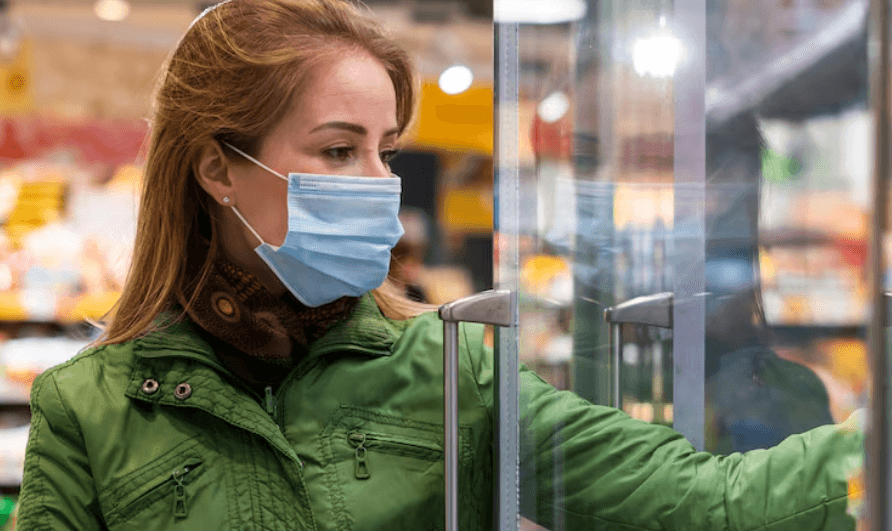
There’s a sense, watching this unfold, that we’ve slipped past a threshold without anyone announcing it. Cameras now track eye movement and gait. Voice patterns get logged. License plates get read by Flock cameras stationed in suburban parking lots, and that data, it turns out, has been quietly searched on behalf of federal immigration agencies through local police departments that often had no idea their feeds could travel that far. Towns have learned, sometimes from leaked records, that their residents’ driving habits had become national intelligence.
The technology also fails, and it fails unevenly. Rite Aid was temporarily barred from using facial recognition after its system kept flagging women and people of color as thieves who weren’t thieves at all. Anyone who has read about wrongful arrests tied to algorithmic mismatches, nearly all involving Black Americans, knows the pattern by now. The machine is confident. The machine is wrong. The person spends a night, or longer, in a cell.
Woodrow Hartzog, a Boston University law professor, made an observation that lingers. Companies, he said, are going to try to charge each of us the maximum we’ll tolerate. The data isn’t only about who’s stealing. It’s about how long you hesitate between buying name-brand cookies and less expensive ones, and what that indicates about your financial situation. He continued, “We don’t always realize how exposed it makes us.”
The silent accumulation is what worries proponents of civil liberties. A face scan here, a plate read there, a watchlist shared with a department two states over. None of it made a loud announcement. It’s not simple to choose not to participate. It hardly counts as consent when a little sign is taped next to the automated doors. And in a moment when federal immigration enforcement has shown an appetite for any data stream it can reach, the question of what a grocery chain owes its customers, beyond fresh bread and a working freezer aisle, has become surprisingly urgent.
It’s hard not to notice that buying milk shouldn’t feel like passing through a checkpoint. It’s unclear if anyone with the ability to slow this down agrees.
