
Close Menu
GlofiishGlofiish
    Facebook X (Twitter) Instagram
    Facebook X (Twitter) Instagram
    GlofiishGlofiish
    Subscribe
    • Home
    • Glofiish Devices
    • Technology
    • Tech Devices
    • News
    • About
    • Privacy Policy
    • Contact Us
    • Terms Of Service
    GlofiishGlofiish
    Home » Why the Next Breakthrough in Computing Will Come From Fungi
    Tech Devices

    Why the Next Breakthrough in Computing Will Come From Fungi

    Taylor LoweryBy Taylor LoweryMay 20, 2026No Comments4 Mins Read
    Facebook Twitter Pinterest LinkedIn Tumblr Email
    Share
    Facebook Twitter LinkedIn Pinterest Email

    If you enter a small lab at Ohio State at the appropriate time, you will see something that resembles a botany experiment rather than a serious computer project. From dehydrated mushrooms, wires emerge. The probes are attached to the caps with clips. Beside them, a laptop hums as it records electrical signals. At first glance, it seems almost ridiculous. Then you realize that these researchers are creating memory chips from fungi, something that ten years ago no one really thought to take seriously.

    The study isn’t presented as a moonshot; it was published in PLOS One in late 2025. It is described by the researchers in a modest, almost cautious manner. However, the implications continue to pull at you. Grown in trays, dried out, and wired up, shiitake and button mushrooms transitioned between electrical states about 5,850 times per second with about 90% accuracy. That’s not a question. Hardware engineers raise an eyebrow at a figure like that.

    It’s difficult to ignore the computing industry’s obstinate adherence to silicon. Everyone in the tech industry is aware that the bill is due because of rare-earth minerals, water-hungry factories, and data centers consuming electricity at a rate that is beginning to worry even the executives in charge of them. The industry seems to have been searching for a way out for years. DNA storage, photonics, quantum, and neuromorphic chips. A new candidate is paraded out every few months. Most fade silently. It may even outlive the cycle due to the peculiarity of the fungal angle.
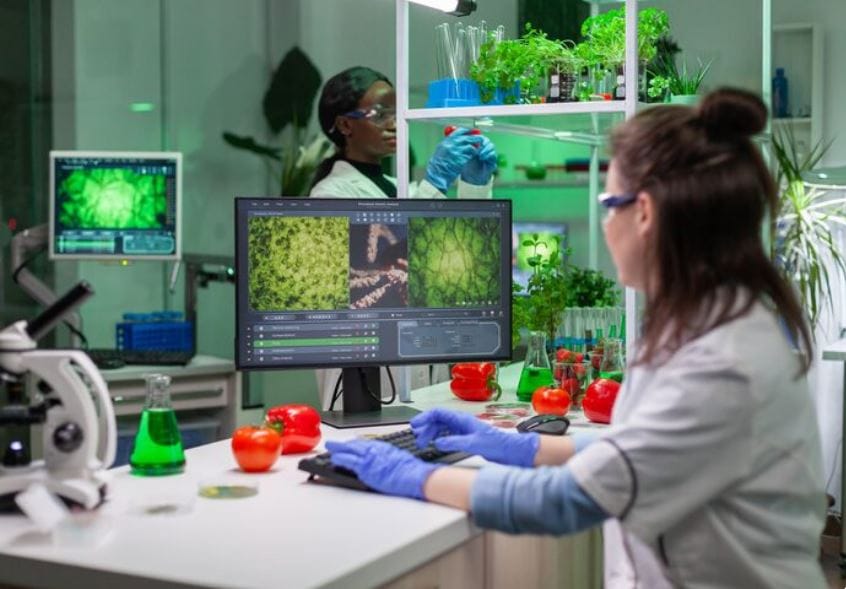
    Why the Next Breakthrough in Computing Will Come From Fungi
    Why the Next Breakthrough in Computing Will Come From Fungi

    Novelty is not what makes mycelium fascinating. What engineers spend billions trying to replicate is already done by the underlying biology. Neural tissue and fungal networks exhibit similar behaviors. Electrical spikes are conducted by them. They react to stimuli. They hold onto something that is similar to memory. Lead author John LaRocco has been direct about this: the team was pushing an existing property to see how far it could go rather than creating a new one. They pushed it. After being electrocuted for two months, the mushrooms continued to function.

    Beneath the research, there is a minor narrative detail that persists. The team did not redesign anything when performance declined at higher frequencies. All they did was connect more mushrooms. The system stabilized, which is how the brain makes up for this by adding more neurons. That is the kind of behavior that engineers typically have to design from the ground up. It came free here.

    Of course, skepticism is justified. The samples were large. Since real memristors are tiny, they are getting smaller.No one has been able to solve the issue of ake-based devices on that scale. The process of cultivation is slow. It will be extremely difficult to replicate across batches. Additionally, most innovative computing concepts have historically died between a working prototype and something that Intel or TSMC would actually manufacture. It appears that researchers are aware of this. Viable fungal memristors would need to be much smaller than what they constructed, according to LaRocco himself.

    However, there is a larger pull. This work was funded by the Honda Research Institute, which is noteworthy. Projects are typically not supported by corporate research arms unless an internal person believes there is a thread worth pulling. Biodegradable computing begins to look less like science fiction and more like a procurement strategy in wearables, aerospace components, and low-power edge devices.

    As you watch this develop, it seems unlikely that chips will be replaced by mushrooms in the coming year or even decade. It’s about a gradual change in engineers’ perspectives that the most effective computer ever created has always been organic, and perhaps the industry has been ignoring the solution for the past 70 years. It’s really unclear if fungi will prove to be that solution. However, a processor will eventually be developed by someone, somewhere. When they do, the lab will most likely have a subtle damp wood odor.

    Breakthrough in Computing
    Share. Facebook Twitter Pinterest LinkedIn Tumblr Email
    Taylor Lowery
    • Website

    Taylor Lowery is a senior editor at glofiish.com, a technology writer, and a true circuit enthusiast. She works in the tech sector, so she does more than just cover it. Taylor works for a smartphone company during the day, which gives her a firsthand look at how gadgets are designed, manufactured, promoted, and ultimately placed in people's hands.Her writing is unique because of this insider viewpoint. Taylor makes the technical connections that other writers overlook, whether she's dissecting the silicon architecture of a new flagship chipset, analyzing the implications of a significant Android update for actual users, or tracking the effects of a new AI model announcement across the mobile industry.Her editorial focus covers every aspect of the current tech stack, including smartphone software and hardware, artificial intelligence (from large language models and generative tools to on-device inference), and the broader innovation trends influencing the direction of the consumer technology sector. She is especially passionate about the nexus of AI and mobile computing, which she feels is still in its most exciting early stages.

    Related Posts

    The Hidden Tax on Budget Phones: How the Galaxy A57 Exposes an Industry Crisis

    May 20, 2026

    The Mac’s New DNA: What the M4-Powered iPad Air Says About Apple’s Master Plan

    May 20, 2026

    The ‘Slow Tech’ Movement: Designing Gadgets Meant to Last 50 Years

    May 20, 2026
    Leave A Reply Cancel Reply

    You must be logged in to post a comment.

    News

    The Hidden Tax on Budget Phones: How the Galaxy A57 Exposes an Industry Crisis

    By Taylor LoweryMay 20, 20260

    You’ll notice something strange if you walk into any mid-tier electronics store in Rawalpindi or…

    The Mac’s New DNA: What the M4-Powered iPad Air Says About Apple’s Master Plan

    May 20, 2026

    The Rise of the ‘Splinternet’: How Governments Are Building Their Own Webs

    May 20, 2026

    Why the Next Breakthrough in Computing Will Come From Fungi

    May 20, 2026

    The ‘Slow Tech’ Movement: Designing Gadgets Meant to Last 50 Years

    May 20, 2026

    The Psychological Impact of Growing Up with an AI Best Friend

    May 12, 2026

    How a 22-Year-Old Oxford Dropout Built the AI Agent Taking Over Wall Street

    May 12, 2026

    How AI is Quietly Destroying Workplace Trust—and How to Win It Back

    May 12, 2026

    The Resurgence of Airships: Tech’s Bizarre Plan for Zero-Emission Freight

    May 12, 2026

    Why Your Next Doctor’s Appointment Might Be with a Hologram

    May 12, 2026
    Disclaimer

    Glofiish.com’s content, which includes market reporting, technology analysis, AI commentary, and device coverage, is solely meant for general informational and educational purposes. Nothing on this website is intended to be financial, investment, legal, or professional technology advice specific to your situation.

    We’re strongly advise all readers to seek independent professional financial advice from a qualified financial adviser before making any financial, investment, or purchasing decisions based only on information found on this website. Technology markets are unstable; product availability, cost, and performance attributes fluctuate quickly.

    Facebook X (Twitter) Instagram Pinterest
    • Home
    • Glofiish Devices
    • Technology
    • Tech Devices
    • News
    • About
    • Privacy Policy
    • Contact Us
    • Terms Of Service
    © 2026 ThemeSphere. Designed by ThemeSphere.

    Type above and press Enter to search. Press Esc to cancel.