

In Estonia, there is a tiny courtroom where the bench is empty. Not a robe. No time to reflect. A face wrinkled with decades of legal experience, but no obvious weighing of the evidence. An algorithm receives a dispute from a litigant, such as a contractor who never completed the job or a landlord who refuses to return a security deposit, reads it, processes it, and makes a decision. It takes several minutes. The system works well. And more and more people are using that efficiency as an example.
Proponents of AI adjudication may be correct in one specific regard: small claims courts are not functioning properly in the conventional sense. Months are spent on backlogs. People who are already contesting amounts they can hardly afford to lose are exhausted by filing fees. Procedural delays frequently penalize poorer litigants more than wealthy ones, who can afford to wait, according to a 2025 analysis from the National Center for State Courts. There is a claim that AI could level the playing field. Decisions are made more quickly, expenses are reduced, and there are fewer people whose disposition on a particular Thursday could subtly tip the scales.
However, it’s difficult to ignore the tendency for enthusiasm to outweigh caution as this experiment is carried out, from Estonia’s pilot program to Brazil’s judges who have been caught using AI to draft opinions containing fake legal citations. The situation in Brazil is not insignificant. It serves as a caution. The harm is not hypothetical when a human judge relies on an AI tool that creates case law that never existed and then renders an enforceable decision based on that fiction. It strikes actual people. It is attached to actual verdicts.
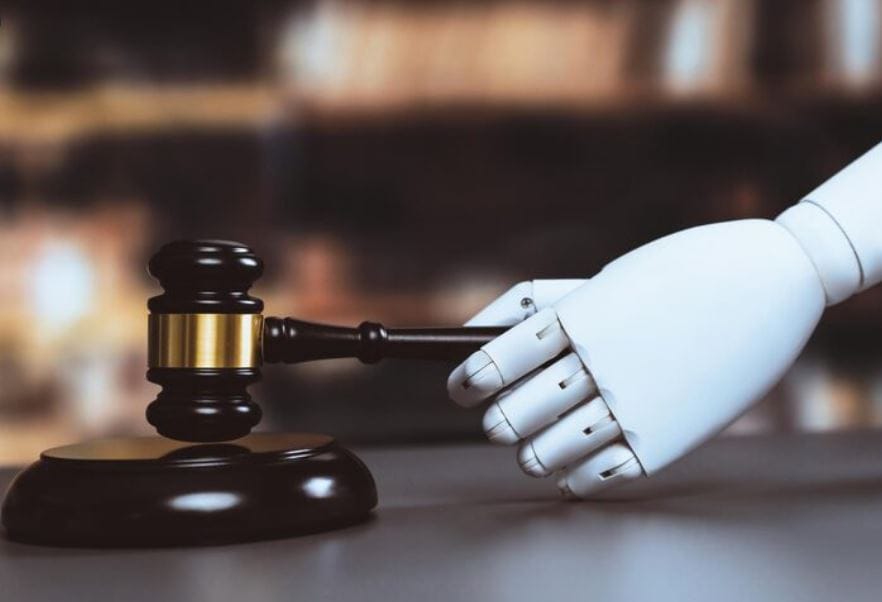
The fact that AI makes errors is not the main issue. People also make mistakes, sometimes quite spectacular ones. The issue is that AI errors have distinct personalities. When a human judge makes a poor decision, they can be questioned, investigated on appeal, and forced to explain why. Such scrutiny is difficult to apply to an algorithm that functions as a “black box,” as many AI adjudication systems currently do. If defendants are unable to understand the reasoning behind a recommendation, they may not be able to effectively contest it. Legal experts have started referring to this as a constitutional issue rather than just a minor annoyance. Fundamentally, due process necessitates that you comprehend the charges against you and the reasoning behind the decision. No matter how quickly it processes data, an opaque algorithm does not meet that requirement.
What the data knows and doesn’t know is another issue. AI systems that have been trained on past court rulings inherit the prejudices inherent in those rulings. Research on risk assessment tools currently in use for bail and sentencing has revealed that some systems disproportionately flag defendants from minority or lower-income backgrounds as high-risk. This is not due to malice, but rather to pattern recognition trained on decades of unfair policing and prosecution. The population most susceptible to these inherited distortions is served by small claims courts, which are frequently the venue where regular people fight landlords, employers, or consumer disputes. No one may notice until the pattern becomes indisputable if an AI system has picked up patterns that favor corporate defendants over individual claimants. This could happen simply because corporations file more claims and win more frequently. Thousands of cases will have been resolved by then.
Consistency is cited as a virtue by proponents of AI judges. Depending on whether they’ve had lunch or how they feel about a specific type of plaintiff, a human judge may make different decisions. An algorithm always uses the same criterion. That’s not totally incorrect. Uniformity has genuine value. However, consistency is only a virtue when a just standard is being used. A consistently biased algorithm is more consistently unfair and more difficult to detect, but it is not any more equitable than an inconsistent human judge.
The question of what courts are truly for is often overlooked in these discussions. They are not merely transactional dispute-resolution mechanisms. They are locations where a wrong is officially acknowledged by society and where someone in a position of authority can truly listen to someone who has been harmed and say, “Yes, that was unjust.” That has an irreducibly human quality. Not sentimental. structural. Judges must uphold impartiality, oversee their staff, and avoid bias in accordance with professional ethics regulations and oaths. These responsibilities are not easily transferred to software.
Whether any jurisdiction has adequately addressed what happens when an AI judge makes a disastrous mistake is still up for debate. Who bears responsibility? Who is the programmer? The system was implemented by the court administrator. The judge who, in theory, approved the final product without actually reading it? Judges are required by the Model Code of Judicial Conduct to oversee their employees, but no one has made a strong case that a judicial officer who reviews an AI recommendation is actually overseeing it in any significant way, as opposed to merely approving it.
Particularly in systems with a backlog, the efficiency argument for AI judges is alluring. However, efficiency in the absence of accountability is not justice. It’s management. Small claims courts deserve more than a quick response because they serve common people with real stakes and limited resources. They should have one that can be defended.
