

For me, it began as a persistent feeling during last year’s Mobile World Congress in Barcelona. A small company was discreetly showcasing a phone interface without any apps on a busy demo floor, amidst booths selling foldable screens and smartwatches with satellite connectivity. No icon grid. There are no attention-grabbing notification badges. All you had was a text bar and an AI that genuinely seemed to know what you wanted. Most of the crowd went by it. However, it remained.
Months later, that uneasy feeling reappeared when Cristiano Amon, CEO of Qualcomm, declared on stage that he wanted to “break the paradigm of the app construct.” Not change it. not make it better. Break it. That’s a startling statement about a system that has brought in hundreds of billions of dollars, influenced the careers of millions of developers, and radically altered how people go about their everyday lives for more than 20 years.
One of the most prosperous commercial ecosystems ever created is the app store model, which includes Google’s Play Store and Apple’s App Store. A world opens when you tap an icon. Easy. predictable. incredibly profitable. Year after year, Apple has taken 15 to 30 percent of each transaction inside that walled garden, creating something more akin to a toll road than a marketplace. And now the road is being rerouted, almost silently.
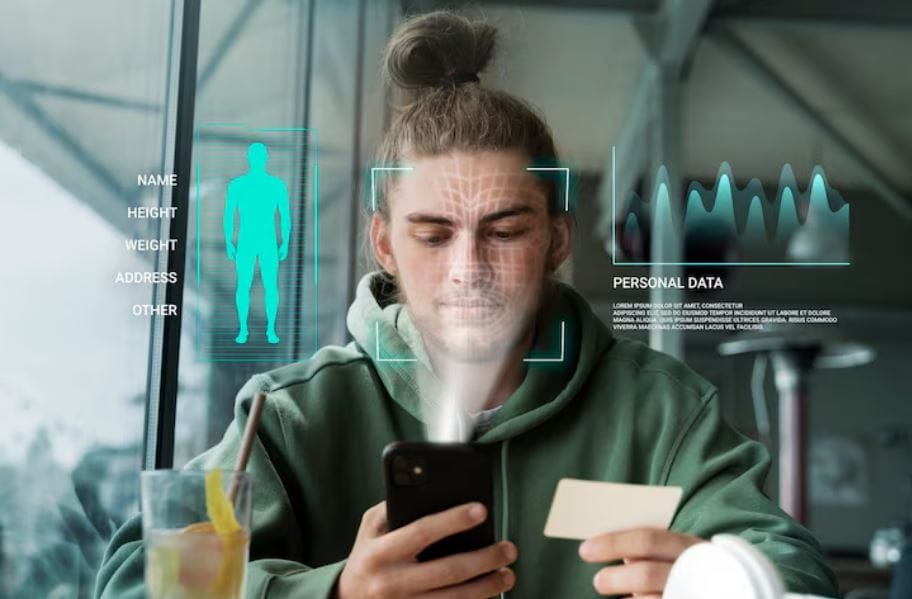
AI agents—systems created to do more than just respond to queries—are bringing about this change. Make the flight reservation. Terminate the subscription. Write a summary of the emails. Forward the follow-up. The difference may seem insignificant at first, but it’s not. An assistant who is capable of doing tasks differs greatly from one who merely speaks. You don’t have to launch an app for every task. It either crosses them all or avoids them completely.
Surprisingly many people in the industry share Qualcomm’s vision that the AI agent will take over as your phone’s primary interface. The home screen, the grid of icons we’ve been gazing at since Steve Jobs unveiled the first iPhone in 2007, becomes less noticeable. Apps are demoted, but they don’t actually vanish. They turn into plumbing, practical infrastructure that operates underneath a surface you are never able to see. The SVP of technology planning at Qualcomm, Durga Malladi, stated it simply: “You don’t have to carry a mental image of a file structure in your head anymore.”
To its credit, Apple appears to be taking notice. According to recent reports, the company is reportedly working on a plan to formally support AI agents on the App Store, potentially even creating what some analysts have already dubbed a “agent store.” That’s a significant change from a company that was discreetly eliminating vibe-coded AI apps and keeping AI agents at a distance not too long ago. Something was altered. Or perhaps more accurately, it became impossible to ignore the pressure of competition. Apple Intelligence is still lagging behind OpenAI’s and Google’s Gemini products. The mind can be focused by that gap.
How quickly any of this actually gets into people’s hands is a serious question. Leo Gebbie of CCS Insight pointed out that the neural processing chips needed to run sophisticated AI agents are only found in flagship phones, not the mid-range devices used by the majority of people. Additionally, fewer people are replacing their phones as frequently as they once did. Five years may pass before AI-agent-capable hardware truly becomes commonplace. It might go on longer. When faced with real-world situations, technology that appears inevitable in a conference keynote tends to move slowly.
The direction feels certain, though. According to Sam Altman, AI will eventually become a metered utility that you pay for based on how much you use, much like electricity or Wi-Fi. Because it completely eschews the app model, that framing is intriguing. No download. Not an icon. Google and Apple are not exempt. Simply put, it is a service that operates in the background of your life, performing tasks on your behalf and charging appropriately. Just the implications for the business model are astounding.
It’s difficult to ignore the fact that the businesses most enthusiastic about this future are the ones that have never quite complied with App Store regulations. OpenAI, Anthropic, and the agents being developed at startups in London and San Francisco do not profit from downloads. They profit from usage and ongoing intelligence delivery. With its one-time purchases and strict review procedure, the App Store was never really designed with them in mind. Thus, they are constructing something different.
The apps are still active. There are still two million of them on Apple’s servers, and developers continue to submit more every day. This is happening more quickly than before because AI-assisted coding makes it possible to create an app in an afternoon. However, there is a distinction between a central platform and one that is expanding. The App Store may continue to expand in terms of quantity while gradually losing control over how users engage with their devices. That is not an unexpected demise. As Malladi said, it’s a gradual fade. The icons will remain in place. We will simply no longer consider them to be the beginning.
