

Because cracked phone screens are so common, they have their own economy: high-street screen repair shops, online marketplaces that sell replacement glass in bulk, and insurance plans that are partially based on the statistical certainty that a glass rectangle carried in a pocket and dropped repeatedly will eventually break. Most people don’t question it since it has been taken for granted as an engineering given for so long. One atomic layer at a time, nanotechnology is beginning to subtly alter that presumption.
Nanotechnology creates materials that behave considerably differently from the same things at conventional sizes since it operates at scales between one and one hundred nanometers, where a nanometer is about 100,000 times thinner than a human hair. For example, charcoal and pencil lead include carbon in their bulk form. It forms a structure that is about a hundred times stronger than steel, weighs nearly nothing, and conducts electricity more effectively than most metals when it is arranged into cylindrical tubes that are only a few nanometers broad. When graphene is spread out in a single, flat layer, it becomes the thinnest material yet discovered, stronger than diamond, and pliable enough to bend without shattering. These are not forecasts. These materials currently exist and are being used in commercial goods.
For the majority of consumers, screen durability is the most obvious application. Drop-testing immediately reveals the basic physical limitations of traditional smartphone glass, even the hardened variants. Transparent layers placed at sizes too small to see or feel, known as nano-engineered coatings, alter the surface characteristics of glass in ways that significantly increase its resistance to impact and scratches. In order to take use of the hardness of diamond material at a scale that doesn’t compromise optical clarity or significantly increase weight, several manufacturers have started incorporating nanodiamonds into glass during production. These methods result in screens that can withstand collisions that would shatter traditional glass without causing obvious damage.
The next front is flexibility. Although foldable phones have been on the market for a number of years, the materials underlying the folding screen continue to present an engineering problem because glass substrates and traditional metals fracture under repetitive bending force. Composites made of graphene and carbon nanotubes are truly flexible. They may be weaved into battery structures and printed circuits that can withstand thousands of bending cycles without degrading their electrical performance or structural integrity. The material capability is no longer in doubt, but whether this scales cheaply to mass-market consumer devices is still up for debate.
Rubber gaskets, adhesive bindings, and precise manufacturing tolerances are some of the sealing techniques used in modern gadgets to achieve water resistance. As seals age and adhesives deteriorate, it eventually deteriorates. In contrast to sealing components against water, hydrophobic nanocoatings applied directly to circuit boards render the surfaces inherently water-repellent at the molecular level. Instead of entering and creating shorts, water beads and rolls away from treated surfaces. Because the protection is incorporated into the material itself rather than relying on physical seals to maintain integrity, the method is more resilient over time.
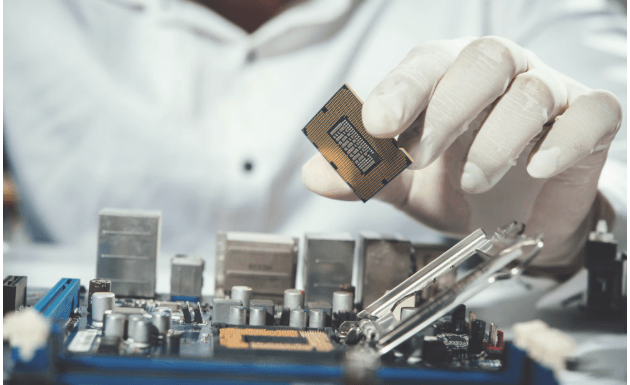
Although it is less obvious to users, heat management has a significant impact on how long a gadget lasts. Processors produce heat that accumulates in small locations. Whether a device throttles performance, experiences long-term component wear, or sustains full capacity over time depends on how well that heat is managed. Because of its thinness, graphene can be incorporated into small locations inside devices where copper heat spreader cannot fit, and its thermal conductivity surpasses that of copper, the typical industrial heat management material. Graphene-based thermal management devices maintain performance more reliably and operate cooler under load.
It’s unclear if all of this will be included in the upcoming generation of consumer electronics at the same time. The cost curves for these materials are still falling rather than having already bottomed out, and manufacturing at the nanoscale is costly and complicated. However, the speed is quicker than it was five years ago, and the direction is obvious. It’s possible that the cracked screen economy has a shorter lifespan than the screen repair industry currently anticipates.
