

In some sections of Silicon Valley, the response to DeepSeek’s early 2025 publication of its R1 model and the benchmarks’ circulation in AI research forums was a mix of unease and sincere recalibration. The model apparently required a quarter of the computational cost to train while matching the performance of American counterparts on important tasks. This was unsettling information for an industry that was predicated on the idea that frontier AI necessitated significant infrastructure investment, the kind that only a small number of US businesses and their data center providers could afford. It implied that the moat was smaller than what the price tag stated.
For years, China’s AI growth trajectory has been viewed as a competitive threat, but the framing—market share concerns, geopolitical rivalry, technology race—often remains abstract. More lately, it has become evident that the challenge’s particular nature has evolved. China’s potential to surpass US capabilities was the initial worry. The US infrastructure-heavy approach appears to be addressing the wrong issue since Chinese companies have discovered an alternative route, optimizing for efficiency rather than brute scale. Lighter, less computationally demanding models that are truly capable and far less expensive to operate have been developed by Alibaba, Tencent, and other companies. This is significant from a business standpoint because it opens up markets that American premium pricing is unable to reach for AI services.
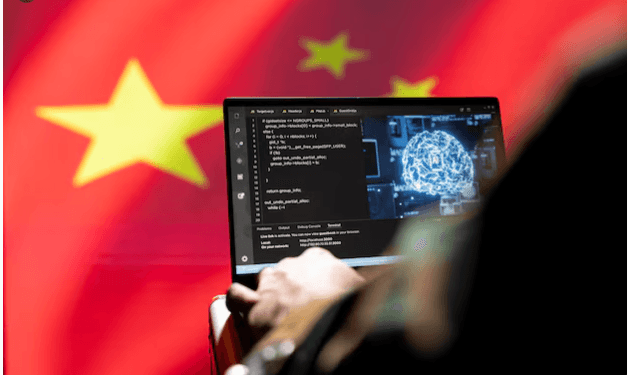
In US tech circles, the talent dilemma is difficult to ignore but uncomfortable to debate in public. The top AI researchers worldwide, including those from China, have been drawn to Google DeepMind, OpenAI, Anthropic, and similar organizations for the majority of the last ten years. It is no longer as strong. Chinese IT companies have responded to US immigration policy by offering funding levels and research environments that are truly competitive, making it more difficult for foreign researchers to establish long-term careers in the United States. Researchers who were taught or employed in the United States are now bringing some of the methodological advancements being achieved in Chinese AI labs. This is not due to any form of theft, but rather to the natural migration of skilled individuals to locations that need them.
Beyond business rivalry, China has geopolitical aspirations in AI. The World Artificial Intelligence Cooperation Organization, or WAICO, was established as a direct attempt to create a Chinese-led alternative to the Western AI governance frameworks that have been developing as a result of US policy initiatives, EU regulations, and OECD procedures. China is establishing connections that lead to long-term reliance on Chinese systems and standards rather than American ones by establishing itself as the Global South’s preferred AI partner and offering training, infrastructure, and deployment support to developing countries. AI using the Belt and Road Infrastructure concept. It’s a well-thought-out tactic, and American foreign policy has been reluctant to come up with a convincing answer to it.
The US’s chip export restrictions, which were put in place to limit Chinese AI development, had an effect that many observers predicted but policymakers appeared to underestimate: they compelled Chinese businesses to find ways to get around the restriction. Chinese developers made significant investments in designing around hardware constraints after being denied access to the most cutting-edge NVIDIA chips. This resulted in optimized designs, more effective training techniques, and open-source frameworks that partially offset the effects of the restrictions. The indigenous chip development of Huawei has advanced. Compared to two years ago, the domestic hardware pipeline has advanced. Time is bought by export controls. They don’t alter trajectories without corresponding actions.
Observing this from both sides, it’s intriguing to see how the dynamics contradict a narrative Silicon Valley had been comfortable presenting about itself: that frontier AI was fundamentally a US-dominated, capital-intensive business. Despite its shortcomings, DeepSeek contested the narrative. The notion that Western governance frameworks will be universal is complicated by WAICO, notwithstanding its early stages. By itself, neither development is disastrous. When taken as a whole, they indicate that the competitive situation in AI is more seriously disputed than it was eighteen months ago and that the US advantage, while real in many ways, is not assured over the next ten years.
