

Something about a survey from 2017 has stuck with me. A group of researchers asked 1,500 top business leaders in the US about artificial intelligence. Only 17% said they knew what it was. These weren’t new employees or people who didn’t follow the news in their field. These were the people in charge of groups. Most of them didn’t even know what AI was, let alone how it could affect their work.
That number seems almost impossible right now. After a few years, people stopped asking “what is this?” and started asking “how do we keep up?” In the time between, something important happened. It wasn’t a single invention or the release of a new product. Instead, it was the slow buildup of capabilities that reached a tipping point that most people didn’t notice happening.
As far back as people can remember, no other technology has moved this quickly across so many areas at the same time. That’s not all AI does. It’s also used in healthcare, national security, transportation, and finance. It’s often making decisions that used to take years of human experience. Stock trades happen in a very short amount of time. Medical images were looked at to find patterns that a person’s eyes would miss on a large scale. Behavior data points that are not part of a credit score are used to evaluate loan applications. The economic world we live in has changed, and it’s been so quiet that most people have taken it in without even realizing it.
Just look at what’s happened in the financial markets. A lot of trades on major exchanges are now done by high-frequency trading systems, which match buy and sell orders in less time than it takes to blink. These systems don’t stick to strict scripts; they change, find small inefficiencies, and act faster than a team of analysts could. Some of these things have made people wonder about fairness and the stability of the market. It’s still not clear if the long-term effects will be good for regular investors. But the ability is real and won’t go away.
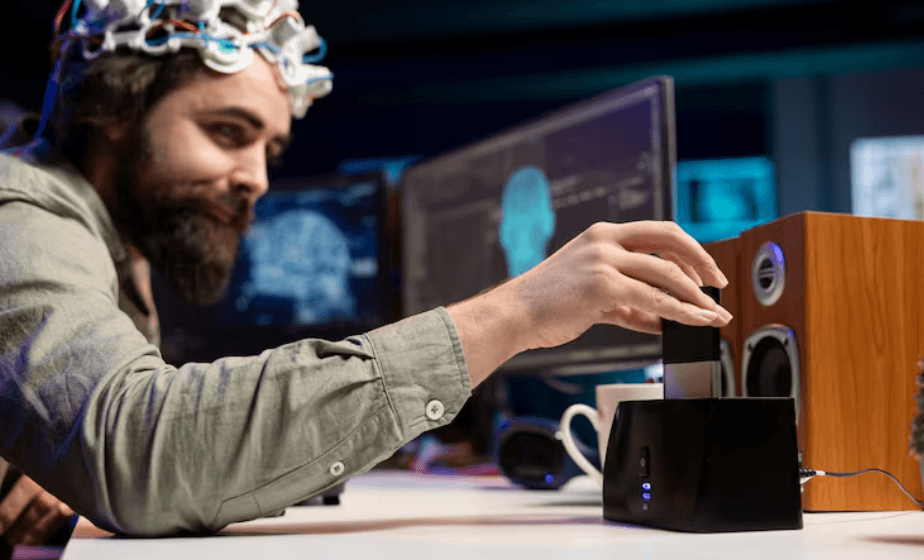
AI isn’t just faster or bigger than previous tech waves; it can also change to fit new needs. Machines from the past were strong, but they were fixed. The only thing they did was what they were told to do. AI systems, especially those that are based on machine learning, can look for patterns in data and change how they act without being told again exactly what to do. A semi-autonomous vehicle doesn’t just follow the rules; it also learns from every other vehicle of its kind that hit a patch of ice on a highway last winter. Cross-learning that happens all the time and without any help from a person is really new.
Whenever economists try to put a number on this, this number comes up: PriceWaterhouseCoopers said that AI could make the world’s GDP grow by $15.7 trillion by 2030. It’s a huge number, and you should probably be wary of any single prediction that big. But the claim that this technology will create economic value on a scale similar to whole national economies doesn’t seem too far-fetched based on what we can see so far. China saw this coming early enough to set a $150 billion national investment goal and make AI leadership a public strategic priority. That level of dedication from a state doesn’t happen over a trend. It takes place over something that seems more permanent.
This doesn’t mean the picture is clean. Concerns have been raised about algorithmic bias, which means AI systems that are trained on historical data that stores historical inequality and then used in ways that reinforce it. There is a risk in criminal justice apps, hiring software, and credit checks when the data used to make the decision is wrong, even if the decision seems automated and therefore fair. People who work on this project think that the tough issues aren’t technical. You can change the math. Choose whose values are built into the system and who gets to ask that question is the harder part.
As I look back on the last ten years, I can’t help but feel that AI is in a different league than most technologies. The internet changed how people talk to each other and get information. You can see that AI is changing how decisions are made at the individual, institutional, and, more and more, government and military levels. That’s a different kind of power. It goes deeper, and because it works under so many surfaces at once, it’s harder to see in everyday life.
The 2017 number of 17% isn’t a story about people not knowing anything. The story is about how quickly things can change once a new technology takes hold. A lot of people didn’t see it coming. That might still be something that you should pay attention to.
