

A small office printer-sized device inside a pharmacy at Southampton General Hospital is about to begin doing something that pharmacists have long desired. Pills will be printed by it. actual ones. shaped, flavored, and dosed according to the individual in front of it.
The National Institute for Health and Care Research awarded the funding earlier this year, and the researchers behind it describe it in the same way engineers describe a prototype that finally functions after years of near-failure.
| Field | Hyper-personalized 3D-printed medicine |
| First FDA-approved 3D-printed drug | Spritam (levetiracetam), 2015 |
| Lead UK research site | University Hospital Southampton |
| Funding body | National Institute for Health and Care Research |
| Key researchers | Dr Andy Fox; Dr Orestis Katsamenis |
| Initial trial focus | Antibiotics for children; dementia drugs for older adults |
| Drugs under early study | Clarithromycin, Donepezil, Galantamine, Memantine |
| Standards work | NIST quality-by-design analysis |
| Estimated home rollout | Still years away, possibly the early 2030s |
| Biggest open question | Quality control at scale |
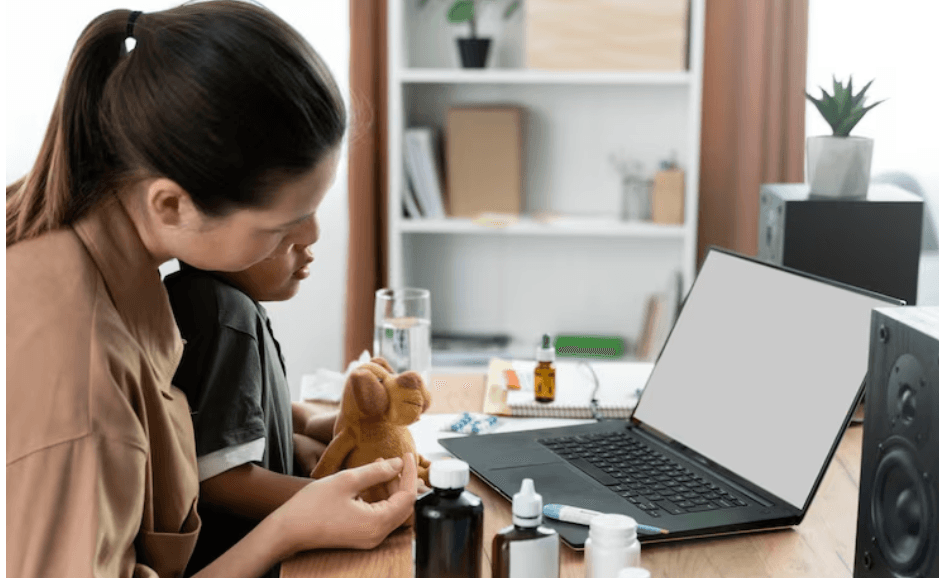
It’s difficult to ignore how commonplace the issue is. For as long as people can remember, parents have been chopping pills in half on kitchen counters. A child is given a tablet by a nurse that, by all accounts, tastes terrible. One of the worst offenders is clarithromycin, which is so bitter that toddlers spit it out and parents start haggling. The same issue manifests differently in older patients. Growing older makes it more difficult to swallow a big pill, and dementia makes it even more difficult. The medication is effective. The delivery doesn’t.
Drs. Orestis Katsamenis and Andy Fox are investigating whether a printer can close that gap. By altering what already exists, rather than creating new chemistry. A softer tablet that dissolves on the tongue. A tiny one with a strawberry flavor. For someone who can’t remember exactly which bottle they opened this morning, three medications are combined into one daily tablet. The molecules do not change. Everything in their immediate vicinity shifts.
The concept is not entirely novel. Since the FDA approved the 3D-printed epilepsy medication Spritam in 2015, a number of manufacturers have pursued the format. What worries people, though, is the transition from a factory in New Jersey to a printer on a hospital floor and eventually, perhaps, a printer on a kitchen counter. A recall is caused by a small measurement error in a factory. A small measurement error at home is quite another.
Thomas P. Forbes, a researcher at NIST, has been investigating that question. In a recent paper, he explores what “quality by design” might mean for printers that manufacture pharmaceuticals outside of factories. pharmacies. clinics. Maybe in someone’s living room eventually. The framework is not complete. Regulators seem to be still figuring out what they don’t know.
It’s amazing to see how gradually and then abruptly the conversation has changed. 3D-printed medicine sounded like a conference slide for many years. The trial plans now resemble a Tuesday morning to-do list rather than science fiction, and a real machine is being installed in a real pharmacy in Hampshire. Improve the taste of the antibiotic. Make the dementia medication easier to ingest. Combine three doses per day into one.
It’s really unclear if printers will ever be used in homes. Regulators will act cautiously, as they most likely ought to. A printer that can convert a single molecule into a hundred different products complicates a business that relies on standardized packaging, so drug companies have their own reasons to slow things down. Even though the timeline isn’t set, the direction feels certain. The history of the standardized pill is lengthy. One cartridge at a time, something more intimate is on the horizon.
