

On the final day of 2023, just before midnight, a doctor in the northern Rwandan mountains picked up his phone and sent a WhatsApp message. A woman who had recently given birth was his patient, and she was bleeding dangerously. It would take four hours to get to him via the roads. Instead, it took eighteen minutes for the white paper parachute that emerged from the dark sky. A tiny red box. a product for blood coagulation. Ten minutes later, the woman was still struggling, so there was actual blood. She made it out alive.
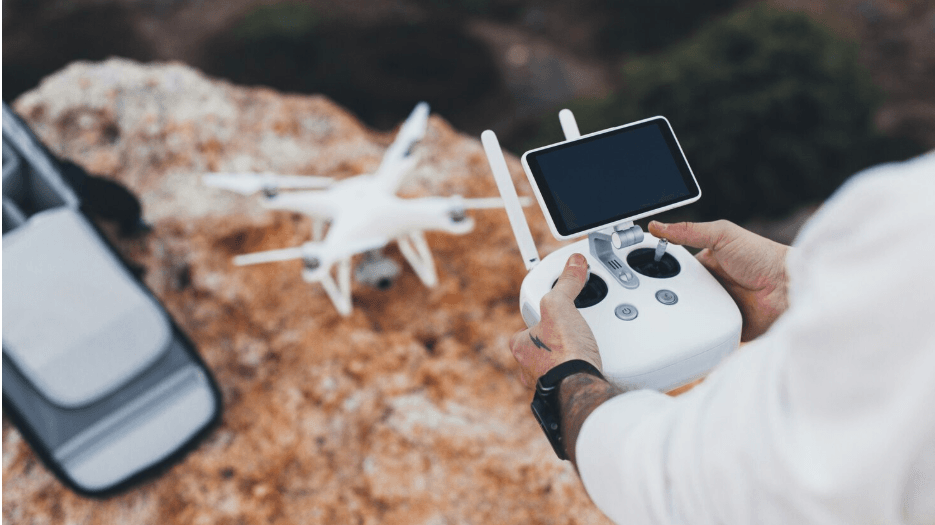
You remember that story. It’s not because it’s dramatic, though it is, but rather because the mechanism was so commonplace. A drone. A phone message. A parachute with a box. For what it accomplished, it’s almost too easy.
| Category | Details |
|---|---|
| Topic | Drone-Based Medical Supply Delivery in Remote Regions |
| Key Organization | Zipline International |
| Founded | 2014 |
| Headquarters | San Francisco, California, USA |
| Primary Operating Regions | Rwanda, Ghana, Malawi, Vanuatu, Uruguay, Canada, USA |
| Notable Achievement | Reduced postpartum hemorrhage mortality by 50%+ in Rwandan hospitals (2016–2020) |
| Notable Program (Canada) | Drone Transport Initiative — Stellat’en First Nation & Village of Fraser Lake, BC |
| Notable Program (India) | Medicine from the Sky |
| Key Supplies Delivered | Blood products, vaccines, antivenom, pathology samples, defibrillators, prescription medicines |
| Average Delivery Time (Rwanda) | 18 minutes vs. 4 hours by road |
| Reference Website | Zipline International |
These deliveries have been made since 2016 by Zipline, a San Francisco-based company that runs the drone network throughout Rwanda. Zipline’s general manager for Rwanda, Pierre Kayitana, has witnessed enough of these instances that they no longer feel like outliers. Zipline’s system reduced postpartum hemorrhage mortality in Rwandan hospitals by over 50% between December 2016 and June 2020.
It’s hard to sit with that number. It subtly but firmly implies that a significant number of deaths in the previous years were at least partially caused by logistical issues. Roads, warehouses, and airplanes were all misaligned in ways that resulted in fatalities that were not accurately counted.
Rwanda was not the only country to see this early. Among the first nations to seriously investigate the potential of drones within vulnerable health systems were Ghana and Malawi. In some of these areas, geography and weather are the twin enemies of care, according to Edwin Ambani Ameso, a researcher at the University of Leipzig who has studied these programs.
For example, storms frequently cut off communities in southern Malawi from what most people would consider standard medical care. It’s not that there aren’t any supplies. It’s because it’s really difficult to get them to the right location at the right time, over unpaved roads, and through seasonal flooding. All of that is not resolved by drones. However, they resolve enough of it to be significant.
When people think about global health crises, they may not immediately think of places where the technology is being used. The Stellat’en First Nation in northern British Columbia collaborated with the University of British Columbia’s Faculty of Medicine and the nearby Village of Fraser Lake to manage an initiative known as the Drone Transport Initiative.
Over 1,200 drone flights transported medical supplies, including life-saving devices and prescription drugs, over a region of land approximately 150 kilometers west of Prince George over the course of a year. One of the project’s co-sponsors, Dr. John Pawlovich, the Rural Doctors’ UBC Chair in Rural Health, has spent his professional life observing the discrepancy in healthcare between rural and urban areas. He doesn’t hold back when discussing the costs associated with that disparity.
According to Stellat’en First Nation Chief Robert Michell, the project accomplished more than just moving boxes through the air. It restored ties with Fraser Lake. Members of the community had something to be proud of. Reading about these initiatives gives the impression that the technology is less important than what they stand for—that someone determined these communities were worth the expenditure. It’s probably best not to undervalue that feeling.
In other trials, Swedish researchers used drones to deliver defibrillators to patients suspected of having a cardiac arrest. In 92% of cases, the drone was able to reach people, and in 64% of cases, it outperformed the ambulance. Vaccines have been delivered to a remote village in Vanuatu that had previously had very little consistent access. Breast milk and medications are being given to rural Uruguay. Supplies are being threaded through mountainous terrain that would exhaust a traditional supply chain as part of India’s Medicine from the Sky initiative. In a somewhat different way, Surf Life Saving Queensland uses drones to monitor sharks and deliver flotation devices to swimmers who are having difficulty. This is a less urgent application, but the technology is still outperforming the alternative.
All of this has the potential to get out of control. There are actual boundaries. Batteries for drones are short-lived. The advantage in truly remote situations is diminished by the fact that most current systems operate within a radius of about seven kilometers from their base, meaning that someone frequently needs to physically move the drone closer to the area of need before it is even launched.
Drones are grounded by weather. During transit, temperature and humidity can deteriorate some medications or destroy pathology samples. Additionally, laws in many nations haven’t kept up with the capabilities of the hardware, which leads to conflict of its own.
Whether drones consistently improve health outcomes in various contexts is still up for debate in a rigorous evidence-based sense. The complete evaluations of many of the trials conducted over the past few years have not yet been released.
This is not a reason to discount the technology, but it is a reason to exercise caution when assuming that every promising trial will smoothly translate into a program that can be scaled. Many good ideas have failed in the transition from a controlled experiment to a regular health system service.
As this develops in various nations and situations, the issue of who benefits from the technology is more prominent than the technology itself. Drones have the greatest impact on communities that have historically been underserved by healthcare systems due to infrastructure, distance, or past neglect. Once said, that seems obvious, but the ramifications are worth considering. The areas where traditional systems have failed the most are where these tools are most effective. Depending on how you interpret it, that could be either encouraging or damning. Most likely both.
From Nunavut to the Solomon Islands, interest in British Columbia’s Drone Transport Initiative is growing. A second stage is being developed. Zipline continues to soar in Rwanda. The red boxes continue to fall in Uruguay, Vanuatu, and India. Presumably, the woman who made it through the Rwandan mountains on New Year’s Eve is currently living her life. The drone that took eighteen minutes to reach her is most likely already on its next flight.
