

Every gamer is familiar with a certain moment. It happens quickly: a boss kill that required 47 tries, an impossible headshot, a last-second clutch play. Your heart is pounding. Your hands continue to tremble. And then it’s gone, undocumented, existing only in recollection and the frantic recounting to friends who weren’t present. It appears that Microsoft has been considering that precise moment for some time.
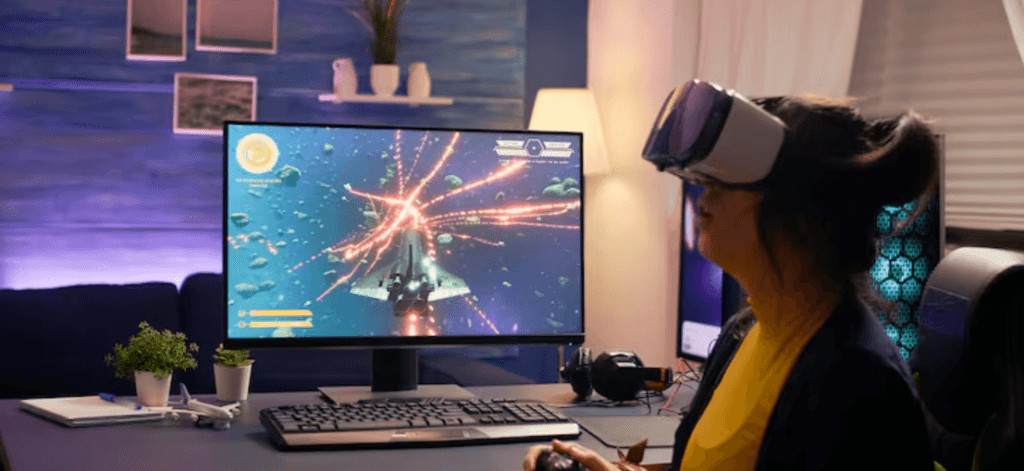
Through its Xbox Insider program, the company is currently testing a feature called Highlight Reels. The idea is simple enough to seem almost obvious in retrospect: let artificial intelligence watch your gameplay, recognize the moments that are worth preserving, and automatically save them without requiring you to press any buttons or interrupting the experience. You simply engage in play. The rest is handled by the AI.
| Category | Details |
|---|---|
| Company Name | Microsoft Corporation |
| Founded | April 4, 1975 |
| Founders | Bill Gates, Paul Allen |
| Headquarters | Redmond, Washington, USA |
| CEO | Satya Nadella |
| Industry | Technology, Gaming, Cloud Computing, AI |
| Gaming Division | Xbox (acquired 2001) |
| Key AI Product | Microsoft Copilot |
| Relevant Feature | Highlight Reels (in testing via Xbox Insiders) |
| Hardware Partner | Asus ROG (Xbox Ally handheld) |
| NPU Standard | Copilot+ (40 TOPS threshold) |
| Reference Website | Microsoft Xbox Official Site |
Users of the Asus ROG Xbox Ally, a portable gaming PC with a neural processing unit (NPU) built right into its hardware, are currently the only ones able to participate in the testing. The hard work here is being done by that chip. The company’s AI assistant Copilot, which has already been subtly incorporated into everything from Word documents to Windows itself, is being positioned as the brains behind the operation.
It’s still unclear exactly how Copilot determines what constitutes a “memorable moment”—whether it’s monitoring killstreaks, spotting abrupt activity spikes, or picking up on something more nuanced about the play rhythm. Microsoft has not responded. Depending on how you feel about an AI making editorial choices about your life, that ambiguity can be either fascinating or a little unnerving.
The range that Microsoft is aiming for can be inferred from the games being used for testing. The list, which includes open-world role-playing games, casual party games, League of Legends, Elden Ring, Fortnite, Call of Duty, Rocket League, Palworld, and Rainbow Six Siege, is purposefully varied. Exciting moments are produced in wildly different ways by each of those genres.
A perfectly timed dodge roll against a FromSoftware boss feels nothing like a clutch round-winning defuse in Rainbow Six.
It’s not easy to get the AI to identify both as highlight-worthy, and early iterations of the feature might be blunt instruments that save anything that appears somewhat intense. However, that is the purpose of testing.
The infrastructure that underpins this is what elevates it above mere novelty. Highlight Reels appears to be one of the first truly gaming-specific use cases that supports Microsoft’s Copilot+ PC standard, which calls for devices to have NPUs capable of at least 40 trillion operations per second. The threshold is already met by Qualcomm, AMD, and Intel processors.
Later this year, Nvidia is anticipated to enter that market with an Arm-based CPU. It follows that Highlight Reels won’t be restricted to Asus handhelds for very long if it succeeds. There are already millions of machines that are compatible with Copilot+.
There’s a feeling that Microsoft is taking a more comprehensive approach here as well, discreetly putting together a collection of AI gaming tools that, when combined, begin to resemble a true platform change. In addition to Highlight Reels, the company recently introduced automatic postgame recaps for Xbox Insiders, in which the Xbox app compiles recorded clips and achievements into a brief edit once a game is closed.
Qualcomm devices already have Automatic Super Resolution, which uses NPU-powered AI upscaling to sharpen visuals in games that were never intended to have the feature. For all Xbox Game Bar users, the Copilot gaming assistant is presently in beta. Each of these characteristics is not revolutionary on its own. When stacked, they create the general shape of something more ambitious.
It’s difficult to ignore how different this strategy feels from, say, the ecosystem of Nvidia. Although DLSS is powerful, it only works with Nvidia hardware, so game developers must specifically create support for it. Theoretically, Microsoft’s Automatic Super Resolution supports all games without the need for developer involvement because it operates at the system level.
If it functions as promised, Highlight Reels also doesn’t need anything from game studios. Microsoft appears to be wagering that the best place to incorporate AI into gaming is beneath the game itself, at the hardware and operating system level, where it is automatic and undetectable.
It’s genuinely unclear if players want this. Hardcore content producers already have years of muscle memory for manually capturing moments, capture cards, and streaming software. An AI curator could seem arrogant to them. Highlight Reels, however, might be a real unlock for a much larger group of players—those who play for hours on end and never upload a single clip because it seems like work.
The feature doesn’t need to be flawless. It simply needs to be good enough that the moments you would have otherwise missed appear out of nowhere, waiting to be shared in a folder.
As you watch this develop, it’s important to consider what it means when an AI determines what aspects of your experience are memorable. Inside what appears to be a fairly practical gaming feature, there is a small philosophical quirk. It’s unlikely that Microsoft is worried about it.
However, the distinction between “the game captured a cool moment” and “an algorithm decided this moment was cool” begins to blur in ways that are worth paying attention to as these tools improve and become more integrated into regular play. For now, though, it’s mostly just pleasant to think that something might be observing the next time you accomplish something truly remarkable.
