

Around the third or fourth Apple privacy announcement of the year, you begin to question whether the company is actually protecting its users or if it is just improving the appearance of protection. That question seems more pertinent than it has in years as the iPhone 18 Pro gets closer to its September 2026 release.
Apple has consistently marketed privacy in addition to its hardware. As identifiable as the aluminum chassis and the bitten fruit on the back, it now forms part of the brand’s identity. To be fair, part of that reputation has been earned by the company. A few years ago, it implemented App Tracking Transparency, which required app developers to obtain consent before tracking users across platforms. Facebook detested it. On its own, that seemed like a respectable signal.
However, the situation has become much more complicated over the last few months. An iOS update that restricts how precisely cell carriers can share a device’s location with third parties, such as advertisers and, potentially, law enforcement, was discreetly released by Apple earlier this year. The feature is important and genuine.
However, most iPhone owners don’t use Boost Mobile, so it only functions for users on that carrier. Users of AT&T and T-Mobile, who make up the great majority of readers, are unable to even activate the feature. Apple has not provided an explanation. It’s important to pay attention to that kind of discrepancy between a privacy feature’s announcement and its actual reach.
In the meantime, iOS 26.4 introduced something that seems to be the antithesis of privacy in the UK. The update made age verification mandatory at the operating system level, requiring users to provide identification before they can access specific apps or browse the web without restriction. If adults with iPhones didn’t present a credit card, driver’s license, or other form of identification, they were automatically redirected to a child-filtered internet. Advocacy organizations like Big Brother Watch have vigorously opposed this strategy, and it raises a valid question: when does protecting people turn into controlling them?
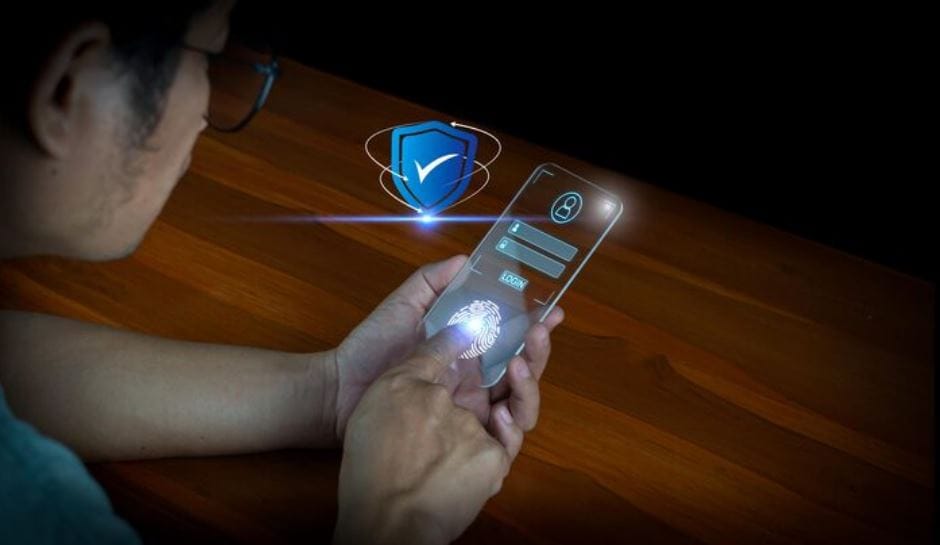
All of this indicates that the iPhone 18 Pro will be a significant advancement. On paper, the hardware alone is impressive. Based on TSMC’s 2nm process, Apple’s A20 chip is anticipated to outperform its predecessor by about 15% and increase efficiency by about 30%. The Pro Max model’s battery is reportedly getting a major boost, with U.S. versions reportedly approaching 5,600mAh. Additionally, the company’s “privacy-first architecture” for its AI systems served as the foundation for the next generation of Apple Intelligence, which was unveiled at WWDC in June 2026. It’s another matter entirely whether that architecture can withstand scrutiny in the real world.
When data begins to move between devices and servers, it’s still unclear if the AI privacy protections mentioned in keynote addresses will actually be protective. It is significant that Apple has increased end-to-end encryption in iCloud backups and Messages.
However, for years, law enforcement has discovered workarounds, such as tower dumps, E911 emergency location data, and court orders that function independently of software features. When a user dials 911, emergency location information will still be available, according to Apple’s own update. That is a fair exception. The problem is that a search warrant can be used to order the same data infrastructure that police use in real emergencies for non-emergency purposes, and there isn’t a clear solution to that.
This is part of a larger tension that isn’t specific to Apple. Smartphones are becoming increasingly sophisticated. On-device AI will be faster and more powerful thanks to the A20 chip, which is really helpful. However, it also means that a person’s phone is doing more, storing more implications, and occupying a larger portion of their daily life. All of that will have a significant impact on the privacy architecture.
It’s difficult to ignore the fact that Apple is in a very challenging situation. This hardware company has made privacy a differentiator in its products, so every policy choice it makes is evaluated in light of that commitment. It’s highly likely that the iPhone 18 Pro will be the most powerful iPhone ever produced. Making the case that it’s the most private is far more difficult and crucial.
