

Every foldable phone ever produced has a line running down the center of it. It runs the entire length of the screen, directly at the hinge, serving as a tiny, constant reminder that the technology is still in its early stages. The majority of owners learn to disregard it. However, no one ever completely stops observing it—not on the Motorola Razr, not on the Samsung Galaxy Z Fold, not on any of them. That crease has been the most persistent issue facing the foldable industry for the past seven years.
There might be a solution to that issue at last. With the release of the Find N6 in March 2026, Oppo introduced a hinge design that effectively conceals the display’s fold from the human eye. Not more subdued. Not “barely there.” In fact, it’s gone, at least visually. The device was the kind of product moment that causes the rest of the industry to uncomfortably double-take. The company had been working toward this for years.
When you stand at a demo booth and run your finger over an unfolded Find N6, it feels unlike any other foldable. There is no dip in the surface. You wouldn’t expect one in any valley. Long-term use may cause some deterioration; early reviews of the Samsung Galaxy Z Fold 8, which also made audacious claims about its ability to reduce creases, revealed that after just one week of consistent use, the display began to show more noticeable creasing. Thus, skepticism is justified. However, no one had previously been able to ship what Oppo demonstrated in March.
Most people are unaware of how long Samsung has been pursuing this. In January 2026, the company’s display division displayed a crease-free concept at CES, contrasting it with a modern device. In a matter of seconds, the current phone appeared outdated.
Not because of what it said about the idea, but rather because of how long customers had been putting up with something so blatantly flawed, that comparison was startling. Samsung Display is currently working on a technology called Center-Etched Thin Glass, which reduces the stress that eventually results in a noticeable crease by precisely thinning the glass where the screen bends. It might first show up in a commercial Samsung device in 2027.
Apple, on the other hand, is tackling the same issue in a different way. According to reports from late 2025, the company used a combination of an inner display manufactured by Samsung and a custom hinge made of Liquid Metal components, a material renowned for its durability and flexibility, to solve its crease problem.
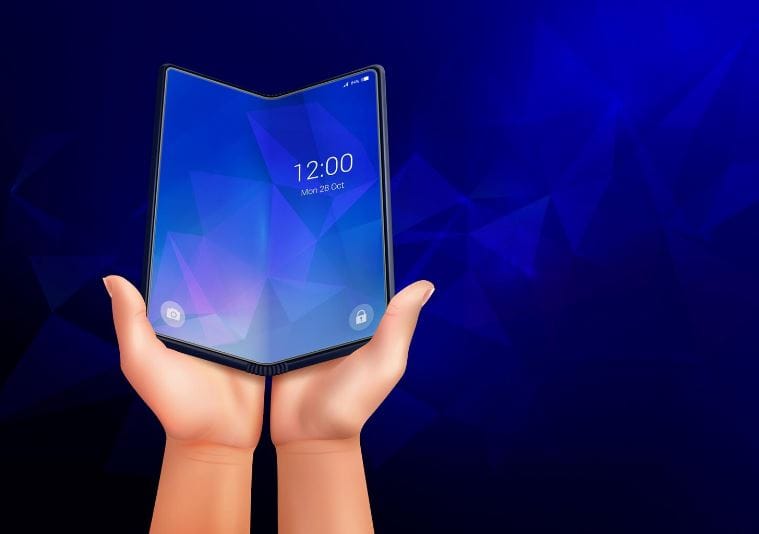
The so-called iPhone Fold was supposedly already in mass production by July and was scheduled to launch in 2026. It’s still unclear if Apple’s claims about being crease-free hold up in day-to-day use. After eighteen months in a pocket, it’s still unclear if any of these solutions—Oppo’s hinge, Samsung’s etched glass, and Apple’s Liquid Metal approach—will continue to function.
However, it’s becoming evident that the crease was never merely an aesthetic defect. It was what prevented foldables from feeling more like a costly experiment than a true evolution. Simply put, a phone that folds neatly and doesn’t show any signs of doing so is a more appealing product. It eliminates the final clear justification for a reluctant customer to pass the display case.
Although the market for foldables has steadily expanded, it has never gained widespread acceptance as its early proponents had hoped. The gadgets became more potent and thinner. Hinges became more dependable. Slowly, prices decreased. However, the crease persisted, giving every prospective buyer cause for concern. Watching Oppo release the Find N6 while Apple and Samsung scramble to catch up gives me the impression that the category is finally getting close to becoming what it was always meant to be: a phone worth actually switching to, rather than just a curiosity for early adopters.
It is nearly never true that a single product can completely transform an industry. However, there are instances when a single gadget is sufficient to advance everything else by demonstrating that something is feasible.
