

There are currently hundreds of thousands of asteroids in different orbits somewhere between Earth and Mars, some of which have concentrations of platinum, cobalt, and nickel that are higher than anything that is currently available on the planet’s surface. It has been known for decades. Recently, a few businesses have started approaching it as a business plan rather than an intriguing astronomical footnote.
The early 2010s saw the enthusiastic launch of the first wave of serious asteroid mining startups. Supported by filmmaker James Cameron and Google co-founder Larry Page, Planetary Resources grabbed news with audacious forecasts and self-assured timeframes. Soon after, Deep Space Industries emerged. Both businesses are no longer in existence. Before either could place hardware close to an asteroid, the funding runway ran out, the technology wasn’t ready, and the economics didn’t work. For a number of years, the entire idea was clouded by that catastrophe, and understandably so. The engineering had been greatly outpaced by the claims.
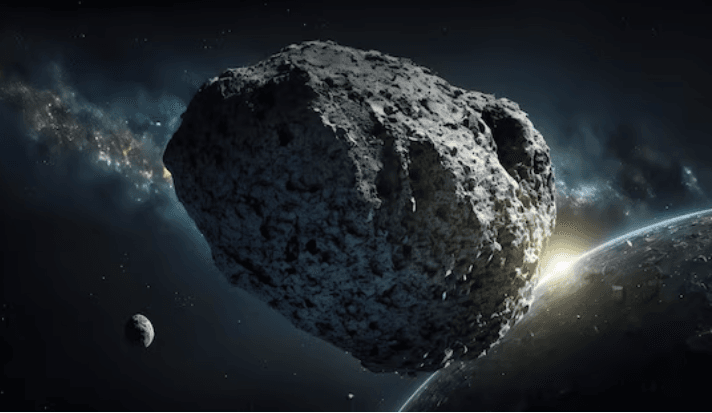
At least in tone, the second wave is taking a different approach. In April 2023, AstroForge, a California-based business that has funded $55 million and is unusually open about its shortcomings, launched its first flight on a SpaceX Falcon 9. The payload from the refinery failed to activate. The business acknowledged this in public, explained what went wrong, and continued. The goal of its second spacecraft, Odin, was to be the first to take a close-up picture of a metallic M-type asteroid, which is the type of space rock most commonly linked to high metal concentrations. The Vestri probe, a third mission, is intended to land. The technique being developed entails vaporizing the asteroid’s surface with an onboard laser, and then using magnets to separate the platinum group metals from the iron and nickel particles that comprise the majority of the rock. It’s an exacting, technically challenging procedure that hasn’t been tested on an operational scale yet.
Even though they can be a little overwhelming to comprehend, the numbers that are generating the interest are real. According to NASA, the value of mining only ten asteroids may reach $1.5 trillion. By terrestrial standards, the amounts of metals found in M-type asteroids would be exceptional. However, as of 2024, all three asteroid sample return missions—Hayabusa, Hayabusa2, and OSIRIS-REx—had returned about 127 grams of asteroid material to Earth, which puts the current state of the field in a clearer perspective. Over two billion dollars was spent on all of the missions. That amounts to about $15 million every gram. Closing the gap between the potential value contained in such asteroids and the current expense of retrieving even a small piece of it will require technological advancements that have not yet been made.
Many of the present participants aren’t primarily trying to bring metal back to Earth at all, at least not initially, which is fascinating about how they are defining their goals. Water is at the heart of the more immediate economic argument. Rocket fuel can be created in orbit by breaking down asteroids that contain water ice into hydrogen and oxygen. The expense of deep-space trips might be significantly decreased by creating a propellant supply chain in space instead of lugging everything up from Earth’s gravity well. That avoids the issue of what would happen to commodity pricing if asteroid-derived metals ever made it to Earth in substantial amounts, and it’s a smaller, more manageable goal than flooding terrestrial rare earth markets. The worldwide market for platinum could become unstable if imports are high enough, according to some economists. This is a theoretical issue for the time being, but the industry will eventually need to consider it.
An additional layer of complexity is introduced by the legal environment. There is no legally binding international framework governing how the US SPACE Act of 2015 interacts with the interests of other countries, but it does allow American persons and companies to own resources they take from space. Numerous nations have enacted legislation pertaining to their own space resources. Although national appropriation of celestial bodies is forbidden by the Outer Space Treaty of 1967, it is unclear if this also applies to resources taken from them. When the industry is small and mostly theoretical, this ambiguity is manageable. If commercial extraction truly scales, it becomes more significant.
