

The idea that a regular smartphone could connect directly to a satellite overhead—no dish, no special hardware, no local carrier—sounds like something from a different era on the eastern edge of the Democratic Republic of the Congo, where the closest cell tower might be two hundred kilometers away and the roads between villages are unpaved seasonal tracks. It’s not. Most people outside the telecom sector are unaware of how near it is to commercial reality, and the $12 billion market prediction that goes along with it tends to speed up timetables.
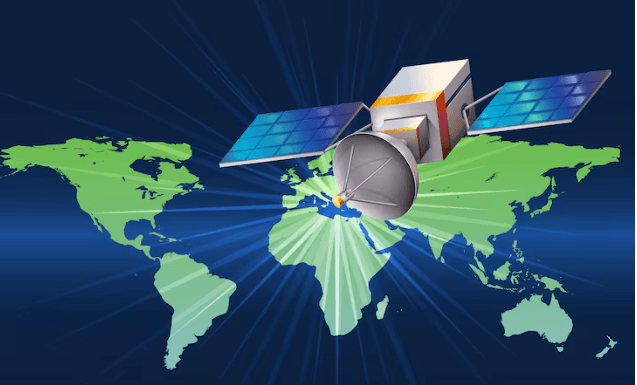
The direct-to-device idea is simple in theory but difficult to implement technically. It links directly to a satellite in low Earth orbit, usually a few hundred kilometers up and traveling quickly, as opposed to a phone connecting to a ground-based tower. These satellites are part of a vast constellation that covers the whole surface of the Earth. Through a business agreement with T-Mobile, SpaceX has begun deploying direct-to-cell satellites as part of the Starlink network, enabling orbiting satellites to access the carrier’s current spectrum allocation. The fact that customers don’t require new phones or other hardware is the crucial aspect that makes this practically meaningful. The current gadget is the source of the capability.
Launched on the iPhone 14 in 2022 and subsequently expanded, Apple’s Emergency SOS via Satellite function had a significant impact on the industry as a whole by normalizing the notion that consumer handsets might interact with low-Earth orbit satellites. Although the feature was limited to one-way text in an emergency, it showed at scale that the infrastructure was workable and that people could communicate with it without any specialized equipment or training. This feature is currently available on millions of iPhones. The economic implication is that rather than being a technical impossibility, the transition from emergency-only to basic connectivity to more extensive data services is a product roadmap.
The more comprehensive version of the roadmap is being developed by AST SpaceMobile. The startup is building what it claims to be the first space-based cellular broadband network specifically made to function with common 4G and 5G smartphones—not just for emergency texting, but for actual data connectivity. It intends to reach subscribers through its business partnerships with major telecom carriers: the carrier manages customer relations and billing, the satellite network fills coverage gaps, and the user’s existing phone takes care of the rest. The business has encountered the usual capital-intensive difficulties of creating a constellation from the ground up, but it has garnered sufficient institutional support to be regarded as a legitimate business rather than a venture.
The technical challenges are genuine and should be acknowledged. The distance between a cell tower and the devices it serves is about one kilometer. A satellite travels at several kilometers per second while hundreds of kilometers above the ground. Compared to a terrestrial link, the signal route loss over that distance is around 110,000 times higher, necessitating complex antenna construction and signal processing to compensate. Large footprints share bandwidth; each satellite provides service to a region that may have thousands of concurrent users, with a total throughput of seventeen to 120 megabits per second throughout the footprint. In remote places, that is sufficient for basic connectivity. It cannot replace a dense metropolitan network that serves millions of people in a few square kilometers with video calls and streaming content.
It’s important to be clear about how this restriction affects the true purpose of direct-to-device. By 2030, it is anticipated that 411 million monthly active customers will not be migrating from fiber or 5G. These individuals—farmers in isolated agricultural areas, maritime workers, and communities in mountainous areas that ground-based infrastructure has never economically reached—do not now have any dependable terrestrial connection at all. The market that Omdia is projecting is a coverage gap market, and there are huge coverage gaps worldwide. Connecting those users is both a real business opportunity and a real, useful way to make people’s lives better.
It is actually unclear if the schedule will be met by 2030. This includes the deployment of constellations, regulatory approvals in numerous jurisdictions, carrier agreements, and large-scale technical performance. The goal is evident. The field of engineering is developing. The funds have been committed. However, satellite initiatives have a long history of exceeding deadlines, and investor trust alone is insufficient to address the challenge of establishing global communication from orbit.
