

On a typical Tuesday morning in a government office, a cybersecurity investigator discovered something that shouldn’t have been there. a software malfunction. brief, silent, and limited to a few devices. The kind of anomaly that most people would forget by lunch and write off as a glitch. However, it turned out that the crash was not a glitch at all, and the devices in question belonged to government officials, journalists, political operatives, and technology workers. It was proof of an intrusion. The phones were compromised. In a sense, the pockets in which their owners kept them had turned into open windows.
The incident, which was reported in the middle of 2025 and was connected to Chinese state-sponsored hackers, brought to light something that national security experts had been attempting to convey for years without succeeding: the smartphone has emerged as the most important security device that most people will ever possess, and the security procedures surrounding it are still, in many cases, embarrassingly careless. Our laptops are locked. Firewalls are installed by us. We go to corporate cybersecurity seminars. Then we post pictures from our front door with the house number prominently displayed in the background, leave our phones on café tables, and download free apps without reading permissions.
Key Facts & Context
| Core Issue | National security experts warn that mobile security has not kept pace with the proliferation of smartphones and mobile networks — creating a widening global vulnerability gap |
|---|---|
| Documented Threat Event | Cybersecurity investigators detected an unusual software crash affecting smartphones belonging to government officials, political figures, journalists, and tech workers — linked to Chinese state-sponsored hacking activity |
| Why Smartphones Are Targeted | Smartphones store banking credentials, location data, private communications, work emails, health records, and in many cases, access to classified or sensitive professional systems — all in a single, frequently unsecured device |
| Key Vulnerability: Malware | Cybercriminals distribute malware through seemingly legitimate free applications; exploiting smartphone app ecosystems to collect personal and confidential information without the user’s knowledge |
| Key Vulnerability: Social Media | Oversharing on social platforms exposes home locations, daily routines, and personal relationships — giving threat actors a detailed picture of a target’s life without any technical intrusion required |
| User Behavior Gap | Research consistently shows users are significantly less careful about securing their phones than their computers — despite phones containing equal or greater volumes of sensitive personal data |
| Recommended Baseline Protections (2026) | End-to-end encryption, passkeys, a password manager, telecom PIN, a trusted VPN, and keeping the device updated with current security patches |
| Android vs iOS Security | Both platforms carry distinct vulnerabilities; Kaspersky research notes iOS has a more controlled app environment while Android’s open ecosystem increases |
When you put it simply, the disparity between what modern smartphones contain and how cautiously people tend to protect them is truly startling. Banking credentials, location history spanning years, private messages on various platforms, work emails that may contain proprietary or sensitive information, health information, and—for an increasing number of professionals—access to systems that could have real-world repercussions if compromised are all stored on a modern phone. It is a master key to a person’s life, to put it simply. Even when smartphones contain more sensitive data, researchers studying smartphone users have consistently discovered that people are far less cautious about their phones’ security than they are about their desktop computers. The idea that a small device is somehow less serious than a large one has proven to be both remarkably expensive and remarkably durable.
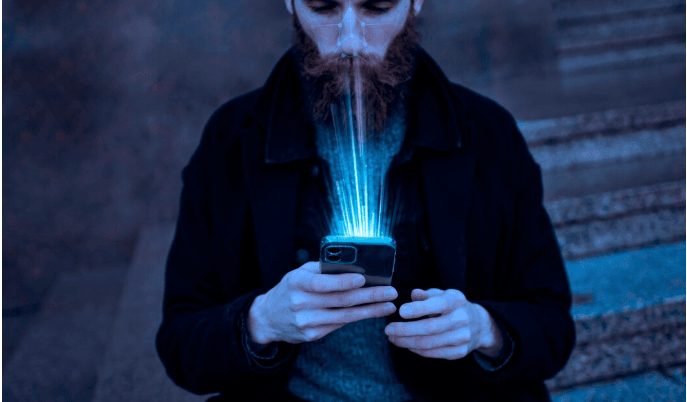
The position of the casual user has become more challenging due to the evolution of the malware threat. Cybercriminals are now adept at spreading malicious software through programs that appear completely authentic, such as free tools, games, or productivity apps. These programs are made to sit silently on a device while gathering login credentials, intercepting messages, or tracking a user’s location. Given Apple’s stricter review process, the app store environment offers some protection, more on iOS than Android, but neither platform offers anything approaching a guarantee. The basic issue is that every new application is a potential point of entry, and most users grant permissions without reading them, taking location, contacts, microphone, and camera access as the standard price for making a flashlight app function.
Although it receives less attention than the technical risks, the social aspect of smartphone vulnerability is arguably just as significant. Threat actors can obtain a comprehensive profile of a target’s life without the need for any hacking skills thanks to oversharing on social media, which occurs on a massive scale, millions of times every day. An image of a front garden with the street number clearly visible. A new home renovation was mentioned in the caption. Every morning at 6:45, a tagged location at a gym is visited. On its own, each piece of information seems insignificant. When put together, they paint a picture that a determined actor, be it a corporate spy, a foreign intelligence agency, a stalker, or a burglar, could use in ways the person posting never would have thought possible. The phone was not compromised. The individual merely offered something that would have been hard to pilfer.
The current situation, where governments and corporations are investing billions of dollars in mobile security infrastructure while the human layer—the behavior of the person holding the phone—remains the most exploited vulnerability of all, is particularly ironic. There are technical tools available. Passkeys, password managers, telecom PINs, VPNs, end-to-end encryption, and frequent software updates are not novel or costly solutions. Anyone can access them on any device, and they’re frequently free or very nearly so. Capability is not the gap. It’s two things that security guidelines have traditionally had trouble changing on a large scale: habit and attention.
Better hardware won’t be enough to solve the “mobile security crisis,” as experts have come to refer to it. Already, the phones have a great deal of protection for their owners. They are unable to override the choice to leave them unlocked on a restaurant table, stop a user from posting one piece of location information too frequently, or stop someone from clicking on a link that appeared sufficiently official. The gadget has surpassed the security culture surrounding it, and it will take something more enduring and unglamorous than the next operating system update to close that gap—a real change in people’s perceptions of what they truly carry in their pockets. Not a phone. A safe. Anybody who gets close enough can access it.
