

The first thing you notice when you walk into a busy Saturday afternoon electronics store is the subtle chemical freshness of brand-new gadgets that are stacked floor to ceiling and shrink-wrapped. Individuals are constantly improving. However, the previous generation of those same devices is being burned in an open field somewhere on the other side of the globe, in a location that the majority of consumers will never visit. The smoke is thick and black. There are no masks on the employees.
This is the reality of what the industry kindly refers to as “e-waste”—the abandoned phones, laptops, televisions, and tangled charging cables that pile up at a rate that the recycling system was never designed to manage. Every year, more than 60 million metric tonnes of electronic waste are produced worldwide. It’s nearly impossible to imagine that amount. For comparison, it surpasses the combined weight of all commercial aircraft ever constructed.
Long before anyone discards anything, the issue begins. Decisions regarding software update cycles, screw types, and battery replaceability are made in boardrooms and engineering labs during the design phase. Although the phrase “planned obsolescence” has been used since the 1950s, it has never felt quite so literal as it does now, when a laptop’s battery is glued in so that replacing it is almost as expensive as buying a new one, or a two-year-old phone receives an update that makes it slow. There is a perception that businesses have been covertly shifting the costs of this cycle onto those who are least able to bear them for decades.
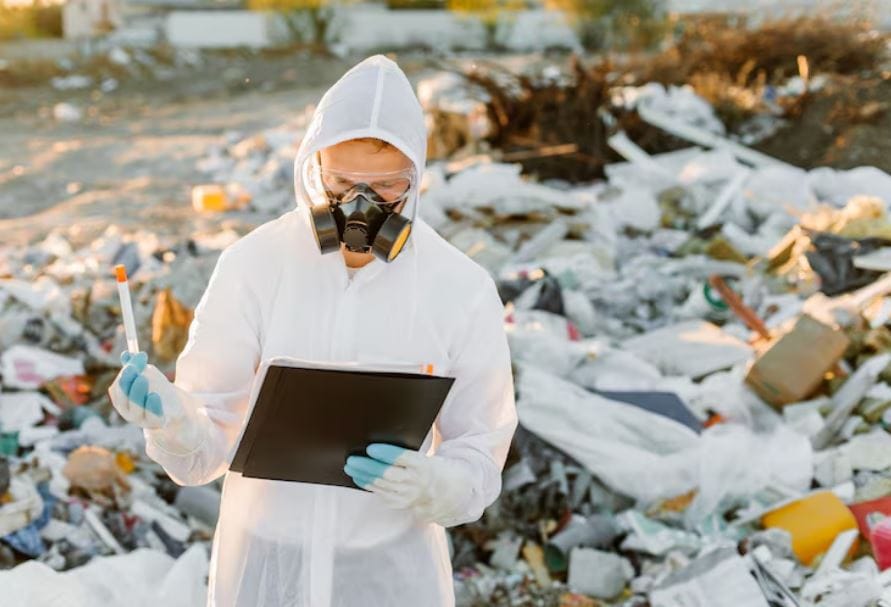
The most well-known location for that cost is likely Agbogbloshie, which is located in Ghana on the outskirts of Accra. Although thousands of people live and work there, including many young men and boys who disassemble old monitors and burn wire insulation to recover the copper inside, it has been dubbed the largest e-waste dump in the world. Lead, mercury, cadmium, and a variety of other heavy metals are carried into the lungs, soil, and waterways by the harmful fumes. Research on communities close to unofficial e-waste sites has revealed respiratory illnesses, neurological impairment, and increased heavy metal exposure in children. People upgrading their phones in Los Angeles or London are largely unaware of this slow-motion public health disaster.
Less than 20% of the world’s e-waste is officially recycled, which is an unsettling fact. Through a network of unofficial middlemen and export routes that take advantage of legal gray areas, the remainder vanishes. By being categorized as “second-hand goods” or “donations,” electronics shipped abroad are exempt from the laws that would normally apply to hazardous waste. On paper, it is lawful, but in reality, it is disastrous.
However, something is changing. Scientists and businesspeople have begun to view all that waste as an ore rather than a liability. Given that the concentration of gold in circuit boards is significantly higher than in most natural deposits, the BBC reported in 2022 that researchers were advising businesses to mine electronic waste rather than extract new raw materials from the Earth. According to estimates from the Environmental Protection Agency, recycling just one million cell phones could yield more than 20,000 pounds of copper, 50 pounds of gold, 550 pounds of silver, and 20 pounds of palladium. These numbers are not insignificant.
There are already a few businesses operating in this area, but it’s still unclear if urban mining can grow quickly enough to be significant. The entire business strategy of the Dutch electronics company Fairphone is based on the notion that consumers ought to be concerned about what happens to phones after they are sold. A portion of the proceeds from each handset sold goes toward collecting outdated gadgets in Ghana. A recycling facility in Europe receives about 75,000 handsets, extracts copper and other materials, and repurposes them for new manufacturing. Although the number is small in comparison to the scope of the issue, the reasoning makes sense, and it is difficult to ignore the fact that the majority of Fairphone’s rivals haven’t bothered to attempt anything comparable.
Apple has taken more noticeable action, launching Daisy, a disassembly robot that can quickly process iPhones and recover parts. It’s still up for debate whether Daisy is a well-planned corporate stunt or truly transformative. It does, however, show that responsible recovery technology is available. Technical difficulties have never been the main obstacle.
The other thread worth keeping an eye on is the Right to Repair movement. Manufacturers are now required by laws passed in the EU and some US states in 2024 and 2025 to publish repair manuals and provide independent retailers with spare parts. Every phone that is fixed results in one fewer phone being sent to a landfill or an illicit export container, which is the kind of structural change that sounds dry in a press release but has tangible effects on the ground. It turns out that one of the most successful environmental policies that nobody was discussing ten years ago is repairability.
Fundamentally, the e-waste crisis is a tale of responsibility. about the distance between a product’s manufacturing, use, and final demise. This gap, which is expressed in millions of tonnes and thousands of miles, passes directly through communities that were not involved in the initial construction of the devices. At the very least, the companies that are finally taking notice of this—some due to regulatory pressure, some out of conviction—are admitting that the loop needs to close somewhere. Whether it ends on their terms or on the terms of a teenage Ghanaian inhaling smoke in a field full of outdated electronics is the question.
