

Most homes have a drawer with charging cords inside that is difficult to close due to the contents. They come in a variety of colors, including black, white, USB-C, and old Micro-USB ends. At least one of them has a frayed jacket close to the connector due to repeated bending at the incorrect angle. Every new phone comes with a charging cable, every hotel room has the wrong sort, and every airport has someone crouched close to a floor outlet with their luggage obstructing a way.
Despite this, charging cables are possibly the most commonplace and generally hated component in consumer electronics. This agreement has been in place for many years. Now, scientists at engineering labs from Tokyo to MIT are seriously attempting to render it obsolete.
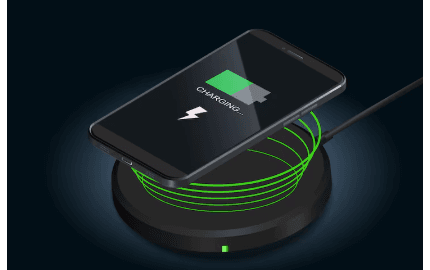
The concept of an energy-autonomous smartphone, which continuously charges itself from its surroundings without ever needing to be plugged in, sounds like something from a product launch talk that is welcomed with courteous skepticism before quietly not being shipped. However, the components are developing and the underlying physics is genuine.
One of the most promising methods is ambient radio frequency harvesting, which uses specialized receiver circuits to transform electromagnetic energy that is already present in any building or city block—such as Wi-Fi signals, Bluetooth beacons, and cellular waves—into usable electrical current. At the moment, the power levels involved are rather small.
Milliwatts, not the watts required for a contemporary smartphone to run its processor and screen at maximum capacity. The engineering issue is that gap, and it’s a big one. However, the direction of travel has been determined, and prototypes show that some gadget functionality can already be maintained in this manner.
In some ways, transparent solar technology is more advanced. Both direct sunshine and interior ambient lighting can be captured by arrays that are integrated into a phone’s display layer or applied as flexible panels on the back surface. This allows the device to receive a gradual trickle of charge throughout the day as it is carried outside or placed on a desk by a window.
Although the efficiency figures for transparent solar panels are lower than those for conventional panels—transparency and energy capture are physically at odds—they make a significant contribution when utilized in conjunction with other collecting techniques rather than on their own. The charger may not be eliminated by a single energy source, but it is more likely to be eliminated by multiple sources operating concurrently.
There is an ingeniously straightforward attraction to piezoelectric harvesting, which uses the mechanical stress of human motion and temperature differences between skin and air to generate electricity. The phone is carried by you. As you carry the phone, it charges a little. A few microwatts are contributed by each step up a staircase or change of grip.
Though little on an individual basis, they add up to a system. The most promising of the consumer-scale technologies is ultrasonic over-the-air charging, which transmits concentrated power through walls and the air in a room without requiring surface contact. However, it raises concerns about safety certification, interference, and what happens when several devices are vying for the same ultrasonic signal.
Convenience is important, but the motive goes beyond that. A significant and expanding portion of electronic trash worldwide is made up of abandoned charging cables, power bricks, and proprietary connectors; this issue might be resolved by permanently sealing the charging port. Additionally, a phone without a port is more robust, water-resistant, and structurally sound.
As these technologies come together in research settings, there’s a sense that the charging cord is where the headphone jack was ten years ago—it hasn’t disappeared yet, but the industry has already decided where it will go. When consumer-ready versions will be available is still unknown. However, the course has been decided.
