

The fact that the most significant advancement in artificial intelligence is taking place inside a gadget that most people use to browse through food photos and check the weather seems a little ridiculous. However, that is essentially what has occurred. Once a glorified communication tool, the smartphone has evolved into the main means of delivering AI in daily life. This has happened gradually, almost covertly, one software update at a time, rather than through a big announcement.
Small conveniences were the first, barely noticeable. predictive text that picked up on your routines. apps for photos that subtly improved fuzzy images. voice assistants with the ability to play music or set a timer. It didn’t feel revolutionary at all. Beneath the surface, however, neural engines were being integrated into chipsets, processors were becoming more specialized, and the difference between what could happen in a large data center and what could happen in your hand was rapidly closing. Canalys estimates that by 2024, about 16% of smartphones shipped worldwide could perform generative AI tasks on-device. By 2028, that percentage is predicted to rise above 50%. In a few years, every phone that is sold might be an AI machine in some way.
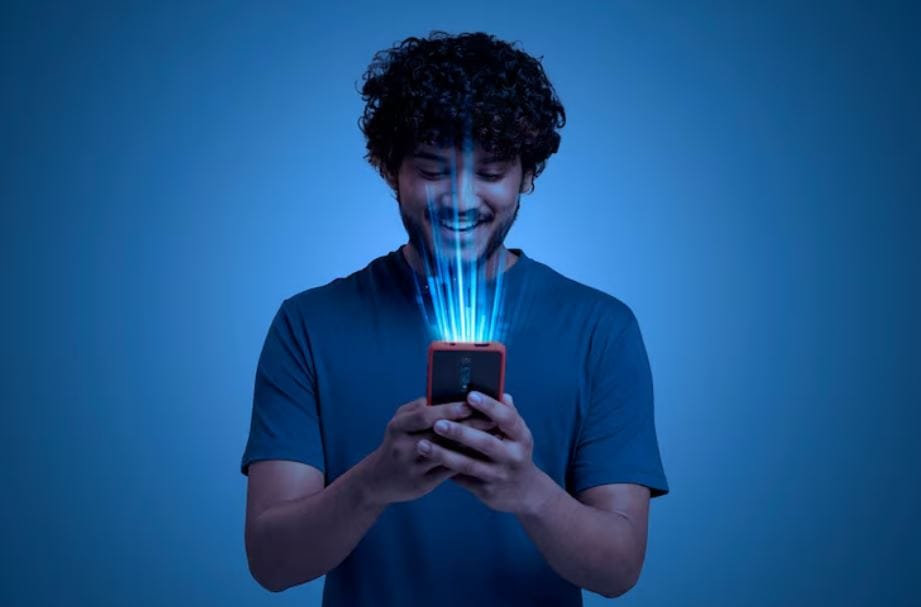
One of the less well-known but potentially most significant stories in this field is the transition from cloud to edge processing. For many years, it was believed that computationally demanding tasks like image creation, real-time translation, and intricate photo editing needed to be offloaded to distant servers. Phones served only as an interface. The actual work was done somewhere else. That is evolving. Apple’s A-series silicon, Qualcomm’s Snapdragon chips, and Google’s Tensor Processing Units have all been redesigned around AI workloads, employing specialized architectures like systolic arrays that process massive volumes of data concurrently while consuming power. When Samsung demonstrated real-time call translation on a Galaxy S24 without any noticeable lag during a phone launch event in 2024, it was difficult to avoid feeling as though a threshold had been crossed.
The way AI reduces the gap between capability and accessibility is what sets this tech cycle apart from others. Once the domain of someone who spent hours in front of Photoshop, professional-grade photo editing now only requires a few taps. With results that appear unsettlingly realistic, Google’s Magic Editor on the Pixel 9 allows users to move subjects, change skies, and even remove people from backgrounds. Notification summaries and fully on-device live transcription features were added to Apple’s most recent iOS version. These aren’t tricks. They are unannounced structural modifications to the way people engage with information that are integrated into the operating system like a fresh coat of paint.
However, it’s worthwhile to sit with the tension that exists here. A phone requires more data to operate properly as it gets smarter. The machine is fed information such as voice patterns, browsing habits, location history, and biometric markers. Although some exposure is lessened by on-device processing, many features still depend on cloud connectivity, and the privacy implications are still unclear. Although the EU’s AI Act has begun establishing regulations, most users are unaware of what their phone actually knows about them, and global enforcement is, at best, inconsistent. Whether the industry will self-correct on transparency or if a significant violation is required to compel the discussion is still up for debate.
The question of whether all this intelligence is truly beneficial or merely remarkably innovative also needs to be considered. Certain features, like AI-generated wallpapers or the ability to add yourself to a group photo that you weren’t in, seem like solutions searching for problems. Others seem to matter more deeply, such as AI-driven accessibility tools for visually impaired users or real-time health monitoring via phone sensors. There is a real gap between spectacle and substance, and manufacturers haven’t always been transparent about which side their flagship features fall on.
However, given the trajectory, it’s hard to deny that smartphones are where AI most directly interacts with everyday life. Not in research facilities, not in autonomous vehicles trapped in regulatory limbo, but in the device charging overnight on the nightstand. The revolution ended up there. The question of whether we’re prepared for everything it entails is quite different.
