

When you’re checking your bank balance on a crowded train and just a beat too late realize that the person behind you is looking over your shoulder, it makes you feel uneasy. It’s something most people have felt. A quick tilt of the phone, the screen going dark, and maybe a hand cupped together. For years, these makeshift solutions have been used to protect mobile privacy in public places. It looks like Samsung has had enough of that.
The company just released a new feature for its new Galaxy S26 Ultra called Privacy Display. The idea behind it is pretty simple: make the screen almost impossible to read for people who aren’t looking at it straight on. No special glasses or screen protectors you can buy elsewhere. It’s built into the phone itself. It’s worth pausing to think about the fact that this is the first time a security screen of this nature has been built directly into a mobile device. Why did it take so long?
Shoulder surfing, which is what security experts have called it for decades, is a very old-fashioned way to do things. No need for malware. There was no complex hack. Someone looks at your screen while you type in your passcode or read a message from your lawyer. Bad things can happen as a result. Thieves have been caught watching people enter their PINs on their phones in public. They then stole the phones and used the PINs to lock the victims out of all of their digital accounts, photos, banking apps, and everything else. The weakness was never really technical. It felt like a body.
Samsung’s answer works in two ways. A piece of hardware controls how the screen projects light from all sides, and software lets users choose which apps or moments really need to be protected. Someone might only want the filter to be on when they open a banking app or when the lock screen shows previews of notifications. It’s not a permanent frost on the whole screen; you can change it, which is likely the most important detail for real users. If there’s a feature on your phone that makes it annoying to use alone, turn it off right away and forget about it.
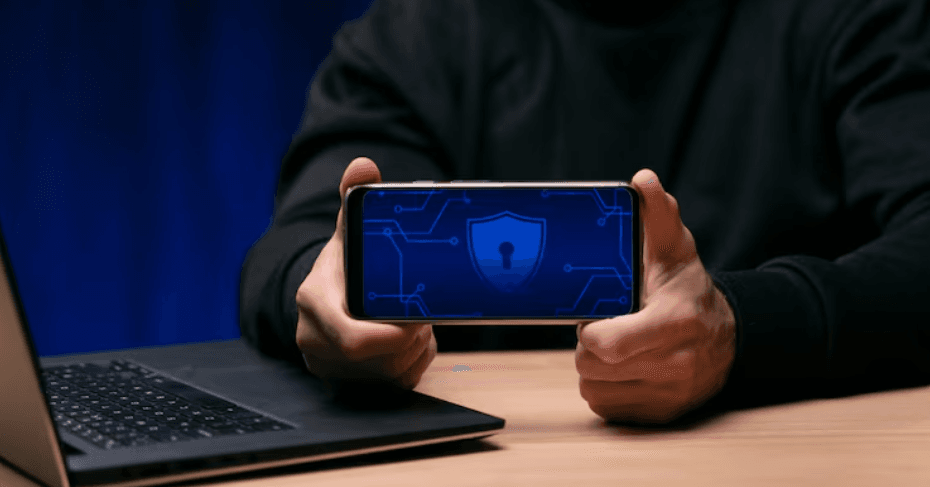
In a way, this approach seems to be a more accurate reflection of how people really feel about privacy issues. For a long time, people have talked about encryption, firewalls, and software bugs when they talk about mobile security. All of that is important. Someone could read your two-factor authentication code over your shoulder in a coffee shop and use it before you do. In that case, your device’s encryption is not protecting you at all. In a quiet way, Samsung seems to be realizing that the front of the phone is just as important as what’s inside it.
The feature works with Samsung Knox, the company’s current enterprise-level security framework that protects data at the system level. They’re meant to cover both sides of the issue: what can be seen and what can be accessed. Even though the Privacy Display is clearly the more noticeable addition, the two work well together.
It’s still not clear how well the hardware filtering will work in real life, with different angles, lighting, and situations. No matter how well they are made, optional features only protect the people who turn them on. There is a problem with that that can’t be fully fixed by display technology. But this is long overdue as a step toward seeing visual privacy as a real security issue instead of a personal annoyance.
