
Close Menu
GlofiishGlofiish
    Facebook X (Twitter) Instagram
    Facebook X (Twitter) Instagram
    GlofiishGlofiish
    Subscribe
    • Home
    • Glofiish Devices
    • Technology
    • Tech Devices
    • News
    • About
    • Privacy Policy
    • Contact Us
    • Terms Of Service
    GlofiishGlofiish
    Home » The Rise of ‘Dark Kitchens’ and the AI Orchestrating Your Takeout Delivery
    Global

    The Rise of ‘Dark Kitchens’ and the AI Orchestrating Your Takeout Delivery

    Taylor LoweryBy Taylor LoweryJuly 28, 2026No Comments5 Mins Read
    Facebook Twitter Pinterest LinkedIn Tumblr Email
    Share
    Facebook Twitter LinkedIn Pinterest Email

    There is an empty warehouse on the edge of a busy business area. There are no signs or storefronts, and the smell of garlic doesn’t reach the street. It doesn’t look like anything important from the outside. One hundred meals are made every night inside for at least four “restaurants,” but none of them have a dining room, a hostess stand, or even a single table. The kitchen is dark. It’s likely that you’ve already bought something from one.

    The idea behind it is pretty simple: a commercial kitchen that only takes delivery orders and doesn’t have a storefront that people can visit. What’s not as clear is how much these businesses have changed since the early days of pop-ups and repurposed takeout counters during the pandemic. The real change isn’t the kitchen model itself; it’s the AI that sits on top of it and makes decisions faster and more accurately than a human kitchen manager could.

    These days, ghost kitchens get orders from Uber Eats, Deliveroo, and any other delivery service that’s popular in a city at the same time. They then route these orders through a single dashboard. AI systems keep track of hourly patterns of demand and change preparation schedules based on past sales data, events in the area, and even the weather. On a Tuesday in November when it rains, things act differently than on a Friday in July when it doesn’t rain. This is known by the system. The staff only cooks.

    Take a step back and think about how strange that is. Ten years ago, a restaurant manager would have looked at a busy service, gut-wrenched what to prepare, and hoped their gut was right. Now, those calls are made with a higher level of certainty, or at least a more well-balanced level of uncertainty, by an algorithm that was built on thousands of past orders. How you feel about kitchens in general will probably determine whether that makes you feel calm or slightly uneasy.
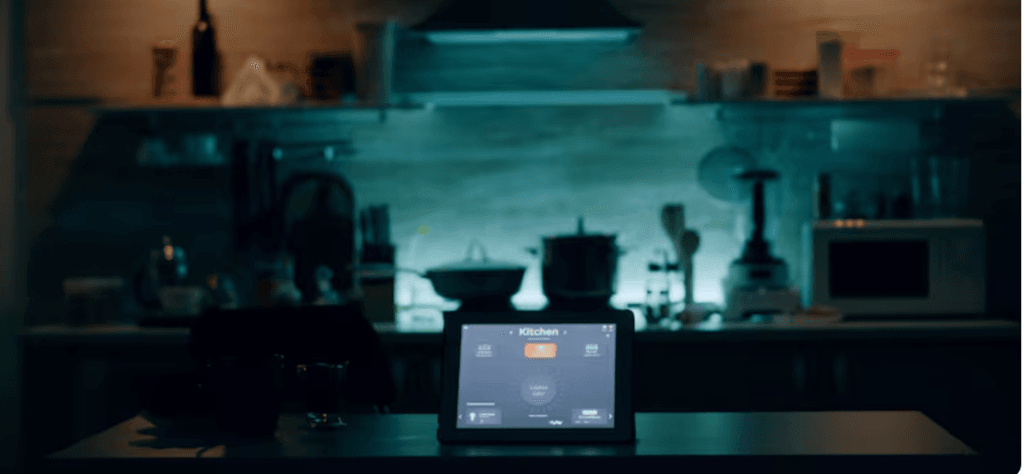
    The Rise of ‘Dark Kitchens’
    The Rise of ‘Dark Kitchens’

    The economics were what first made the model grow. Dark kitchens usually have 40 to 60 percent lower real estate costs than regular restaurants, and they need a lot less staff because they don’t have to run the front of the house. The barrier to entry dropped a lot for food entrepreneurs who wanted to try out a new idea. From a shared kitchen, a virtual brand can be up and running in days, not months. It will have its own menu, logo, and look on delivery apps.

    Because the barrier was so low, there are now a lot of virtual brands that most people still don’t know are brands. It’s not unusual for one kitchen to run four concepts at the same time. Gourmet smash burgers might be made in one space under one name, vegan grain bowls under another, and late-night loaded fries under a third. Each would have its own ratings, menu, and identity on whatever app you’re using at 9pm. This is a smart way to spend time in the kitchen when it’s not being used, and the AI that manages inventory for all three menus means less waste and higher profits. If it seems a little strange to order from a “restaurant” that’s only an icon on your phone, the industry has mostly chosen not to talk about it.

    Logistics for delivery have changed in ways that are easy to see. Now, route optimization takes into account real-time traffic, where riders are, and order batching by geography. This groups deliveries that are close together to save time and energy. According to the people who run these systems, the result is that average delivery times are cut by about 20 to 30 percent. When you measure food quality in minutes, that’s not a small number.

    Of course, there is still a limit. It’s still really hard to keep food fresh during a 25-minute delivery window. Putting things in boxes is helpful, but it’s not enough. Some foods just don’t travel well, and algorithmic routing can’t change the fact that a soggy fry is a soggy fry. The better-run businesses plan their menus with delivery in mind from the start. This is a small but important difference between those who are serious about this and those who are just after the model.

    When you look ahead, it’s clear that technology isn’t done changing. In a number of markets, drone delivery trials are still going on. Ingredients that are tracked by blockchain are being tested to make the supply chain more clear. At this point, the idea of a fully autonomous kitchen where robots do all the cooking, putting things together, and packaging without any help from people is still just an idea, but the direction is clear.

    Even so, it’s still not clear if any of this changes how we eat. It’s real food. The taste is real. There’s just no kitchen to be seen.

    Dark Kitchens
    Share. Facebook Twitter Pinterest LinkedIn Tumblr Email
    Taylor Lowery
    • Website

    Taylor Lowery is a senior editor at glofiish.com, a technology writer, and a true circuit enthusiast. She works in the tech sector, so she does more than just cover it. Taylor works for a smartphone company during the day, which gives her a firsthand look at how gadgets are designed, manufactured, promoted, and ultimately placed in people's hands.Her writing is unique because of this insider viewpoint. Taylor makes the technical connections that other writers overlook, whether she's dissecting the silicon architecture of a new flagship chipset, analyzing the implications of a significant Android update for actual users, or tracking the effects of a new AI model announcement across the mobile industry.Her editorial focus covers every aspect of the current tech stack, including smartphone software and hardware, artificial intelligence (from large language models and generative tools to on-device inference), and the broader innovation trends influencing the direction of the consumer technology sector. She is especially passionate about the nexus of AI and mobile computing, which she feels is still in its most exciting early stages.

    Related Posts

    Why Silicon Valley VCs Are Shifting Capital from Generative Apps to Infrastructure and Power

    August 19, 2026

    The Algorithmic Market Maker , How AI Is Driving Liquidity Across Global Stock Exchanges

    August 13, 2026

    The Great Copper Crunch , How Global Tech Infrastructure Hit a Physical Material Wall in 2026

    August 11, 2026
    Leave A Reply Cancel Reply

    You must be logged in to post a comment.

    Technology

    The Hydrogen Highway Myth , Inside California’s $10 Billion Clean Energy Gamble

    By Taylor LoweryAugust 26, 20260

    Arnold Schwarzenegger declared in 2004 that California will construct a Hydrogen Highway, a network of…

    Why the UK Government Created an Emergency Taskforce to Regulate Agentic Superintelligence

    August 25, 2026

    Inside the Cyberwar for Control of North America’s Interconnected Regional Energy Grids

    August 25, 2026

    Why Wall Street Analysts Are Downgrading Legacy Telecoms in Favor of Orbital Mesh Networks

    August 25, 2026

    Inside Wall Street’s $40 Billion Bet on Autonomous Deep-Sea Mining Technologies

    August 25, 2026

    Why Australian Miners Are Using Autonomous AI Agents to Locate Underground Mineral Deposits

    August 25, 2026

    The Hallucination Safeguard , How New Verification Layer Software Stops AI Mistakes

    August 25, 2026

    The Windows Mobile Resurgence , Why Gen Z Programmers in Brooklyn Reject iOS for Pocket PC OS

    August 25, 2026

    Inside the Melbourne Facility Training Physical AI Robots to Assist Elderly Citizens

    August 25, 2026

    Silicon Valley’s Quiet Obsession with Pre-Capacitive Touchscreens , The Glofiish Legacy

    August 25, 2026
    Disclaimer

    Glofiish.com’s content, which includes market reporting, technology analysis, AI commentary, and device coverage, is solely meant for general informational and educational purposes. Nothing on this website is intended to be financial, investment, legal, or professional technology advice specific to your situation.

    We’re strongly advise all readers to seek independent professional financial advice from a qualified financial adviser before making any financial, investment, or purchasing decisions based only on information found on this website. Technology markets are unstable; product availability, cost, and performance attributes fluctuate quickly.

    Facebook X (Twitter) Instagram Pinterest
    • Home
    • Glofiish Devices
    • Technology
    • Tech Devices
    • News
    • About
    • Privacy Policy
    • Contact Us
    • Terms Of Service
    © 2026 ThemeSphere. Designed by ThemeSphere.

    Type above and press Enter to search. Press Esc to cancel.