

There is an empty warehouse on the edge of a busy business area. There are no signs or storefronts, and the smell of garlic doesn’t reach the street. It doesn’t look like anything important from the outside. One hundred meals are made every night inside for at least four “restaurants,” but none of them have a dining room, a hostess stand, or even a single table. The kitchen is dark. It’s likely that you’ve already bought something from one.
The idea behind it is pretty simple: a commercial kitchen that only takes delivery orders and doesn’t have a storefront that people can visit. What’s not as clear is how much these businesses have changed since the early days of pop-ups and repurposed takeout counters during the pandemic. The real change isn’t the kitchen model itself; it’s the AI that sits on top of it and makes decisions faster and more accurately than a human kitchen manager could.
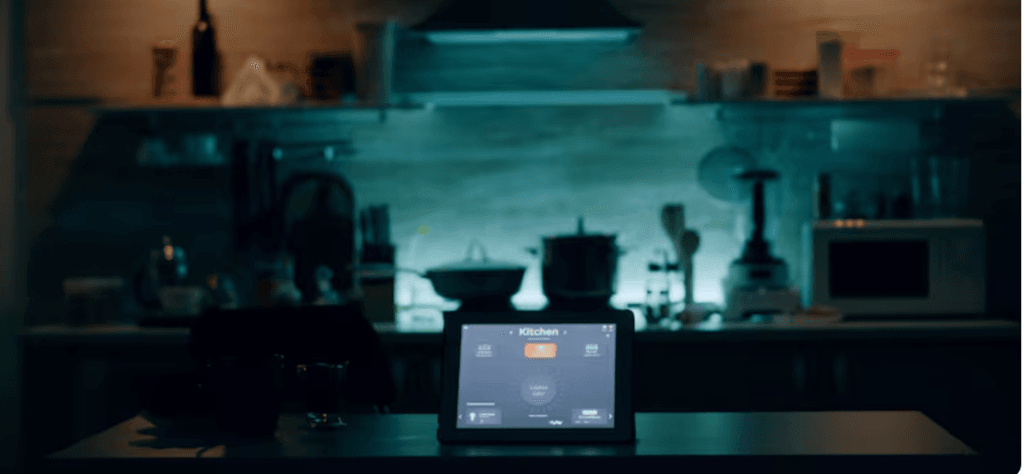
These days, ghost kitchens get orders from Uber Eats, Deliveroo, and any other delivery service that’s popular in a city at the same time. They then route these orders through a single dashboard. AI systems keep track of hourly patterns of demand and change preparation schedules based on past sales data, events in the area, and even the weather. On a Tuesday in November when it rains, things act differently than on a Friday in July when it doesn’t rain. This is known by the system. The staff only cooks.
Take a step back and think about how strange that is. Ten years ago, a restaurant manager would have looked at a busy service, gut-wrenched what to prepare, and hoped their gut was right. Now, those calls are made with a higher level of certainty, or at least a more well-balanced level of uncertainty, by an algorithm that was built on thousands of past orders. How you feel about kitchens in general will probably determine whether that makes you feel calm or slightly uneasy.
The economics were what first made the model grow. Dark kitchens usually have 40 to 60 percent lower real estate costs than regular restaurants, and they need a lot less staff because they don’t have to run the front of the house. The barrier to entry dropped a lot for food entrepreneurs who wanted to try out a new idea. From a shared kitchen, a virtual brand can be up and running in days, not months. It will have its own menu, logo, and look on delivery apps.
Because the barrier was so low, there are now a lot of virtual brands that most people still don’t know are brands. It’s not unusual for one kitchen to run four concepts at the same time. Gourmet smash burgers might be made in one space under one name, vegan grain bowls under another, and late-night loaded fries under a third. Each would have its own ratings, menu, and identity on whatever app you’re using at 9pm. This is a smart way to spend time in the kitchen when it’s not being used, and the AI that manages inventory for all three menus means less waste and higher profits. If it seems a little strange to order from a “restaurant” that’s only an icon on your phone, the industry has mostly chosen not to talk about it.
Logistics for delivery have changed in ways that are easy to see. Now, route optimization takes into account real-time traffic, where riders are, and order batching by geography. This groups deliveries that are close together to save time and energy. According to the people who run these systems, the result is that average delivery times are cut by about 20 to 30 percent. When you measure food quality in minutes, that’s not a small number.
Of course, there is still a limit. It’s still really hard to keep food fresh during a 25-minute delivery window. Putting things in boxes is helpful, but it’s not enough. Some foods just don’t travel well, and algorithmic routing can’t change the fact that a soggy fry is a soggy fry. The better-run businesses plan their menus with delivery in mind from the start. This is a small but important difference between those who are serious about this and those who are just after the model.
When you look ahead, it’s clear that technology isn’t done changing. In a number of markets, drone delivery trials are still going on. Ingredients that are tracked by blockchain are being tested to make the supply chain more clear. At this point, the idea of a fully autonomous kitchen where robots do all the cooking, putting things together, and packaging without any help from people is still just an idea, but the direction is clear.
Even so, it’s still not clear if any of this changes how we eat. It’s real food. The taste is real. There’s just no kitchen to be seen.
