
There are still buzzing machines, a faint antiseptic smell, flash sheets on the walls, and someone clenching their teeth in the chair when you walk into a tattoo studio in any major city today. But something has changed behind the scenes. AI tools are being used by more and more artists and clients to come up with design ideas before the needle even touches the skin. People who get tattoos are now able to talk about it, even though it’s only a small change.
At first glance, it’s easy to see why AI-made tattoo designs are appealing. These tools can quickly come up with dozens of different versions of an idea. A client who has trouble putting their thoughts into words can type a few words into a prompt and get a visual response right away. For example, they might want something “geometric but also organic, dark but not heavy.” It can cut down on the back-and-forth brainstorming that takes up artists’ free time. We shouldn’t just brush this off because it’s not helpful in real life.
But this is where things get tricky. People who get tattoos have always had a special relationship with who owns art. Informally, people share designs, copy flash art, and borrow styles. This is nothing new. AI does, however, bring about a new type of problem. These models for making images were trained on huge collections of art, some of which was taken from the internet without the artists’ permission. The tribal sleeve or neo-traditional rose that an AI makes is based on the work of thousands of real tattoo artists who never agreed to add to that training pool. Many of those artists might not even know it happened.
In terms of moral weight, that is different from normal artistic influence. Tattoo artists have always learned their craft from one generation to the next by studying published work, getting ideas from conventions, and learning from their mentors. It feels like something else when an algorithm cleans up portfolios on a large scale. It’s hard not to notice that artists whose work was freely shared online and who built communities around their art were more likely to have it taken up. In a strange way, their kindness was part of what made them vulnerable.
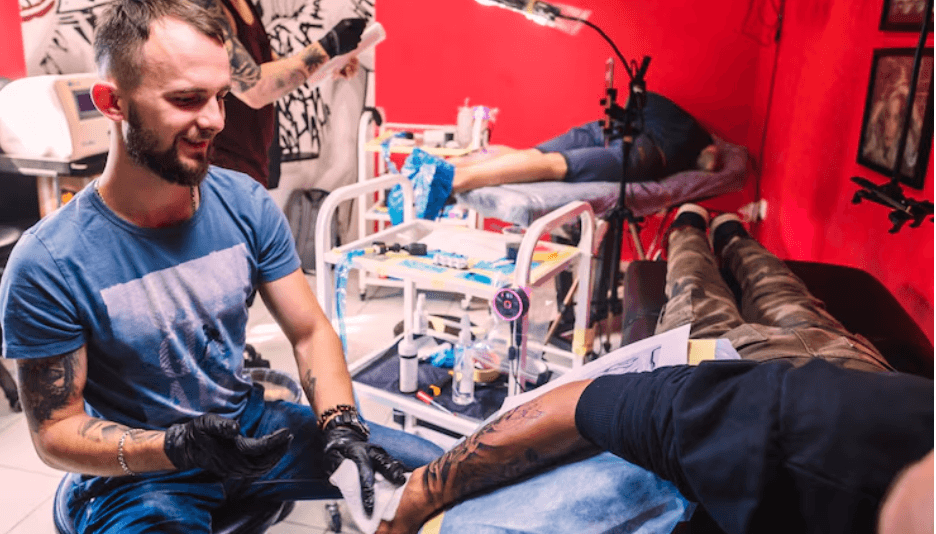
It’s important to think about the fact that AI can’t really copy the act of getting a tattoo. Skin isn’t a flat surface. As a result of its location, age, scar tissue, and level of hydration, it stretches and breathes in different ways. A skilled artist reads all of that in real time and changes the needle’s depth and pressure in ways that are more like guesswork than math. That is not in any software. You can’t have the same relationship with a client as you do with an artist—the trust that is built through hours of talking and sitting in that chair together. People don’t pick a tattoo artist like they pick a font. There is a very personal issue at stake.
The tattoo business isn’t going away. It’s worth about $2.4 billion and is expected to grow a lot until the early 2030s. Actually, younger people are making more things, not less. It’s not likely that AI will wipe out that industry the way automation has done to manufacturing or data entry. Because tattooing is physical and involves people, it naturally creates a kind of resistance that most desk jobs don’t have.
Still, it seems important to keep an eye on how studios use these tools and whether the artists whose work trained the algorithms will ever get credit for it. These highs are real. The lows are the same. The moral questions are still mostly unanswered; they’re just sitting there in the studio corner like a design that hasn’t been inked yet.
