

You can find them on eBay on any given Tuesday if you know what to look for. The sale describes a Glofiish X500 in its original packaging as “rare vintage Windows Mobile PDA, working condition, stylus included.” Compared to five years ago, the asking price is now higher. Not significantly, not in a way that makes financial headlines, but enough that the person who listed it is obviously aware that they have something that a particular kind of person desires. When one shows up, the buyer is most likely someone who worked in technology in 2006 and recalls using one of these, or someone who takes mobile history seriously enough to be interested in what the world was like six months before to the arrival of the iPhone and how it altered everything.
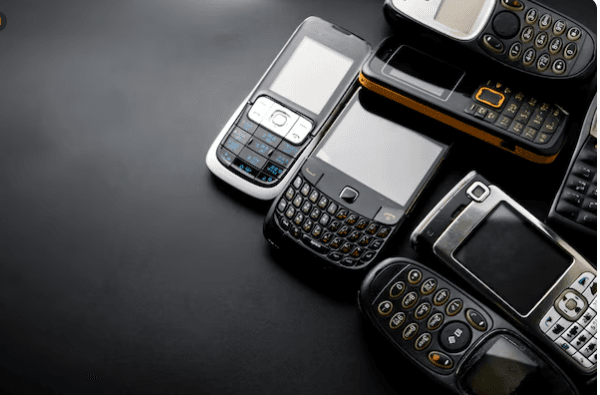
Even tho the Glofiish has a small and specialized role in it, the nostalgia economy surrounding outdated technology is real. It’s important to comprehend the motivations behind it in 2026 since they go beyond sentimentality. As vast amounts of DRAM and NAND supply are absorbed by the development of AI infrastructure, memory chip prices have skyrocketed, driving the price of flagship smartphones at the high end well beyond the threshold that prior smartphone cycles had normalized. The psychological gap between “buying a new phone” and “buying something old and interesting” is smaller when a brand-new Galaxy or iPhone costs $1,400. Not for the majority of individuals. However, it opens a door for a particular segment of tech-savvy customers.
This is accompanied with the aspect of digital detoxification. In 2026, there is a counter-cultural trend that has been developing for a number of years: people are purposefully moving away from smartphones as constant notification delivery systems in favor of gadgets that perform fewer tasks without the use of algorithms. The 2017 resurrection of the Nokia 3310 demonstrated that there was enough consumer demand for vintage phone designs and diminished functionality to support a product.
The Glofiish doesn’t immediately profit from that trend because it’s too complicated, too opaque, and too reliant on a dead ecology to appeal to someone seeking simplicity. However, it occupies adjacent cultural space as a gadget that, independent of the monitoring and attention-capture mechanisms that characterize contemporary phones, symbolizes computing on its own terms.
The Glofiish’s appeal to collectors in particular is based on a number of elements that have proven to be reliable value generators in vintage electronics markets. scarcity in nice shape. position in history at a particular turning point in technology. The physical artifact quality of a sealed retail box retaining a version of the item that most people saw in 2006 in a completely different state—used, scratched, with a dead battery and a stylus misplaced in a jacket pocket. A sealed Glofiish M700, with its slide-out keyboard still in place and never expanded, is a record of what mobile enterprise computing aspired to be just before it was superseded by something more compact, seamless, and user-friendly.
It is not appropriate to present the financial comparison to stocks as one since it cannot withstand close examination. Glofiish devices are not tracked by any index. This hardware has a very limited collector market, few transactions, and a price-discovery process that is driven by individual buyers and sellers rather than anything approaching a liquid market. Anyone who owned one in 2008 would have been shocked by the prices at which sealed units have sold. It is considerably more difficult to determine whether it is a trend or the result of a few eager buyers finding the proper motivated seller.
At one of its quirky edges, the Glofiish collector phenomenon accurately reflects the larger nostalgia economy, where gadgets that were never mass-market favored, culturally dominant, or particularly well-remembered are being reexamined because of their marginality. Something about a piece of technology that didn’t find a large audience in 2006 finding a new kind of audience in 2026 is a little intriguing. Not a big one. Not very profitable. But a genuine one.
