

From the outside, it appears to be a minor skirmish taking place in American statehouses. No demonstrations outside biotech labs, no tractors obstructing roads. Meat produced from animal cells in steel bioreactors rather than raised on pasture is prohibited by these bills, which were quietly signed.
First place went to Florida. In an attempt to “save our steaks,” Governor Ron DeSantis signed a law prohibiting the sale of lab-grown meat in his state in May 2024. In a matter of weeks, Alabama followed. More than a dozen states currently limit the labeling of cultivated meat products, with Arizona and Tennessee starting to draft similar legislation. The agriculture minister of Italy went so far as to declare the nation “the world’s first safe from the social and economic risks of synthetic food.” Regulatory caution is not what that is. It has been simmering for longer than most headlines indicate, and it is a culture war.
Why a product that hardly appears on grocery store shelves has generated so much legislative activity is worth considering. Cultivated meat is still produced on a very small scale; Memphis Meats, one of the industry’s pioneers, once calculated that the cost of production was close to $2,400 per pound. The only nation where consumers can actually purchase a product made from cultured chicken is still Singapore. Politicians, however, are behaving as if the slaughterhouse is already out of date. The prohibitions seem to be more about protecting an identity—what it means to farm, eat, and be self-sufficient in a nation that values that concept—than they are about a threat to the current market.
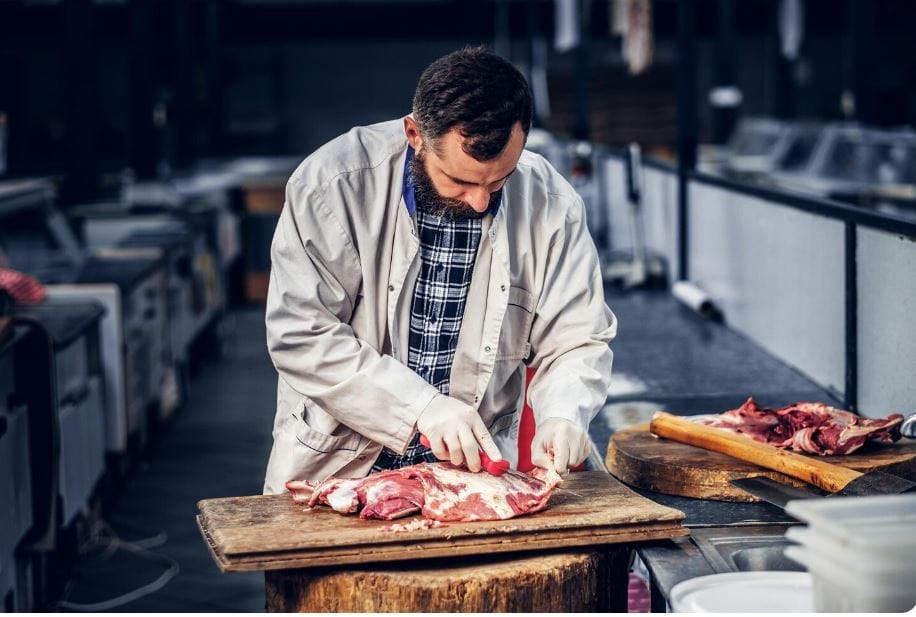
However, the picture becomes more complex and fascinating when you speak with real farmers. Last year, Royal Agricultural University researchers conducted interviews with over 80 British farmers and discovered something that was almost the opposite of panic. The study’s principal investigator, Professor Tom MacMillan, characterized farmers as inquisitive rather than antagonistic, fascinated by the prospect of providing cultivated meat producers with raw materials (such as oilseed rape meal) or even housing production facilities on their own property. In the words of one Gloucestershire farmer, Dom Morris, “Animals will probably remain on farms like his for the rest of his working life and probably his children’s too.” MacMillan referred to it as a slow-burn risk. It’s not a crisis.
A different, more subdued conflict exists within the industry itself, but it receives far less attention than the political struggle. Businesses creating cultivated meat have been remarkably reluctant to share growth-medium recipes, cell lines, and other fundamental research. The Good Food Institute and other nonprofits have advocated for open repositories, claiming that secrecy is stifling a sector that urgently needs to grow in order to compete on price.
The majority of the approximately $366 million invested in cultured meat in 2020 came from private funds rather than government grants, indicating that private businesses are primarily driving the field and using patents to safeguard their advantages rather than disseminating research. It’s a strange irony: an industry that positions itself as the transparent, moral substitute for industrial agriculture acts internally much like any other cutthroat tech industry protecting its intellectual property.
It’s genuinely unclear if farmed meat will ever pose a significant threat to conventional farming. Cost, texture, and consumer acceptability must all be addressed simultaneously by the technology, and none of those issues have been resolved. What is evident is that the war being waged in public—bans, slogans, and framing of the culture-war—won’t ultimately decide the result. Whether this industry ever develops at all may depend more on the more subdued conflict over funding, patents, and shared science that takes place primarily behind closed doors.
