
Close Menu
GlofiishGlofiish
    Facebook X (Twitter) Instagram
    Facebook X (Twitter) Instagram
    GlofiishGlofiish
    Subscribe
    • Home
    • Glofiish Devices
    • Technology
    • Tech Devices
    • News
    • About
    • Privacy Policy
    • Contact Us
    • Terms Of Service
    GlofiishGlofiish
    Home » Why Voice-Activated Tech is Failing Millions with Speech Impediments
    Tech Devices

    Why Voice-Activated Tech is Failing Millions with Speech Impediments

    Taylor LoweryBy Taylor LoweryJune 30, 2026No Comments4 Mins Read
    Facebook Twitter Pinterest LinkedIn Tumblr Email
    Share
    Facebook Twitter LinkedIn Pinterest Email

    A recent academic review of speech recognition failures contains a small but telling detail: when a man with dysarthria says “drink fresh water,” the software hears “available now.” This is not a typo. Not a typical mishearing. Simply put, the machine created something completely different that fit the patterns it had learned and sounded plausible. Millions of people experience this peculiar form of failure on a daily basis.

    It’s easy to forget how new and limited voice-activated technology is because it has become so integrated into daily life. Whisper-based transcription tools, Google Assistant, Alexa, and Siri were all trained to listen to a relatively narrow segment of humanity. Speaking into phones or listening to audiobooks, these young, standardized English speakers are primarily American or British. These systems were raised in that acoustic environment. A person with cerebral palsy, a stutterer, someone recovering from a stroke, or an elderly person with a weakening voice—anyone whose voice exists outside of that world—runs into a wall that the rest of us are unaware of.

    Over 3 million Americans stutter, and approximately 7.5 million struggle to communicate and be understood. These are not insignificant figures, but voice assistants continue to treat everything else as noise and fluent, “normal” speech as the default. Error rates for non-normative speech can be five to ten times higher than for typical speakers, according to researchers examining this disparity. According to reports, a popular model yielded an average word error rate of roughly 6.5 percent for standard speech but almost 62 percent for dysarthric speech. It’s not a rounding error. Exclusion is a feature of the architecture.

    The way the failures manifest is what makes this especially unsettling. It’s not always a blank stare or a courteous “I didn’t catch that.” Researchers refer to this phenomenon as hallucination. Occasionally, the system creates a completely different sentence and presents it with complete confidence. A pause is filled with made-up words. A stutter is sometimes described as something more akin to mockery than misunderstanding. A machine that refuses to acknowledge uncertainty when it ought to has an almost unsettling quality.
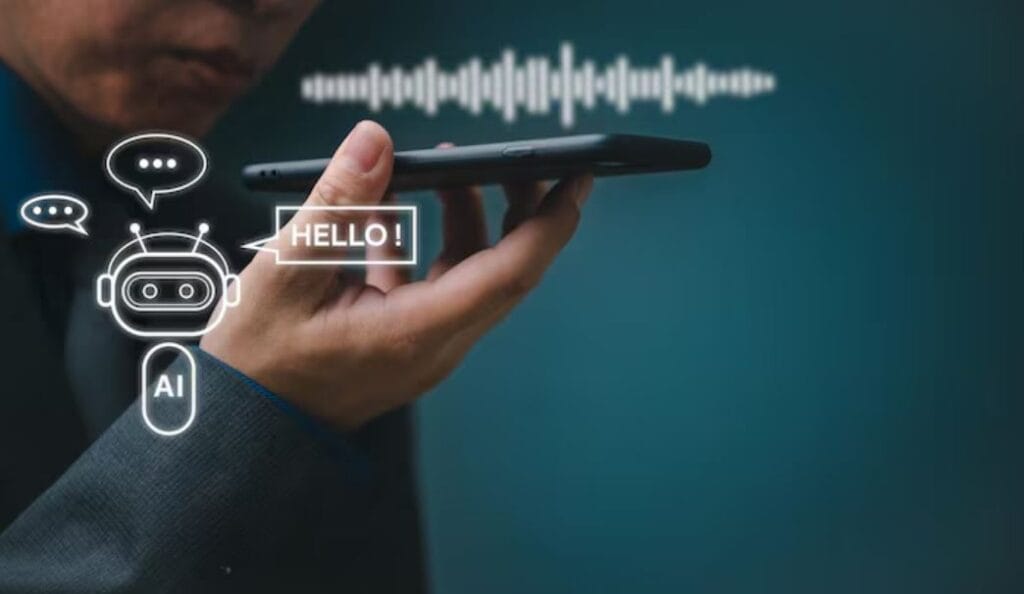
    Why Voice-Activated Tech is Failing Millions with Speech Impediments
    Why Voice-Activated Tech is Failing Millions with Speech Impediments

    A few smaller businesses have made an effort to bridge the gap. Voiceitt allows users to create a personal voice dictionary that the app gradually learns to translate. It was founded by a man whose grandmother suffered a stroke and lost most of her speech. By acting as a go-between for Alexa, Tecla enables individuals with speech impairments to tap pre-programmed commands rather than depending on the assistant to directly interpret their voice. These are practical, even transformative, solutions. However, they are workarounds applied to systems that were not initially designed with this population in mind; they are patches rather than fixes.

    It’s difficult to ignore the pattern’s recurrence. Large tech firms scale convenience for the typical user remarkably well, but they scale inclusion for everyone else remarkably slowly. When voice tech truly helped their clients, therapists surveyed in a UK study reported real benefits, such as increased independence, confidence, and decreased reliance on caregivers. However, the same study discovered that almost 80% of speech-language pathologists had never even attempted to use these tools in a professional setting, frequently due to financial constraints or a lack of training before the technology itself.

    Reading the research gives the impression that the industry views this as a data issue rather than a design philosophy issue. Of course, more varied training data would be beneficial. The deeper problem, however, is that “normal speech” was never a neutral baseline; rather, it was a decision made by engineers who prioritized the simplest scenario. It’s unclear if that decision will be reexamined or if millions of people will continue to adjust to machines that won’t change.

    Voice-Activated Tech
    Share. Facebook Twitter Pinterest LinkedIn Tumblr Email
    Taylor Lowery
    • Website

    Taylor Lowery is a senior editor at glofiish.com, a technology writer, and a true circuit enthusiast. She works in the tech sector, so she does more than just cover it. Taylor works for a smartphone company during the day, which gives her a firsthand look at how gadgets are designed, manufactured, promoted, and ultimately placed in people's hands.Her writing is unique because of this insider viewpoint. Taylor makes the technical connections that other writers overlook, whether she's dissecting the silicon architecture of a new flagship chipset, analyzing the implications of a significant Android update for actual users, or tracking the effects of a new AI model announcement across the mobile industry.Her editorial focus covers every aspect of the current tech stack, including smartphone software and hardware, artificial intelligence (from large language models and generative tools to on-device inference), and the broader innovation trends influencing the direction of the consumer technology sector. She is especially passionate about the nexus of AI and mobile computing, which she feels is still in its most exciting early stages.

    Related Posts

    Apple’s Next iPhone May Think for You—And That’s Raising Big Questions

    June 30, 2026

    Why China’s AI ‘Doomers’ Are Suddenly Going Quiet

    June 30, 2026

    The Rise of AI Agents That Work Without Human Instructions

    June 30, 2026
    Leave A Reply Cancel Reply

    You must be logged in to post a comment.

    News

    Apple’s Next iPhone May Think for You—And That’s Raising Big Questions

    By Taylor LoweryJune 30, 20260

    Cupertino frequently shows up late to events and acts as though it never happened. That’s…

    Why China’s AI ‘Doomers’ Are Suddenly Going Quiet

    June 30, 2026

    The Lab-Grown Meat Industry’s Secret War with Traditional Farming

    June 30, 2026

    The Rise of AI Agents That Work Without Human Instructions

    June 30, 2026

    The ‘Digital Twins’ Replicating Entire Cities to Predict the Future

    June 30, 2026

    Why Voice-Activated Tech is Failing Millions with Speech Impediments

    June 30, 2026

    Universities Are Rethinking Education for the AI Age

    June 30, 2026

    The Global Race to Build the First Truly Intelligent Smartphone

    June 30, 2026

    Iran’s Suspected Use of American AI: The Unintended Consequences of Open-Source Models

    June 30, 2026

    The Dark Web’s New Favorite Tool: Deepfake AI Voice Clones

    June 30, 2026
    Disclaimer

    Glofiish.com’s content, which includes market reporting, technology analysis, AI commentary, and device coverage, is solely meant for general informational and educational purposes. Nothing on this website is intended to be financial, investment, legal, or professional technology advice specific to your situation.

    We’re strongly advise all readers to seek independent professional financial advice from a qualified financial adviser before making any financial, investment, or purchasing decisions based only on information found on this website. Technology markets are unstable; product availability, cost, and performance attributes fluctuate quickly.

    Facebook X (Twitter) Instagram Pinterest
    • Home
    • Glofiish Devices
    • Technology
    • Tech Devices
    • News
    • About
    • Privacy Policy
    • Contact Us
    • Terms Of Service
    © 2026 ThemeSphere. Designed by ThemeSphere.

    Type above and press Enter to search. Press Esc to cancel.