

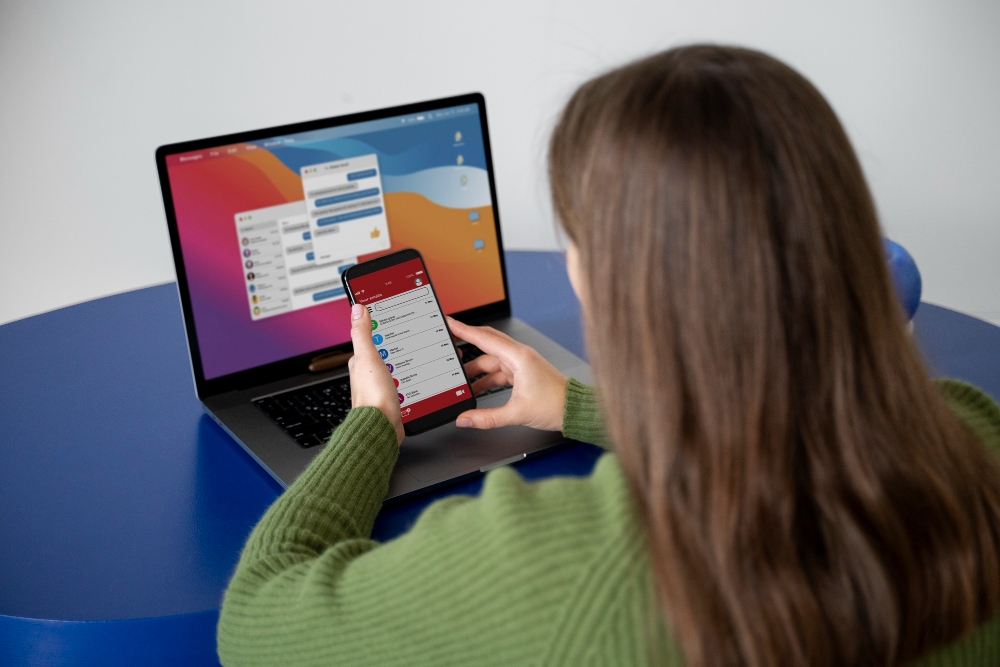
If you observe the space in silence for a few minutes on a weekday afternoon in a San Francisco café, an interesting thing happens. There are still laptops with glowing Apple logos strewn across tables, but just as many people are crouched over phones, tapping quickly, flipping between spreadsheets, documents, and messages.
It’s difficult to ignore the fact that some of them seem to be functional. Technology companies have been hinting at a straightforward concept for years: your smartphone may eventually serve as your only computer. More than most, Google appears to think that possibility is approaching.
| Key Information | Details |
|---|---|
| Technology Focus | Smartphone-as-Computer Concept |
| Key Company | |
| Operating System | Android |
| Supporting Tools | Google Docs, Drive, Workspace Apps |
| Hardware Trend | High-performance mobile processors |
| Connectivity | 5G, cloud computing, wireless display |
| Typical Tasks | Email, document editing, browsing, communication |
| Competing Devices | Laptops, tablets, desktops |
| Industry Trend | Mobile-first computing |
| Reference | https://www.cnet.com/tech/mobile |
When you look at contemporary phones, the reasoning behind the concept is practically clear. High-end smartphones today have processors that can match the processing power of laptops from just a few years ago. Sharper screens, more storage, and the ability for apps and documents to follow users across devices are all made possible by cloud services.
Some already use their phones as their main devices. It’s not uncommon to see travelers editing presentations, responding to emails, or reviewing documents entirely on a phone while strolling through airports or trains late at night. Many daily tasks no longer require a traditional computer thanks to mobile apps like Google Docs and Microsoft Office.
This change seems to have been subtly made possible by software. That strategy heavily relies on Google’s ecosystem. Cloud-based services include Gmail, Google Drive, and Google Docs. Without moving files, a laptop-started document can be edited on a phone minutes later.
The account takes precedence over the device. The trend becomes even more apparent when one observes how younger users engage with technology. Nowadays, a lot of students use their phones exclusively to finish assignments, conduct research, and interact with classmates.
Sometimes the laptop never shows up. However, there are still those in the tech industry who are skeptical of the notion that smartphones will totally replace laptops. Programmers, engineers, and designers frequently quickly identify the limitations.
After all, a phone screen is still a phone screen. After a few minutes, using a touchscreen to write lengthy documents or edit intricate spreadsheets can become uncomfortable. Modern devices still have a limited amount of physical space for multitasking, despite their larger displays.
The keyboard issue is another issue. After attempting to write several pages of text on a smartphone, anyone can see why laptops are still in use. Longer sessions can feel crowded, but the experience works in short bursts—answering emails, taking notes, etc.
A few manufacturers have made an effort to close the gap. With the introduction of the DeX feature, Samsung made it possible for some Galaxy phones to connect to monitors and change into desktop-style interfaces. The keyboard and display serve as the workspace, and the phone serves as the computer’s brain.
Similar concepts have been investigated by Google in Android. In theory, the idea is appealing. Keep one gadget in your pocket. When you get to the office, plug it into a screen. Pick up where you left off in your work.
However, putting that vision into practice has proven more difficult. There are still benefits to laptops that are hard to fit into a smartphone. Complex tasks are made easier by larger screens. Processors can operate at higher speeds thanks to cooling systems. It is possible to have multiple windows and apps open at once.
These minor variations add up. Here, technology history provides some fascinating background. Many people didn’t think laptops would take the place of desktop computers when they first came out decades ago. However, over time, millions of users came to favor portability.
The same argument is now taking place once more. Some computing domains are already dominated by smartphones. Years ago, phones took over nearly all of these tasks, including messaging, social media, navigation, and photography. Even entertainment, such as gaming or movie streaming, is increasingly taking place on portable devices.
However, work is still the last frontier. Many people still prefer laptops for tasks involving documents, studying, or creative work, according to surveys on technology use. For prolonged sessions, the keyboard, trackpad, and large screen combination still feels more comfortable.
Future gadgets might make the lines even more hazy. Already, foldable phones are getting bigger screens without sacrificing portability. Processing power is still being moved away from the device itself by cloud computing.
The hardware in your pocket might just become a window into more sophisticated computer systems if that trend keeps up.
As I watch this develop, I notice a subtle irony in the entire discussion. For years, people carried multiple devices — phone, laptop, tablet — each designed for slightly different tasks. It appears that the smartphone industry is committed to combining those categories into a single piece of hardware.
It’s unclear if that actually occurs. It’s obvious that Google and other tech firms think the change is happening. However, even when technology is ready, human habits tend to change slowly.
Nevertheless, the scene in the café gives a glimpse of what may be to come. There are twelve people seated in the room. Some people are using laptops to type. Others are staring at phones, editing documents and replying to messages. The difference is beginning to appear less noticeable from a distance.
