

Qualcomm engineers have been working on a problem that no one asked them to solve for the better part of ten years in a building in San Diego. In a nutshell, the issue is this: Why should the processor in your pocket be any less powerful than the one humming inside a server that is mounted on a rack? Heat, battery life, and physics were the obvious answers for the majority of the smartphone era. However, over the past 18 months, something has changed, and Qualcomm’s most recent silicon is the best proof yet that the boundaries are beginning to blur.
Announced in late 2025, the Snapdragon X2 Elite Extreme is an 18-core processor with 80 trillion operations per second through its neural processing unit alone. It is based on Qualcomm’s third-generation Oryon architecture. Even three years ago, it would have been ludicrous for a mobile chipmaker to make such a claim—80 TOPS. Instead of chips meant for thin laptops and eventually phones, it’s the kind of number you’d associate with specialized AI accelerators bolted into server farms. According to Qualcomm, the new Adreno GPU architecture offers a 2.3x increase in performance per watt over the previous generation, and the CPU can perform up to 75% faster than competitors at equivalent power draw. These are big claims, and until independent benchmarks are available, they should be treated with a healthy dose of skepticism. However, it is difficult to disagree with the direction.
It’s not just the numbers that make this moment intriguing. Beneath them is the architectural philosophy. Since before the majority of people had smartphones, Qualcomm has been supplying Arm-based chips for phones. The deep fluency of mobile-first silicon, which obsesses over every milliwatt and extracts performance from minuscule thermal envelopes, is now being directed upward into workstations and laptops. With the release of the Snapdragon 8 Elite in phones in late 2024, on-device AI processing—which had previously required cloud servers—was already possible. It’s the kind of thing that subtly challenges preconceived notions about what mobile computing truly entails—running massive language models with ten billion parameters locally, without an internet connection, on a device that fits in a jeans pocket.
In the long run, the budget play may be even more significant. Snapdragon C, a new processor family based on Qualcomm’s older Kryo architecture, was unveiled at Computex 2026. It is essentially repurposed phone silicon tuned for laptops priced between $300 and $500. The strategy is similar to what Apple did with the MacBook Neo, which included iPhone processors in reasonably priced laptops. This type of trickle-down computing, in which phone chips develop into fully functional desktop computers, may prove to be more significant than the flagship components. Hardware is already arranged by Acer, HP, and Lenovo.
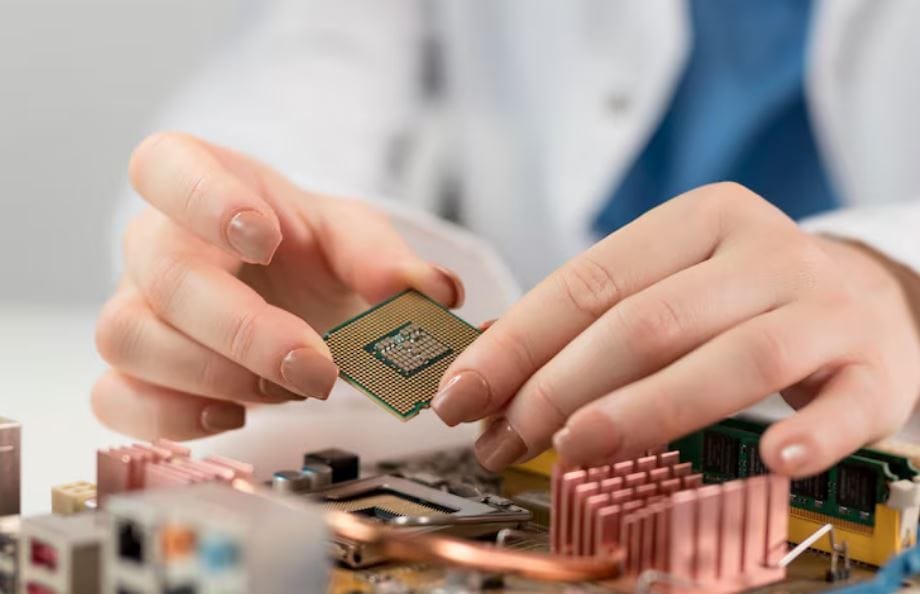
Qualcomm seems to be running a covert two-front campaign. For buyers of high-end laptops who desire workstation-level AI processing without carrying a power brick, the X2 Elite Extreme competes with AMD and Intel. Conversely, Snapdragon C caters to the large global market of consumers who require a working computer for less than $500. The same realization underlies both fronts: silicon produced by mobile chip design, which has been refined over billions of phones shipped, is essentially more power-efficient than conventional PC architectures. In the past, the difference between a phone processor and a supercomputer node was expressed in orders of magnitude. Although it’s still big, it’s contracting more quickly than most industry observers anticipated.
Given ongoing concerns about x86 software compatibility on Arm-based systems, it’s still unclear if Qualcomm can maintain this momentum against Intel’s Wildcat Lake chips and AMD’s established position. Professional applications continue to make mistakes. Porting is still being done by developers. Pretending otherwise would be dishonest because the ecosystem isn’t complete yet. However, there’s a sense that the traditional categories—phone chip, laptop chip, and server chip—are becoming less relevant by the quarter as Qualcomm pushes phone-born silicon into space previously occupied by rack-mounted hardware. The company is not developing a handheld supercomputer. Not just yet. However, one generation at a time, the pieces are being assembled, and the trajectory is difficult to ignore.
