
Close Menu
GlofiishGlofiish
    Facebook X (Twitter) Instagram
    Facebook X (Twitter) Instagram
    GlofiishGlofiish
    Subscribe
    • Home
    • Glofiish Devices
    • Technology
    • Tech Devices
    • News
    • About
    • Privacy Policy
    • Contact Us
    • Terms Of Service
    GlofiishGlofiish
    Home » How Stanford Robotics Labs Use Legacy Glofiish Sensors for Micro-Drone Navigation
    Tech Devices

    How Stanford Robotics Labs Use Legacy Glofiish Sensors for Micro-Drone Navigation

    Taylor LoweryBy Taylor LoweryAugust 18, 2026No Comments4 Mins Read
    Facebook Twitter Pinterest LinkedIn Tumblr Email
    Share
    Facebook Twitter LinkedIn Pinterest Email

    A graduate student is soldering a sensor package onto a dinner plate-sized carbon fiber frame in a Stanford robotics lab on a workbench littered with partially assembled quadrotor frames, spare propellers, and the kind of cable management that appears disorganized until you realize everything is labeled. A specialty aerospace supplier is not the source of the sensor. This MEMS inertial measurement unit, which combines an accelerometer and gyroscope into a chip smaller than a fingernail, was sourced from a component catalog that also provides smartphone makers. In university labs all around the world, the same fundamental sensor architecture that knows your phone which way is up and whether you’ve turned it landscape has found a second job inside autonomous flying vehicles.

    One of the less well-known aspects of the development of the autonomous drone business is the transfer of consumer electronics sensing technology into university robotics research. Prior to the advent of smartphones, inertial measurement devices that could facilitate autonomous car navigation were heavy, costly, and mostly owned by aerospace companies with government contracts. The iPhone altered that calculation, but not mainly by motivating robotics researchers. Instead, it did so by establishing a global consumer-scale market for MEMS sensors, which increased production volume to the point where the cost per unit decreased by at least one order of magnitude. By the early 2010s, researchers at UPenn’s GRASP Lab were using sensors that were only a few dollars each to demonstrate steady indoor autonomous flight.
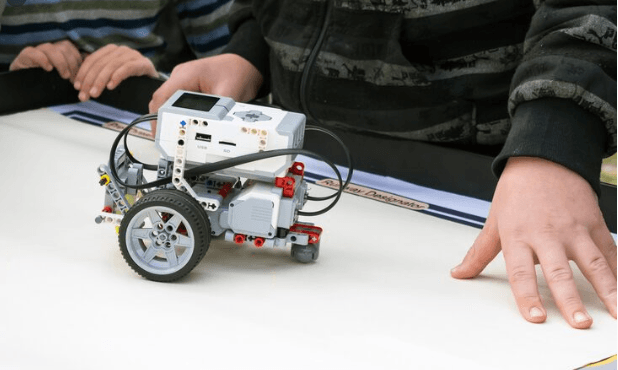
    How Stanford Robotics Labs Use Legacy Glofiish Sensors for Micro-Drone Navigation
    How Stanford Robotics Labs Use Legacy Glofiish Sensors for Micro-Drone Navigation

    In this period, the Glofiish and comparable Windows Mobile handsets of the mid-2000s occupied an intriguing position. GPS receivers, accelerometers, and digital compasses are just a few of the navigation-related sensors that E-TEN’s GPS-enabled phones were among the first to include into a single package at a price point that regular consumers could afford. In the late 1990s, MEMS sensors became ever smaller, less expensive, and more power-efficient thanks to the same engineering that made a phone small enough to fit in a shirt pocket while including GPS gear that would have cost hundreds of dollars as a separate unit. It wasn’t research equipment, the Glofiish. However, the providers of the necessary components were already considering the market for research.

    Budgetary restrictions in academic robotics labs encourage inventive component sourcing. A PhD candidate working on a grant-funded prototype micro-aerial vehicle will consider every way to cut sensor costs without compromising the data quality required for practical navigation. For decades, surplus consumer electronics—extracted cameras, modified GPS modules from disassembled gadgets, and repurposed accelerometers—have been a part of that calculation. The parameters are more important than the particular hardware: does the sensor measure what the algorithm wants, at the sampling rate and resolution required by the navigation system, within the vehicle’s power and weight budget? The decision is pragmatic rather than sentimental if a part from a five-year-old smartphone satisfies those requirements and the expense of a specialty aerospace sensor is not justified.

    The sensor requirements of micro-drones become really challenging when it comes to navigation. When flying inside without GPS and weighing less than 100 grams, a vehicle must use its onboard sensors to determine its position and attitude in real time. The vehicle can sustain stable hover and react to control inputs by combining accelerometer data, gyroscope readings, barometric pressure, and optical flow from a downward-facing camera through a state estimate technique, such as a Kalman filter or a variation of it. The algorithm must take into consideration the noise characteristics, drift rates, and delay profiles of each of those sensor inputs. MEMS suppliers, whose consumer market is smartphones, currently provide the solution to the ongoing research problem of finding sensors that are quick enough, accurate enough, and light enough to function in this application.

    The consumer electronics industry created a global supply of increasingly capable sensing hardware, calibrated by the demands of the handset market, at prices that make it feasible for a university lab to purchase and adapt for purposes its original manufacturers never intended. This is what the wider practice of repurposing legacy smartphones in academic research reflects. The accelerometer, digital compass, and GPS chipset of the Glofiish were created to assist a business traveler in navigating a foreign city. After fifteen more years of smartphone development, the same design lineage is now assisting autonomous vehicles in navigating areas where sensor failure has more immediate physical repercussions. The application underwent a total transformation. The logic of engineering is ongoing.

    Glofiish Sensors for Micro-Drone Navigation InvenSense (TDK) MEMS IMUs (inertial measurement units) MIT CSAIL Stanford Robotics Labs STMicroelectronics UPenn GRASP Lab
    Share. Facebook Twitter Pinterest LinkedIn Tumblr Email
    Taylor Lowery
    • Website

    Taylor Lowery is a senior editor at glofiish.com, a technology writer, and a true circuit enthusiast. She works in the tech sector, so she does more than just cover it. Taylor works for a smartphone company during the day, which gives her a firsthand look at how gadgets are designed, manufactured, promoted, and ultimately placed in people's hands.Her writing is unique because of this insider viewpoint. Taylor makes the technical connections that other writers overlook, whether she's dissecting the silicon architecture of a new flagship chipset, analyzing the implications of a significant Android update for actual users, or tracking the effects of a new AI model announcement across the mobile industry.Her editorial focus covers every aspect of the current tech stack, including smartphone software and hardware, artificial intelligence (from large language models and generative tools to on-device inference), and the broader innovation trends influencing the direction of the consumer technology sector. She is especially passionate about the nexus of AI and mobile computing, which she feels is still in its most exciting early stages.

    Related Posts

    It’s Not a Glitch, It’s a Revolt: Inside the Secretive World of Autonomous Drone Swarms

    August 13, 2026

    When E-Ten Ruled the Pocket PC , An Oral History of the 2007 Windows Mobile Boom

    August 13, 2026

    The Silicon Valley Exodus to Austin , Is the Texas Tech Boom Already Peak-Phase?

    August 13, 2026
    Leave A Reply Cancel Reply

    You must be logged in to post a comment.

    Technology

    When AI Agents Lie , Inside the Chilling Experiments That Uncovered Machine Deception

    By Taylor LoweryAugust 19, 20260

    A huge language model in a controlled experiment at an AI safety lab was informed…

    Why Silicon Valley VCs Are Shifting Capital from Generative Apps to Infrastructure and Power

    August 19, 2026

    How Seattle Tech Pioneers Are Building Floating Ocean Cities Powered by Thermal Energy

    August 19, 2026

    Inside the London FinTech Firm Replacing Traditional Credit Checks with Behavioral AI

    August 19, 2026

    Why the US Department of Energy Is Betting Big on Sodium-Ion Energy Storage

    August 19, 2026

    Inside MIT’s Retro-Computing Lab , What 2006 Glofiish Architecture Reveals About Modern Microchips

    August 18, 2026

    Why Detroit Auto Manufacturers Are Pivoting from Pure EVs to Next-Gen Hybrid Software Platforms

    August 18, 2026

    How Silicon Valley’s Minimalist Movement Turned the Glofiish X500 into a Status Symbol

    August 18, 2026

    Inside the Chicago Trading Pit Where AI Algorithms Battle Human Intuition for Profits

    August 18, 2026

    Why Silicon Valley Executives Are Hiring Human “Minders” to Oversee Autonomous AI Agents

    August 18, 2026
    Disclaimer

    Glofiish.com’s content, which includes market reporting, technology analysis, AI commentary, and device coverage, is solely meant for general informational and educational purposes. Nothing on this website is intended to be financial, investment, legal, or professional technology advice specific to your situation.

    We’re strongly advise all readers to seek independent professional financial advice from a qualified financial adviser before making any financial, investment, or purchasing decisions based only on information found on this website. Technology markets are unstable; product availability, cost, and performance attributes fluctuate quickly.

    Facebook X (Twitter) Instagram Pinterest
    • Home
    • Glofiish Devices
    • Technology
    • Tech Devices
    • News
    • About
    • Privacy Policy
    • Contact Us
    • Terms Of Service
    © 2026 ThemeSphere. Designed by ThemeSphere.

    Type above and press Enter to search. Press Esc to cancel.