
Close Menu
GlofiishGlofiish
    Facebook X (Twitter) Instagram
    Facebook X (Twitter) Instagram
    GlofiishGlofiish
    Subscribe
    • Home
    • Glofiish Devices
    • Technology
    • Tech Devices
    • News
    • About
    • Privacy Policy
    • Contact Us
    • Terms Of Service
    GlofiishGlofiish
    Home » Inside the Brain-Computer Interfaces That Don’t Require Drilling Your Skull
    Tech Devices

    Inside the Brain-Computer Interfaces That Don’t Require Drilling Your Skull

    Taylor LoweryBy Taylor LoweryJune 12, 2026No Comments4 Mins Read
    Facebook Twitter Pinterest LinkedIn Tumblr Email
    Share
    Facebook Twitter LinkedIn Pinterest Email

    Tetiana Aleksandrova claims that she began posing the question, “Would you personally get a BCI installed?” at neuroscience conferences. Almost everyone responded in the same way. It must have been much less intrusive. Not in the future. Right now. Repeated in research labs and hospital hallways, this response reveals a crucial aspect of where this technology has been stuck and why the current push to remove it from operating rooms feels like more than incremental advancement.

    For many years, brain-computer interfaces—systems that establish direct communication between brain activity and external devices—have been used in research settings. However, surgery is still a part of the version that most people imagine. Electrodes must be inserted into brain tissue using a robotic process for Neuralink’s implant. A permanent implant remains inside the body even with Synchron’s more cautious method, which involves passing a device through the jugular vein instead of breaking the skull. Paralyzed patients have been able to move cursors and send text messages thanks to these serious interventions that are suitable for serious conditions. The outcomes are truly amazing. However, there is a huge barrier to entry.

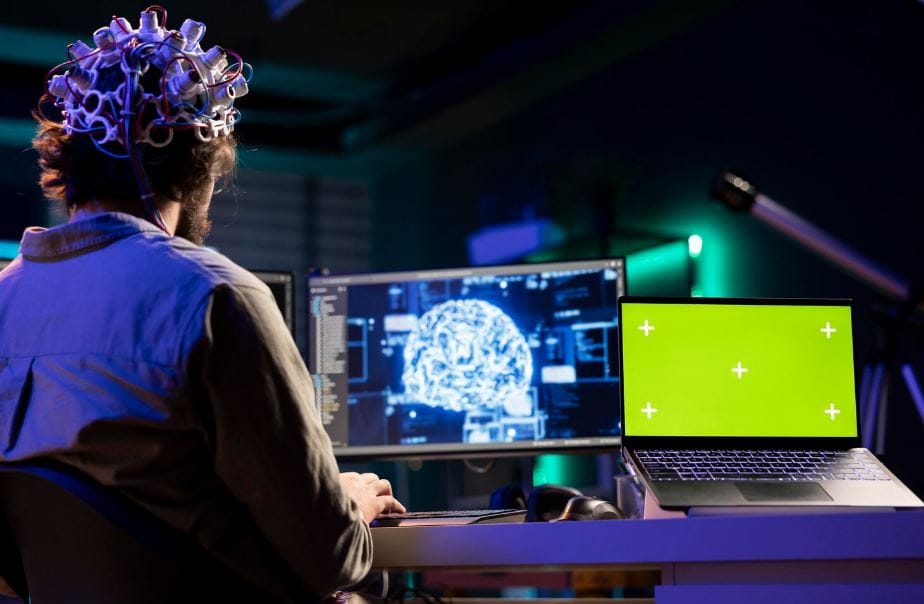
    Selling the non-invasive route has proven more difficult, in part due to the weaker signals. Electrical activity is absorbed and dispersed by the skull before it reaches a sensor when electrodes are placed on the scalp rather than directly on neural tissue. For many years, the primary argument against EEG-based BCIs as anything more than a scientific curiosity was the signal degradation. Artificial intelligence has been the counterargument, evolving first slowly and then quite rapidly. Under controlled circumstances, transformer-based decoders trained on thousands of hours of neural recordings can now extract meaningful information from signals that previously appeared to be noise with accuracy rates close to 95%. Without opening anyone’s eyes, that represents a substantial change in what is truly feasible.
    Inside the Brain-Computer Interfaces That Don’t Require Drilling Your Skull
    Inside the Brain-Computer Interfaces That Don’t Require Drilling Your Skull

    In April 2025, researchers at Georgia Tech made a significant announcement. A group under the direction of Professor W. Hong Yeo created a microneedle sensor that is less than one millimeter in diameter, flexible, wireless, and able to record high-fidelity neural signals for up to twelve hours straight. It is small enough to fit between hair follicles and slightly beneath the skin. The device recorded brain activity while subjects stood, walked, and ran with 96.4% accuracy in tests involving six participants. They made and received AR video calls without using their hands. Gels, large headsets, and obvious hardware were absent. It’s possible that this is how everyday BCI will eventually appear—nearly undetectable, worn like nothing at all.

    Meanwhile, a startup called Subsense is creating a BCI that uses a nasal spray to deliver nanoparticles that function as signal receivers inside the brain in what seems to be the most bizarre entry in this field. No electrodes, whether implanted or not. It’s still genuinely unclear if the strategy will make it through clinical trials, but the fact that anyone is trying it speaks to the direction of collective energy in this field.

    As a result, the market is shifting. Businesses like Emotiv, Neurable, and OpenBCI are incorporating EEG into headphones, earbuds, and mixed-reality headsets in an effort to reach consumer and business markets that surgical systems are unable to. The MW75 headphones from Neurable, created in collaboration with Master and Dynamic and acknowledged at CES 2026, incorporate brain sensing into a product that people already wear on a daily basis. EEG-based systems account for nearly 60% of the technology share in the $1.33 billion global neurotechnology BCI market, which is expanding steadily.

    With its operating rooms, surgical robots, and meticulously controlled patient reveals, it’s difficult to ignore how different this appears from the Neuralink press cycle. Researchers in Atlanta are fitting sensors between hair strands, a Silicon Valley founder is proposing brain interfaces delivered through the nose, and a Boston company is integrating neural decoding into common headphones. The non-invasive side of this field is quieter and, in some ways, more fascinating. No one had to drill a hole to get there, and the gap between the brain and the machine is getting smaller.

    Brain-Computer Interfaces
    Share. Facebook Twitter Pinterest LinkedIn Tumblr Email
    Taylor Lowery
    • Website

    Taylor Lowery is a senior editor at glofiish.com, a technology writer, and a true circuit enthusiast. She works in the tech sector, so she does more than just cover it. Taylor works for a smartphone company during the day, which gives her a firsthand look at how gadgets are designed, manufactured, promoted, and ultimately placed in people's hands.Her writing is unique because of this insider viewpoint. Taylor makes the technical connections that other writers overlook, whether she's dissecting the silicon architecture of a new flagship chipset, analyzing the implications of a significant Android update for actual users, or tracking the effects of a new AI model announcement across the mobile industry.Her editorial focus covers every aspect of the current tech stack, including smartphone software and hardware, artificial intelligence (from large language models and generative tools to on-device inference), and the broader innovation trends influencing the direction of the consumer technology sector. She is especially passionate about the nexus of AI and mobile computing, which she feels is still in its most exciting early stages.

    Related Posts

    The Hidden Bias in Enterprise AI: Are Algorithms Keeping You From Being Promoted?

    July 28, 2026

    The Mechanics of China’s New Robotic Smartphone Camera Arm

    July 28, 2026

    The Next Billion Smartphone Users Are Coming From Africa

    July 28, 2026
    Leave A Reply Cancel Reply

    You must be logged in to post a comment.

    Technology

    The Hidden Bias in Enterprise AI: Are Algorithms Keeping You From Being Promoted?

    By Taylor LoweryJuly 28, 20260

    It’s hard to put your finger on what’s making people in corporate offices so angry….…

    The Mechanics of China’s New Robotic Smartphone Camera Arm

    July 28, 2026

    The Next Billion Smartphone Users Are Coming From Africa

    July 28, 2026

    AI Could Soon Design the Next Generation of Smartphones

    July 28, 2026

    Why Traditional Passwords Will Be Completely Extinct by 2030

    July 28, 2026

    The Highs, Lows, and Ethical Nightmares of AI in the Tattoo Industry

    July 28, 2026

    Why Hollywood Is Nervous About AI-Generated Content

    July 28, 2026

    The Modular Smartphone Was Dead. Tecno Just Figured Out How to Resurrect It.

    July 28, 2026

    Inside the Global Data Center Race Powering Artificial Intelligence

    July 28, 2026

    Apple’s Budget iPhone Strategy Signals a New Global Power Play

    July 28, 2026
    Disclaimer

    Glofiish.com’s content, which includes market reporting, technology analysis, AI commentary, and device coverage, is solely meant for general informational and educational purposes. Nothing on this website is intended to be financial, investment, legal, or professional technology advice specific to your situation.

    We’re strongly advise all readers to seek independent professional financial advice from a qualified financial adviser before making any financial, investment, or purchasing decisions based only on information found on this website. Technology markets are unstable; product availability, cost, and performance attributes fluctuate quickly.

    Facebook X (Twitter) Instagram Pinterest
    • Home
    • Glofiish Devices
    • Technology
    • Tech Devices
    • News
    • About
    • Privacy Policy
    • Contact Us
    • Terms Of Service
    © 2026 ThemeSphere. Designed by ThemeSphere.

    Type above and press Enter to search. Press Esc to cancel.