

There’s a moment, somewhere in the middle of a long day, when you realize you’ve checked your phone forty times without meaning to. Not for anything urgent. The pull of a glowing rectangle that has subtly taken over every free moment of contemporary life, simply out of habit. Silicon Valley built that habit, and now — with some apparent guilt and a great deal of financial ambition — it seems determined to undo it.
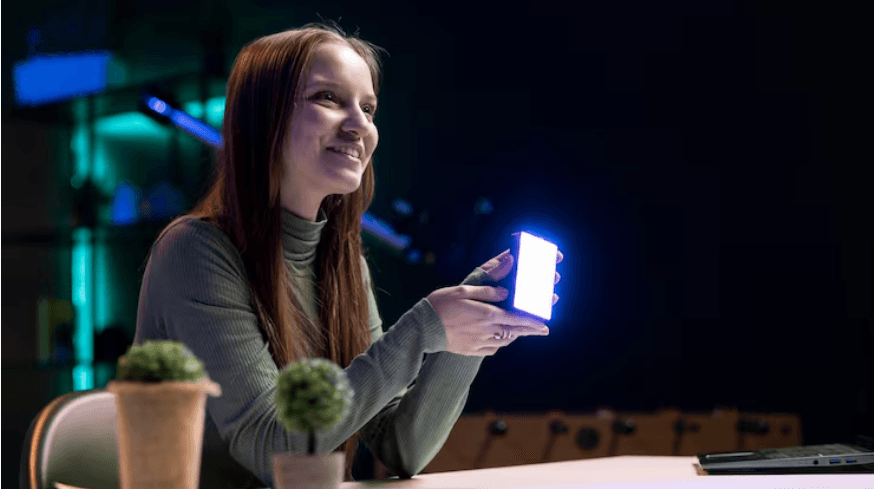
OpenAI has discreetly reorganized a number of its engineering, product, and research teams under a single, audio-focused structure during the last two months. The Information reports that the objective is to completely revamp its audio models, laying the groundwork for what the company envisions as a personal device that prioritizes audio, which is anticipated sometime in early 2026.
| Topic | Silicon Valley’s AI-Powered Audio Device Push |
|---|---|
| Key Company | OpenAI |
| CEO | Sam Altman |
| Hardware Design Lead | Jony Ive (former Apple Chief Design Officer) |
| Acquisition | io (Jony Ive’s firm) — acquired for ~$6.4–6.5B, May 2025 |
| ChatGPT Weekly Users | 800 million |
| Company Valuation | ~$500 billion |
| Expected Audio Device Launch | Early-to-mid 2026 |
| Related Players | Meta, Google, Tesla/xAI, Humane, Sandbar, Pebble founder Eric Migicovsky |
| Reference | OpenAI Official Website |
This is not a small update to the product. It feels closer to a fundamental rethinking of what a personal computing device is supposed to be.
The timing is not accidental. Smart speakers already sit in more than a third of American homes. With a five-microphone array, Meta’s Ray-Ban smart glasses can now sharpen voices in noisy environments, allowing you to aim your face like a listening device. Google began experimenting with “Audio Overviews” last June, converting search results into spoken summaries.
Tesla is integrating the Grok chatbot from xAI into its cars so that drivers can control the climate and navigate without tapping touchscreens. With or without a well-thought-out plan, the shift towards audio is occurring simultaneously on multiple fronts.
The designer behind the glass-and-aluminum silhouette of the iPhone, Jony Ive, is currently employed by OpenAI after the company paid between $6.4 and $6.5 billion to acquire his company. I told Sam Altman on stage at OpenAI‘s DevDay in San Francisco, which drew about 1,500 developers, that he wants to create products that make people “happy and fulfilled and more peaceful and less anxious.”
Yes, vague. But it signals something. The man who once created irresistible gadgets now wants to create something that deters you from using them. It remains to be seen if this contradiction can result in a product that consumers genuinely want to use.
The screenless device graveyard is a depressing place to be. The Humane AI Pin — a wearable that projected information onto your palm and processed commands through voice — burned through hundreds of millions of dollars before becoming something closer to a punchline than a product. More privacy concerns than excitement have been raised by the Friend AI pendant, which claims to record your life and provide companionship through a necklace.
It seems that the concepts that are emerging in this field the quickest are also the ones that have the least connection to what regular people really require from their gadgets. However, the investment continues.
At least two businesses, including one headed by Eric Migicovsky, the founder of Pebble, are currently developing AI rings that will make their debut in 2026. Glasses, pendants, rings, earbuds, and other form factors are becoming more and more common, but the fundamental idea remains the same: audio is becoming the operating system of daily life, and whoever controls the most natural-sounding, context-aware voice interface will have a piece of something huge. That might be the case. Additionally, the market for screenless wearables might continue to be a niche curiosity for years longer than investors anticipate.
OpenAI’s new audio model, reportedly arriving in early 2026, is said to handle interruptions gracefully and speak while you’re still talking — something current AI voice tools cannot manage without awkward pauses. It’s more important than it seems. True dialogue doesn’t wait for an invitation and an answer. It recovers after overlapping, adjusting, and losing its train of thought.
It is truly challenging to create a model that can engage in that type of conversation without sounding like a telephone voice tree. If OpenAI succeeds, it will fundamentally alter the nature of human-machine communication.
In the meantime, Sam Altman has been all over the place, closing infrastructure agreements with Nvidia, Broadcom, Oracle, and AMD, giving keynote addresses at developer conferences, and witnessing Sora reach one million downloads in less than five days. In less than three years, OpenAI has expanded from a research lab to a $500 billion business with a partnership with the most valuable chip manufacturer in the world, Nvidia, and the White House’s attention.
That scale gives the company resources to be wrong several times before landing on something that works. The majority of startups pursuing the same audio dream lack that buffer.
The cultural weight that lies beneath all of this is difficult to ignore. The smartphone was meant to be freeing. In many ways it was. But somewhere along the way, liberation curdled into something more compulsive. As the biggest names in technology make significant investments in voice-first alternatives, it seems like the industry has begun to take some responsibility for what it has created. The question that makes this particular wager worth closely monitoring is whether that reckoning results in something truly better or just a new surface for the same old addictions, now delivered through your eardrums.
