

There’s a particular kind of nostalgia that hits when someone mentions the Nokia 3310. Not because it was elegant — it wasn’t — but because it did one thing and did it without asking for attention. Compare that to the device sitting face-up on most desks right now, glowing faintly, waiting. Somewhere between those two objects, an entire category of technology evolved, swallowed a dozen industries whole, and arguably started eating itself.
It’s worth remembering how unglamorous the beginning actually was. Martin Cooper made the first handheld mobile call fifty-some years ago from a device that weighed nearly a kilogram and offered thirty minutes of talk time after a ten-hour charge. Cooper himself, asked decades later what he thought of the modern smartphone, gave a strangely deflating answer: it’s not really a very good phone. You’re pressing flat glass against the curve of your skull. He has a point that gets lost in all the talk of innovation — the calling function, the original purpose, became almost an afterthought.
The IBM Simon, released in 1994, is usually cited as the true ancestor — touchscreen, fax capability, a calendar, even early maps. It flopped commercially, weighed down by its own ambition and a battery that couldn’t keep up. That’s a pattern worth noticing: the smartphone didn’t arrive fully formed. It limped along for almost two decades, bouncing between bulky PDA hybrids and Nokia’s clamshell experiments, before something clicked.
What clicked, eventually, was less about hardware and more about appetite. Once cameras got decent and app stores existed, the smartphone stopped being a phone with extra features and became, instead, a single object replacing a drawer full of other objects. The point-and-shoot camera went first, practically overnight. Then the iPod. Then the pocket calculator, except in exam halls, where it survives on borrowed time. Dictaphones, paper maps, alarm clocks, pay phones, even the humble landline — all of it got absorbed, quietly, into one rectangle.
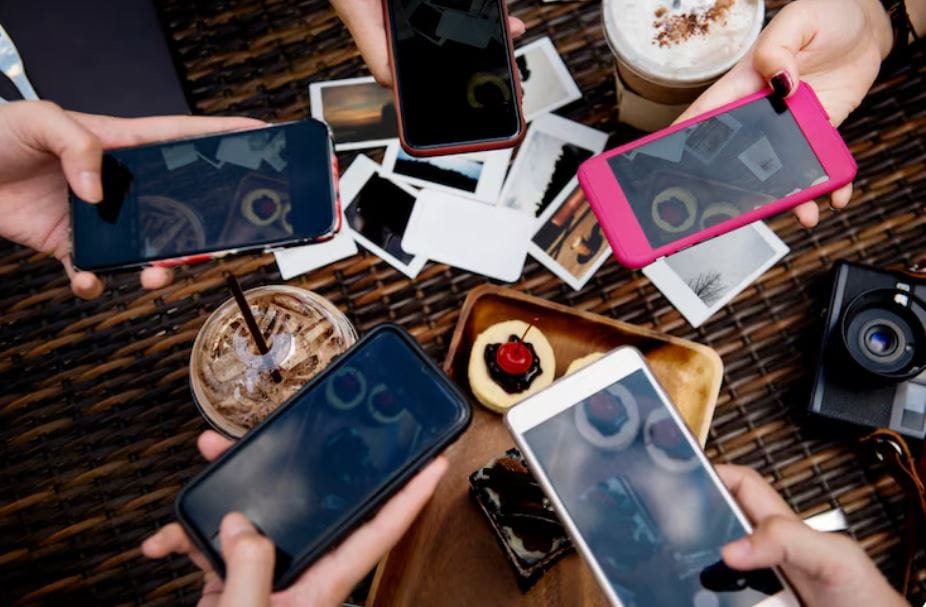
There’s something almost predatory about that consolidation, looking back on it. Each acquisition seemed small at the time. Nobody mourned the Walkman loudly. But the cumulative effect, decades later, is a device so totalizing that losing it for an afternoon feels less like misplacing a gadget and more like misplacing a limb.
And that, it seems, is where the second half of this story starts — the part that isn’t finished yet. Researchers have spent the last several years trying to figure out what constant proximity to this object actually does to attention and memory. The findings aren’t simple. One widely cited study found that participants performed worse on cognitive tasks merely when their phone was nearby, even powered off, even when they weren’t consciously thinking about it. The fix, oddly, wasn’t willpower. It was distance — putting the device in another room entirely.
Other research complicates the doom narrative a little. Offloading memory onto a device, it turns out, doesn’t simply make people forgetful. In one experiment, participants who jotted down high-value information on screen ended up remembering low-value information better too, as if freeing up mental space let other things settle in. It’s not clear yet whether that’s a genuine cognitive trade-off or just a clever quirk of one experiment. The science, honestly, is still catching up to the behavior.
Which raises the question buried under all the headlines about screen time and digital detoxes: is the smartphone, as a category, actually nearing its own extinction event — the way it once delivered one to cameras and calculators? Wearables are creeping closer to the body. Voice assistants are pulling tasks away from screens. AI features are starting to anticipate needs before a person even reaches for the glass slab. None of this looks like a revolution yet. It looks more like erosion, slow and uneven, the same way the smartphone itself crept up on the Walkman.
Whether that erosion accelerates or stalls out is genuinely uncertain. Devices people assumed were untouchable — landlines, pagers, the family camcorder — have a way of becoming relics almost without anyone noticing the exact moment it happened. It’s hard not to wonder if future generations will look at today’s smartphones the way we now look at the DynaTAC: a strange, oversized ancestor of something that eventually got out of the way.
