

Between reading that a Ragdoll cat named Nuomi calmed down at three in the morning after her owner called her via a collar-mounted device and discovering that dogs can now start phone calls by jumping three times in six seconds, there’s a point at which everything stops feeling ridiculous and begins to feel almost inevitable.
Earlier this year, Singapore-based uCloudlink’s wearable, the PetPhone, made its public debut at the Mobile World Congress in Barcelona. It is a palm-sized gadget that fastens to a collar, uses artificial intelligence (AI) to recognize emotions, incorporates GPS and cellular connectivity via the company’s exclusive CloudSIM technology, and enables two-way voice calls between pets and their owners. It is 37 grams in weight. It is rated as IP67 waterproof. A monthly data plan costs about $10, and the total cost is $90. Additionally, it has already sparked thoughtful discussion about the potential design and cost of the next generation of this technology.
After a minute of contemplation, the reasoning behind it is not wholly absurd. At MWC, Jeff Chen, CEO of uCloudlink, stated unequivocally that he believes pets have fallen behind in the AI era. The smart feeders, automated litter boxes, and remote cameras that owners installed around their animals were all upgrades, but the animals themselves continued to be passive objects of observation rather than active participants in any kind of interaction. In essence, Chen is selling agency. A way for a dog or cat to communicate, to reach across the distance and say, “I need you right now,” using whatever limited vocabulary motion sensors permit.
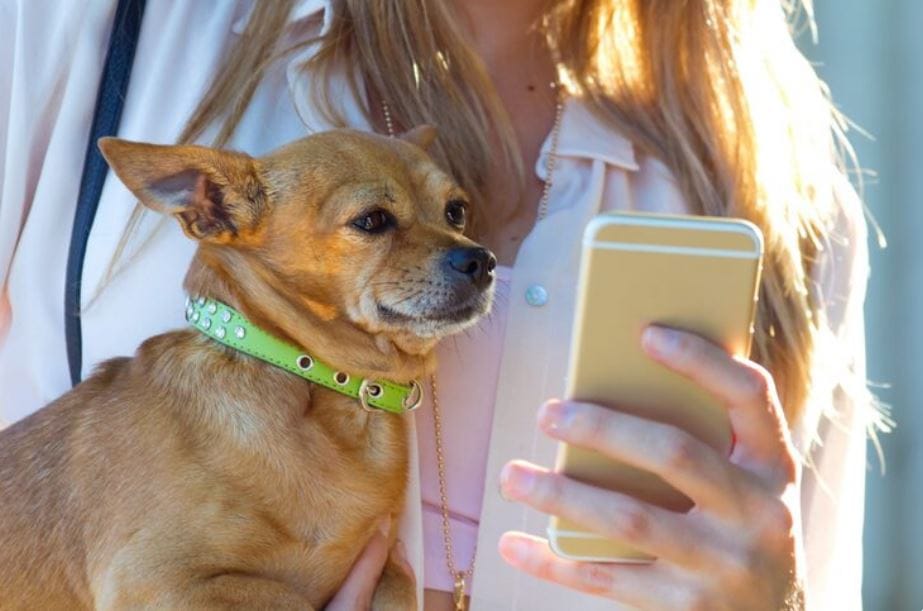
Obviously, that framing is working very hard. Philosophically speaking, teaching a dog to jump three times in a row to make a phone call is not the same as teaching it to communicate. However, the difference between what the technology actually does and what it emotionally represents may not matter much to 120 million pet-owning households worldwide, a figure that the industry frequently cites. Because this gadget fixes a technical issue, people aren’t purchasing it. They are purchasing it because they perceive being away from a pet as a particular, enduring low-grade anxiety, and anything that reduces that anxiety is beneficial.
The premium market comes into play at this point. It’s highly likely that the current $90 price point is a floor rather than a ceiling. The PetCam, a wearable action camera that pairs with the PetPhone for complete audio-visual communication, was anticipated to launch in late spring at a comparable or higher price. Other companion products are already under development. Beyond that, consumer pet technology has continuously advanced. The pet care industry has spent the better part of a decade persuading consumers that premium spending on animals is not extravagant but responsible. Examples of this include genetic testing, fresh-food subscription services, nutraceuticals, and wearables that serve as virtual veterinarians. When placed properly, a $500 or $1,000 pet smartphone fits perfectly into that narrative.
Additionally, there is the social layer, which, depending on your personality, can be either endearing or a little dystopian. A feature of the PetPhone, which is still in development, allows pets to virtually make friends with one another by sharing owner information whenever two animals are in close proximity. Building a pet social ecosystem is how the company has put it. This feature might have a significant impact on customers. It could also feel like a gimmick. To be honest, no one really knows yet.
The underlying infrastructure, which includes CloudSIM’s multi-carrier global connectivity, five-meter precision tracking, and AI-driven behavioral interpretation, appears to be a true engineering investment rather than a novelty project. These are the same fundamental components that drive sophisticated logistics and health monitoring systems; in this case, they are used to address the issue of a dog missing a person.
It’s difficult not to feel that the pet tech sector has crossed a quiet threshold as you watch this develop. Nuomi the Ragdoll cat is sleeping soundly somewhere because someone called her at three in the morning. The devices and demand are real. Stranger things have been created by the tech sector for stranger purposes.
