

There is something going on on the display walls of every electronics store these days. The impossible-deep blacks on the OLED monitors draw every eye in the room to them. They look stunning, like they belong in a movie. But if you sit with a Mini-LED panel in a bright office for twenty minutes, something changes. The screen holds up; it stays bright and easy to read. There’s a quiet confidence in them that doesn’t ask for praise but gets it anyway.
OLED has been the talk of the town when it comes to high-end monitors for years. And it deserves praise. As impressive as the contrast is, the motion in fast-paced games looks smoother than on an LCD, and the viewing angles are broad and accommodating. But OLED has real problems that aren’t talked about much because of all the excitement: it can burn in, text can be less clear at some resolutions, and it costs too much for many people to buy. Those issues don’t happen with mini-LED. At least not all of them.
The technology is pretty easy to understand. Mini-LED is basically an improved version of the LCD backlight system. Instead of a few lights along the edges of the screen, there can be tens of thousands of tiny LEDs spread out over the whole panel. There are more dimming zones when there are more lights, so you can finetune the brightness further. The contrast isn’t as high as OLED’s almost infinite ratio, but it’s a lot higher than most people thought it would be a few years ago. Some of the newest models come with over a thousand local dimming zones on a 27-inch screen, which not long ago would have seemed like a lot.
Mini-LED has a real, consistent edge when it comes to text clarity. The RGB subpixel structure that Mini-LED panels use is what Windows ClearType was built on. It’s possible to see fringing around letters on OLED displays, especially WOLED panels with their RWBG layout. This is the kind of softness that gets annoying after a while of working. Reviewers talk about this kind of detail in the footnotes, but people who work in an office see it every afternoon. This is a big deal for people who spend eight hours a day in a spreadsheet or a document editor.
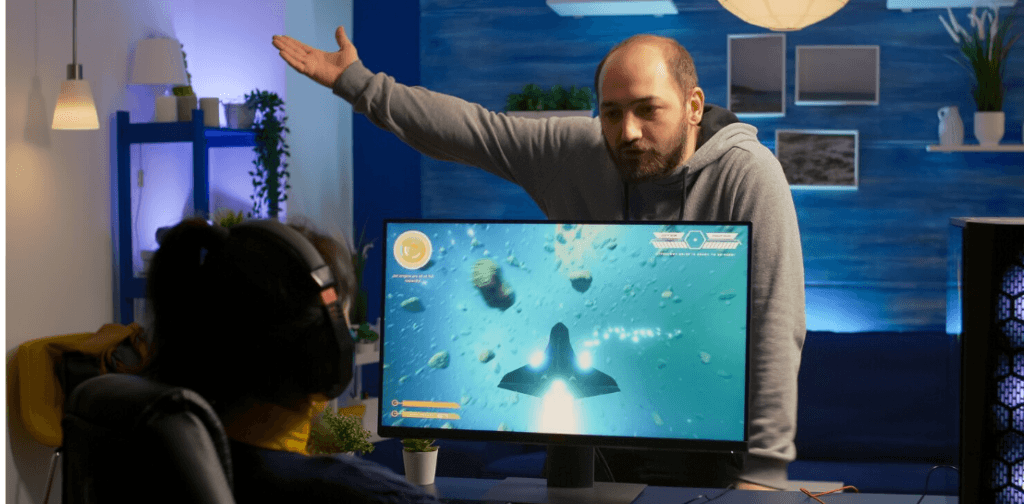
A different point of view is brightness. When it’s dark, OLEDs work very well, but when it’s sunny, they lose ground quickly. When big, bright images are shown on a mini-LED panel, the brightness stays high across the whole screen without dropping off dramatically like it does with OLED. People who work outside, designers who have to deal with daylight, and people who are in a room without blackout curtains will not benefit from OLED’s need for darkness.
It’s still not clear if Mini-LED will ever fully catch up to OLED when it comes to motion handling, which is still its best feature for gaming. At 240Hz, it’s really hard to beat an OLED panel’s almost instantaneous pixel response. Here, mini-LED monitors are very different, and some work much better than others. Right now, that lack of consistency is what’s really making technology hard—not a ceiling, but an uneven floor. In real life, two monitors that say they are Mini-LED can act very differently depending on how many dimming zones they have and how smartly the local dimming is set up.
A lot of people in the business world still don’t know what the best Mini-LED is. The production process for OLED is more standardized, so most monitors with the same panel specification work the same way, no matter what brand logo is on the bezel. It’s not possible to say that about mini-LED yet. You still need to do more research before you buy one. But the difference is getting smaller, and now the prices range from about $200 to well over $1,000. This means that the technology is reaching people that OLED never could.
It’s becoming less clear that one technology will win and more clear that each one serves a different group of people. OLED for movie fans who play games in a dark room, looking for perfect shadow detail and smooth motion. For professionals who work in bright areas and need clear text, long-lasting brightness, and not having to worry about static damaging the screen over time, the mini-LED is the best choice. Neither one makes the other one less important. Mini-LED might be the right choice for more people and more situations than what’s being said right now, but they haven’t heard that yet.
